
Last updated October 31, 2026
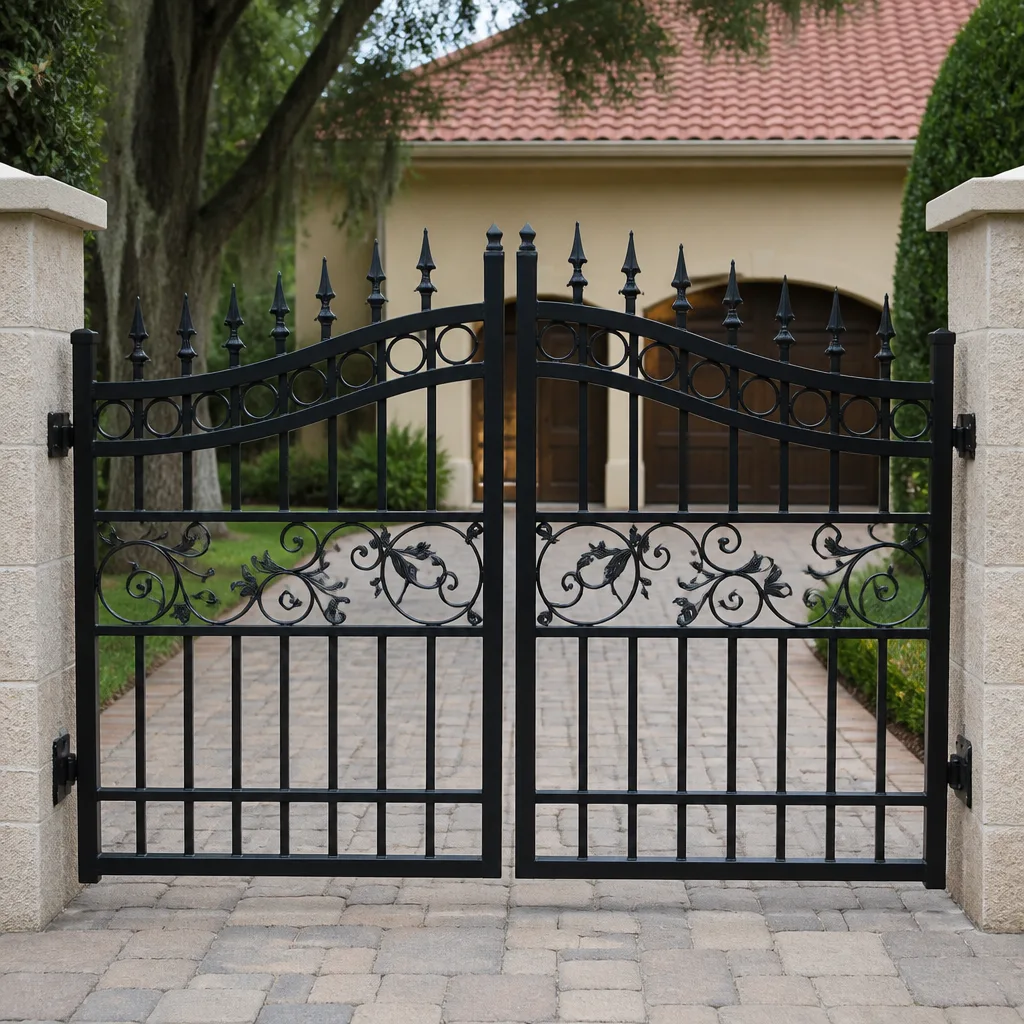 Wrought iron
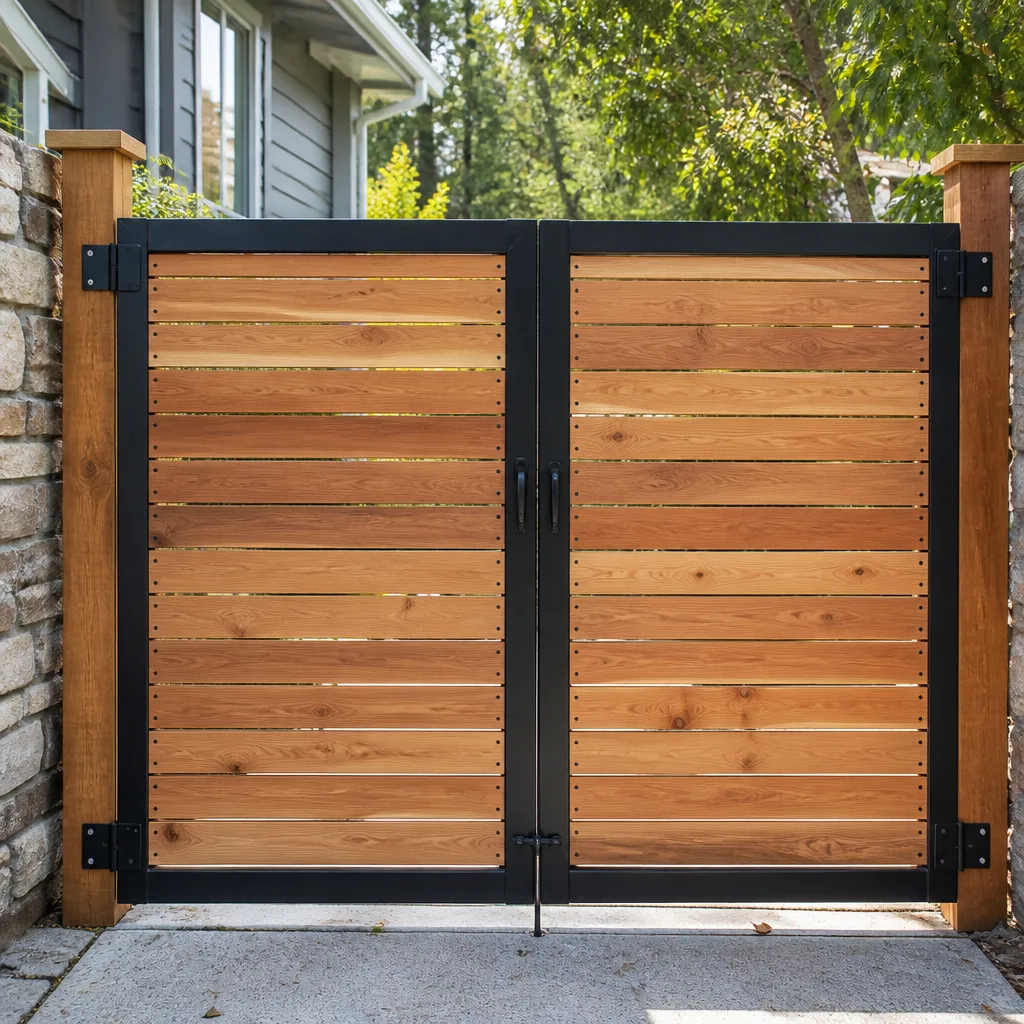 Wood & steel frame
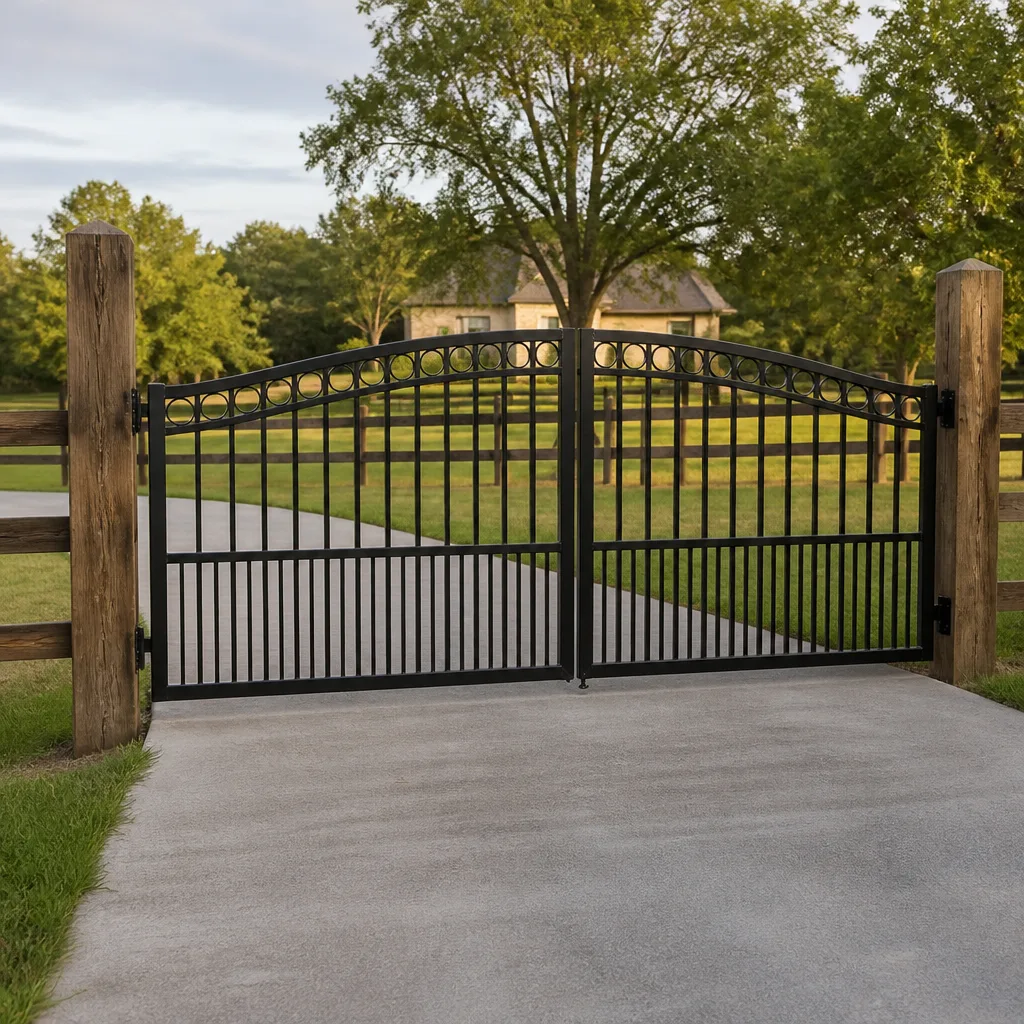 Farm & ranch
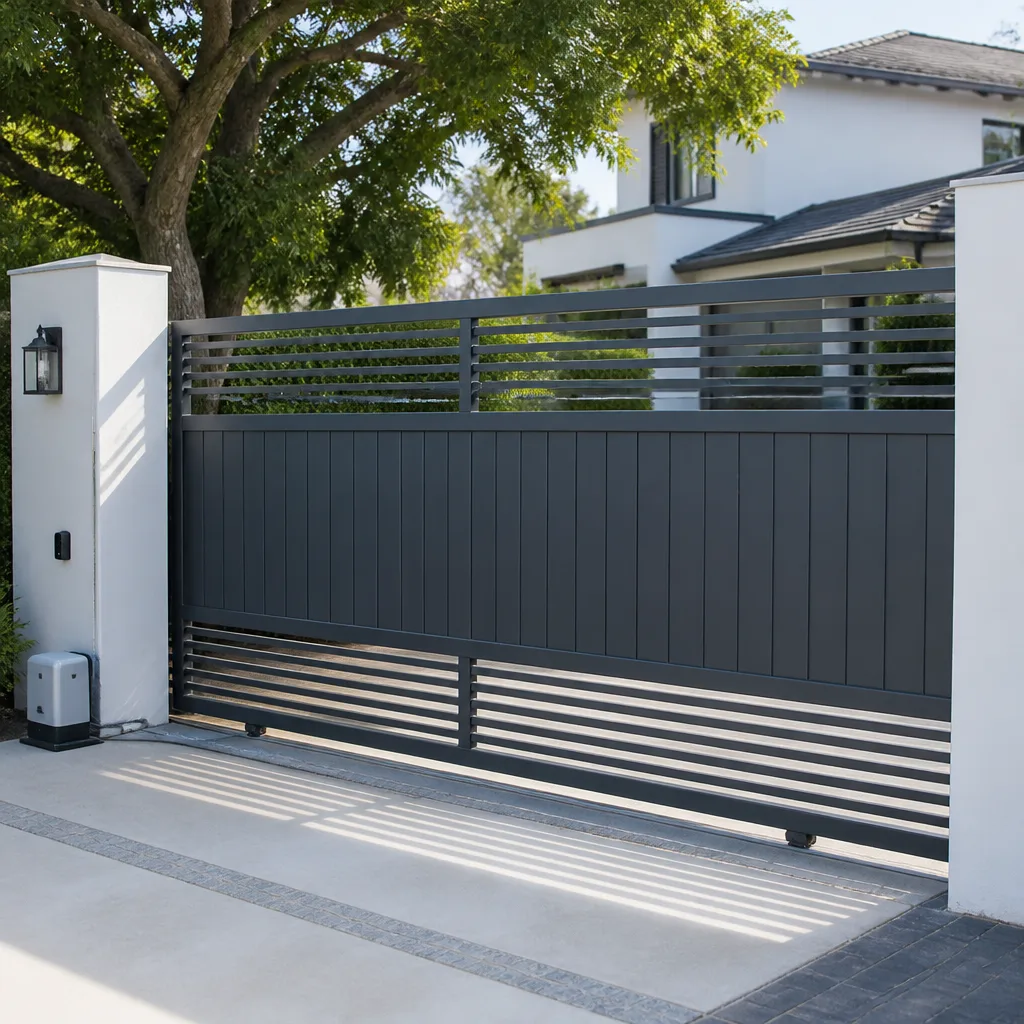 Sliding driveway gates
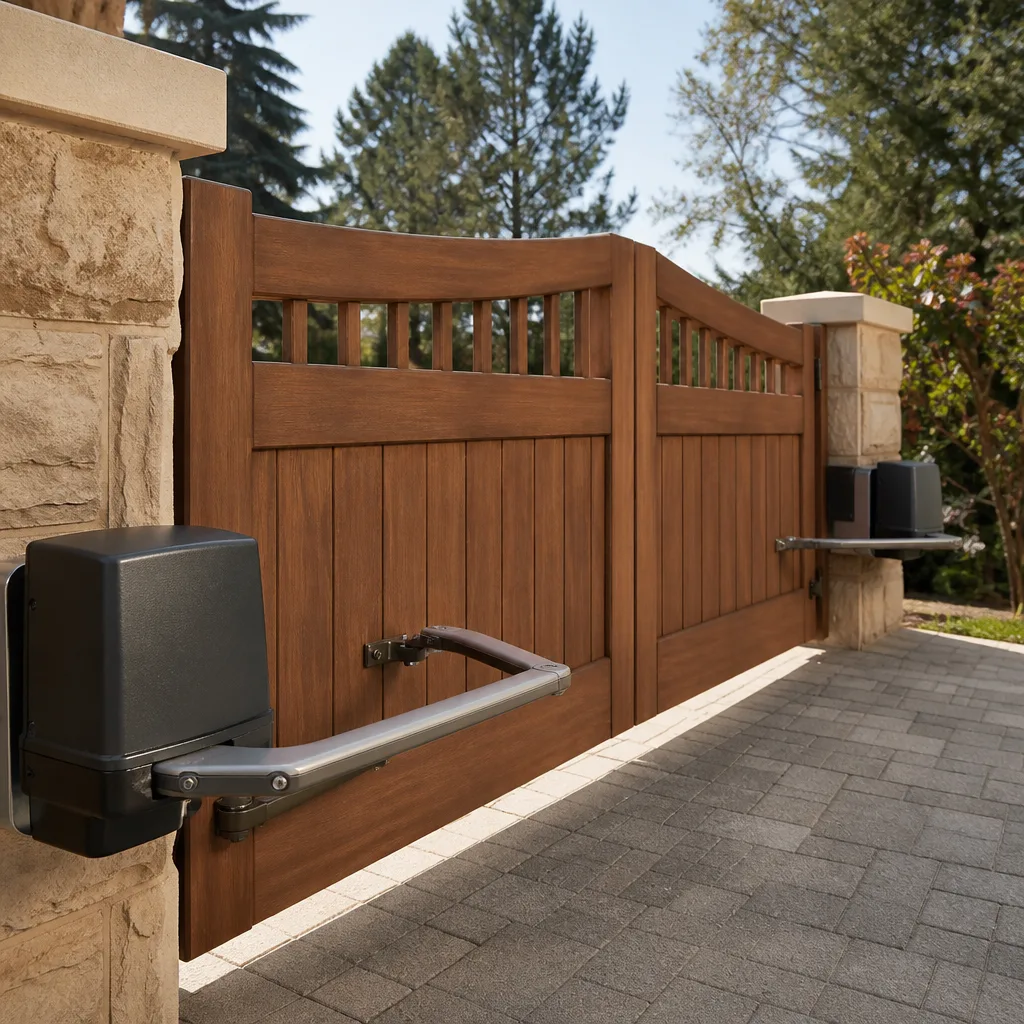 LiftMaster operators
Free on-site gate assessment - hinges, posts, and your LiftMaster or Nice gate operator checked before anything is quoted
The assessment is free and the quote is the invoice.
Get your free estimateGate Repair Warning Signs: A Orlando Homeowner’s Reference Guide
A gate that hesitates for two seconds before moving isn’t “warming up.” It’s telling you the motor is working harder than it should, and that hesitation will become a full stop within weeks if the underlying cause isn’t addressed. Most Orlando homeowners don’t realize their gate has been sending distress signals for months before it finally quits. This guide decodes those signals. You’ll learn which sounds mean a $40 fix and which mean a $900 motor replacement, which visual cues are early warnings versus cosmetic wear, and how to describe a problem to a technician so it gets diagnosed right the first time.
Styles & brands we work with
Quick Answer
The most common gate repair warning signs in Orlando are grinding or clicking sounds from the operator, delayed or jerky movement, partial opening, a gate that reverses direction mid-travel, and remotes or keypads that work intermittently. Any of these signals means a component is failing. Address it now and you’re looking at a minor repair; wait until the gate stops moving entirely and you’re usually facing a motor or control board replacement.
Table of Contents
- Sound-Based Diagnostics: What Your Gate Is Telling You
- Movement-Based Diagnostics: Jerks, Hesitations, and Reversals
- Visual Indicators Most Orlando Homeowners Miss
- Remote and Keypad Failures: Receiver vs. Board vs. Battery
- Warning Signs That Differ by Gate Type
- Orlando-Specific Factors That Accelerate Gate Wear
- Common Mistakes to Avoid
- When to Call a Professional
- Frequently Asked Questions
- The Bottom Line
Sound-Based Diagnostics: What Your Gate Is Telling You
Gates should be relatively quiet. A healthy system produces a low, steady hum during operation. When that hum changes character, the gate is communicating. In our experience working on gates across Orlando, sound is the single most reliable early-warning system a homeowner has, yet it’s the one most people ignore until the noise becomes impossible to miss.
Here’s what each sound pattern indicates:
- Grinding: Metal-on-metal contact somewhere in the drive train. On a slide gate, this usually points to a chain that’s lost tension or a drive sprocket with worn teeth. On a swing gate, it’s often the gearbox inside the operator running low on lubricant or a bearing that’s started to fail. Grinding never resolves itself. Every cycle makes it worse.
- Clicking or rapid chattering: The gate tries to start but something prevents it from engaging. Common causes are a failing capacitor in the motor (the component that gives it the initial jolt to start) or a low-voltage condition at the operator. Clicking is frequently misdiagnosed as a “bad motor” when the actual fix is a $60 capacitor or tightening a loose connection.
- Humming with no movement: The motor is energized but the gate won’t budge. This is the classic seized-gearbox symptom on a swing gate operator, or an obstruction putting enough resistance against a slide gate that the motor stalls. If you hear a hum and nothing moves, cut power to the operator. Forcing it causes heat buildup that damages the motor windings.
- Squealing or high-pitched whine: Belt-driven operators use a belt that stretches over time. A squeal under load indicates a belt that needs adjustment or replacement. On chain-driven systems, a dry or over-tensioned chain produces a similar sound. The fix is usually simple if caught early. Left alone, a slipping belt burns through itself and the motor works harder, shortening its lifespan.
One thing worth noting for Orlando specifically: humidity accelerates the failure of lubricants. Grease that would last three years in a dry climate can break down in 18 months here. If your gate started making noise after a long period of heavy rain, don’t assume it’s “just the weather.” The weather likely revealed lubrication failure that was already underway.
Our full gate repair service in Orlando covers all of these sound-based failures, from simple lubrication to full operator replacements, and we work on brands like BFT and Linear that many generalists won’t touch.
Movement-Based Diagnostics: Jerks, Hesitations, and Reversals
How a gate moves tells you as much as how it sounds. A properly functioning automated gate moves smoothly from its opening limit to its closing limit, every time, at a consistent speed. Deviations from that pattern are diagnostic data.
The most telling movement patterns, and what they typically mean:
- Hesitation before movement begins: A healthy operator engages within half a second of receiving the command. A two-to-three-second pause while the motor strains against the gate indicates the drive mechanism is under excessive load. On swing gates, this usually means a bearing is seizing or the gate has drifted out of alignment. On slide gates, it points to worn drive wheels or a chain that’s set too tight.
- Partial travel then stop: The gate moves a few feet, stops, and every additional command moves it a few more feet. This is a control board entering a protective shutdown state, often because the current sensor is detecting an obstruction that isn’t there. It’s a signal that the gate’s force settings need recalibration, or the limit switches that tell the gate where “open” and “closed” are have failed.
- Reversed direction mid-cycle: The gate starts closing, then suddenly reverses as if something triggered the safety. If nothing is actually in the gate’s path, you’re likely dealing with a failing photo-eye alignment, a weak battery backup interfering with the logic board, or a short in the safety-edge wiring. This pattern gets progressively worse until the gate refuses to close at all.
- Erratic stopping positions: The gate opens fully sometimes, three-quarters other times, and occasionally stops leaving a gap. Inconsistent stopping points mean the limit switches or the magnetic limits inside the operator are failing. Homeowners often compensate by holding the remote button longer, which masks the problem until the gate stops responding completely.
Here’s the pattern we see repeatedly across Orlando: a gate that hesitates gets ignored for months because it “still works.” Then one morning the homeowner is late for work and the gate won’t move. The repair at that point is almost always more expensive than it would have been at the first sign of hesitation. If you’re dealing with any of these movement issues, our electric gate repair service in Orlando handles the control boards, motors, and sensors behind them.
Visual Indicators Most Orlando Homeowners Miss
You don’t need to be a technician to spot gate problems visually. You need to know where to look and what constitutes a warning rather than normal wear. These are the visual signals we find most homeowners overlook, in order of how consistently they precede a major failure:
Hairline Cracks in Welds
Start at the hinge and bracket attachment points. A hair-thin crack travels along the edge of a weld and widens with every open-close cycle. Cracks form because the gate’s weight and movement stress concentrates at these joints. In a city with Orlando’s rainfall, a crack also becomes a water entry point, accelerating internal rust. The crack itself is repairable: grind it out and re-weld. What’s not repairable is the structural failure that happens when that crack propagates under load and a gate leaf drops.
Rust Streaking from Fastener Points
Rust on a gate’s surface is cosmetic. Rust streaking from a specific bolt, hinge, or bracket is structural. It means water has penetrated the finish at that point and corrosion is working its way inside. The streaking pattern tells you where the moisture is pooling and which fastener has lost its integrity. On Orlando’s humid, rain-heavy climate, this is the single most common structural issue we see on older gates.
Frayed Wiring at Conduit Entry Points
Wherever wiring passes through conduit into the operator housing, movement and vibration eventually compromise the insulation. Look for exposed copper, cracked sheathing, or a “nest” of pushed-back insulation. Frayed wiring causes intermittent shorts that mimic control board failures. A homeowner calls us reporting a dead gate, and the actual fix is a $30 wiring harness rather than the $400 board they assumed they needed.
Gate Leaf Sagging or Uneven Gaps
Stand at the gate’s outer edge when it’s closed. Compare the gap at the top and bottom. A difference of more than half an inch means a hinge is wearing or the post has shifted. A sagging gate puts uneven load on the operator, which accelerates motor wear. Left unaddressed, a sagging swing gate pulls itself off its hinges. A sagging slide gate derails.
Wheels Wearing Unevenly on Slide Gates
Look at the bottom support wheels. They should wear evenly across their surface. A wheel that’s worn on one edge means the gate’s track has shifted or the frame is torquing. It’s a cheap fix early: replace the wheels and realign the track. It’s expensive late: the gate drags, the motor strains, and the drive chain snaps under tension.
Remote and Keypad Failures: Receiver vs. Board vs. Battery
When a remote stops working, most Orlando homeowners change the battery first. That’s the right instinct. But when the battery change doesn’t solve it, the problem splits into three distinct branches, and knowing which one you’re dealing with saves time and money.
Battery failure: Symptoms are isolated to one remote. Other remotes work, the keypad works, the gate opens normally from every other input. Replace the battery. If the remote still doesn’t work, the remote’s internal oscillator has typically failed from age or impact. Replacement remotes cost $30 to $80 depending on brand.
Receiver failure: Every remote fails simultaneously, but the keypad still works. The gate’s internal receiver module has stopped detecting the radio signal from the remotes. On brands like Ghost Controls and Viking, the receiver may be a separate plug-in module that costs less than $100 to replace. The keypad continuing to work is the telltale sign: it means the control board is still processing inputs correctly, and only the radio receiving component has failed.
Control board failure: Remotes fail, the keypad fails, and the gate may not respond to any command input at all. The board is the brain of the system, and when it fails, everything downstream stops. Control board replacements range from $200 to $600 depending on the brand, which is why accurate diagnosis matters. Homeowners sometimes order a replacement board online only to discover the problem was a failed receiver or a short in the safety circuit.
Here’s a useful diagnostic sequence, in order of cost, to run through before calling:
- Replace the remote battery. Test the remote. If it works, you’re done.
- Test the keypad. If the keypad opens the gate, the problem is in the remote receiver path, not the control board.
- Test a second remote. If one remote works and another doesn’t, it’s the remote itself, not the system.
- Check the antenna wire. Some operators use an external antenna. If it’s been chewed by a rodent or pulled loose, radio range drops to a few feet.
We carry replacement remotes, receivers, and control boards for Ghost Controls, Viking, Linear, and other major brands as part of our electric gate repair in Orlando. A receiver swap is a 20-minute job; a board replacement is a 45-minute job. Neither requires a new gate, even though that’s the conversation some generalist companies will steer toward.
Warning Signs That Differ by Gate Type
Slide gates, swing gates, and vertical pivot gates fail in different ways. Knowing the failure patterns specific to your gate type helps you catch problems earlier and describe them accurately to a technician.
Slide Gate Red Flags
- Jerk during start or stop: The chain or belt has slack, or the drive sprocket has worn teeth. The jerking motion is the chain engaging and catching on the worn surface.
- Gate drifts after manual release: A properly installed slide gate should stay put when released. Drifting means the track isn’t level or the support wheels have failed.
- Scraping sounds from the bottom rail: Debris in the track, or wheels that have worn unevenly and are no longer carrying the gate’s weight smoothly.
- Excessive vibration during travel: The gate frame is flexing, or the drive chain tension is uneven along its length.
Swing Gate Red Flags
- Operator struggles in one direction only: The weight distribution of the gate has shifted, or a hinge is binding on one side. The operator works harder in one direction and eventually overheats.
- Gate leaf sags visibly when open: Hinge wear is the cause. The open position puts the most stress on the hinge pins. Replace the hinges before the gate drops.
- Slamming or overshooting: The gate’s travel speed has increased because the hydraulic or mechanical resistance has changed, often due to a leak in a hydraulic cylinder or a worn drive arm.
- Whining from the operator housing: The internal gearbox is low on lubricant, or a bearing is failing. This is more urgent on a swing gate because the gearbox takes the full load of the gate’s weight.
Vertical Pivot Gate Red Flags
- Grinding at the pivot point: The main pivot bearing carries the entire gate’s weight. Any grinding here means the bearing is toast and the gate is riding on the housing. This is a stop-using-the-gate situation.
- Gate doesn’t settle into the closed position cleanly: The counterweight system has drifted out of calibration, or the gate leaf has been knocked out of alignment by a bump or impact.
- Uneven wear on the lift mechanism: The gate opens and closes through a cam or lift arm. Uneven wear indicates the gate isn’t balanced, and the mechanism is compensating by grinding away at one contact point.
Our techs service all three gate types across Orlando, including operators from BFT and Linear that use proprietary logic boards many generalists won’t stock or program.
Orlando-Specific Factors That Accelerate Gate Wear
Orlando’s climate and environment create gate problems that simply don’t show up on the same timeline in other parts of the country. Here are the local factors we see affecting gate longevity, and how to work around them:
Humidity and Lubricant Breakdown
Orlando’s average relative humidity runs between 65% and 80% most of the year. Grease and oil in gate operators absorb moisture from the air, which thins the lubricant and reduces its ability to protect metal surfaces. Components that would run smoothly for years in Arizona will start grinding in Orlando after 18 to 24 months. The fix is a more aggressive lubrication schedule: plan on lubricating hinges, chains, and operator internals twice a year instead of the once-a-year schedule manufacturers often recommend.
Intense UV Exposure on Plastic Components
The same Florida sun that makes Orlando a destination city also degrades the plastic housings, wire insulation, and receiver covers on automatic gates. UV radiation makes plastic brittle. After five to seven years of direct sun, remote transmitter housings crack, wiring insulation flakes, and photo-eye lenses yellow. Sealing exposed plastic components with a UV protectant, or installing a shade cover over the operator, extends their life.
Heavy Rain Cycles and Drainage
Orlando’s summer rains come hard and fast. Gate operators sit in low points of the property, and any drainage issue pools water around the base of the unit. We’ve opened operators in Orlando that were half-full of water because the property’s grading changed slightly after landscaping work. The operator became a basin. Check that your gate operator has proper drainage around its base, especially after any hardscape or landscape changes.
Insect and Rodent Intrusion
Warm climates support larger populations of insects and rodents, and both love the dark, dry interior of a gate operator housing. Rodents chew wiring insulation. Insects build nests that interfere with moving parts and retain moisture against circuit boards. In Orlando, we see more control board failures from ant or wasp nests than from actual electronic faults. Sealing cable entry points with proper grommets helps, as does placing deterrents inside the operator housing and checking for nests quarterly.
Common Mistakes to Avoid
- Ignoring a new sound for more than a week. Gates don’t make random noise. A new grinding or clicking sound is a specific component telling you it’s failing. The repair gets more expensive every day you wait. In Orlando, heat and humidity compound the damage faster.
- Lubricating without cleaning. Spraying fresh lubricant over old, contaminated grease creates a grinding paste that eats bearings. Remove the old lubricant and degrease the surface before adding new product. This is the most common DIY gate maintenance error we see in Orlando.
- Adjusting force settings to “fix” a binding gate. When a gate binds, some homeowners increase the force-setting dial so the gate powers through the resistance. The gate moves again, but the underlying problem remains, and the motor is now working harder than it was designed to. Motor replacement follows within months.
- Replacing the control board before checking the safety circuit. A gate that stops midway or reverses direction is often seeing a false obstruction signal from a misaligned photo-eye or a failing safety edge. Replacing the board doesn’t clear the fault. Check the safety circuit first.
- Using a slide gate while the track has visible debris. Gravel, sand, and landscape trimmings accumulate in the track. Running the gate over debris bends the drive wheels and eventually derails the gate. Keep the track clear.
- Waiting to replace a failing battery backup. Many Orlando gates have battery backups that keep them operational during power outages. A failing battery leaks acid inside the operator housing and damages the control board. If you have a battery backup, test it quarterly.
- Calling a general handyman for an electric gate fault. Electric gate systems involve low-voltage control circuits, radio receivers, and logic boards. A handyman who works on fences doesn’t have the training or brand-specific knowledge to diagnose these components. You end up paying for trial-and-error parts replacement rather than diagnosis. Our gate repair team in Orlando sees the aftermath of these attempts regularly.
When to Call a Professional
Any of the warning signs in this guide warrant a professional assessment if they persist for more than a few days or worsen. But certain situations demand immediate attention: a gate that reverses direction and can’t be safely closed, a gate leaf that has dropped or sagged enough to drag, any grinding noise from a pivot or gearbox, or a control board that’s producing smoke or a burning smell. These are active failures, not warning signs, and continued use risks damaging the operator, the gate structure, or a vehicle or person in the path. If your gate has stopped working entirely, or you’re seeing multiple warning signs at once, that’s a pattern of systemic wear rather than a single component failure, and a pro needs to map the whole system. Arroyo Gate Repair offers free estimates in Orlando, and our gate-only focus means we diagnose by system logic rather than guesswork. Call (877) 851-6955 to schedule an inspection.
Frequently Asked Questions
Minor gate repairs in Orlando typically range from $150 to $400 for components like capacitors, receivers, limit switches, and lubricant services. Mid-range repairs such as hinge replacement, drive wheel replacement, or control board swaps run $400 to $900. Full operator replacement or major structural repair on a damaged gate can run $1,200 to $3,500 depending on the gate type and brand. Call (877) 851-6955 and we’ll quote your specific repair before any work begins.
For emergency gate repairs in Orlando, we prioritize calls from customers whose gate won’t open or won’t close safely, and we make same-day service available for these situations. Repairs that are not preventing the gate from operating can typically be scheduled within a day or two. Call (877) 851-6955 and describe what the gate is doing; we’ll tell you whether it needs immediate attention.
A full gate installation includes removing the old gate (if present), setting or repairing the posts, hanging the new gate, installing and programming the operator, wiring the control board and safety devices, and testing the full system through multiple open-close cycles. Our gate installation service in Orlando covers everything from the gate leaf to the operator to the access controls, so there’s no hand-off to another contractor.
We service nine major gate operator brands including LiftMaster, FAAC, BFT, Linear, Viking, Ghost Controls, DoorKing, Elite, and Mighty Mule. If your gate’s operator isn’t from one of these brands, we may still be able to help. Call (877) 851-6955 with your brand and model, and we’ll confirm coverage before you schedule.
The short answer is diagnosis. Operators fail in stages, and a technician who understands the brand’s logic can identify a single failed component from the observable symptoms, then replace that component rather than the whole unit. If you’re in Orlando and unsure whether to repair or replace, our electric gate repair service evaluates the operator’s overall condition and gives you a straightforward repair-versus-replace recommendation based on what we find, not on what’s easier to sell.
All gate operators fail eventually, but in Orlando’s humid, rainy climate, we see faster-than-average wear on entry-level residential operators that use thin-gauge housings and non-sealed circuit boards. Ghost Controls and Mighty Mule openers are more exposed to moisture intrusion than commercial-grade units from BFT or DoorKing. If you have an entry-level operator and it’s more than five years old, upgrading to a sealed, commercial-grade operator during your next repair cycle eliminates many of the moisture-related failures we see across Orlando.
The Bottom Line
Your gate tells you when it’s failing. It makes sounds, changes how it moves, leaves visible traces at weld points and fastener heads, and behaves erratically before it dies entirely. The homeowner’s job is to take those signals seriously and to describe them clearly enough that the first technician on site can diagnose by understanding rather than by guesswork. Most gate failures in Orlando are preventable with early intervention. A grinding gearbox, a sagging hinge, or a waterlogged receiver is a small repair today and a big replacement in three months. If any warning sign in this guide matches what your gate is doing, call (877) 851-6955 now, and we’ll help you fix it before a partial failure becomes a complete shutdown.
Written by the team at Arroyo Gate Repair, serving Orlando since 2013.
See the difference
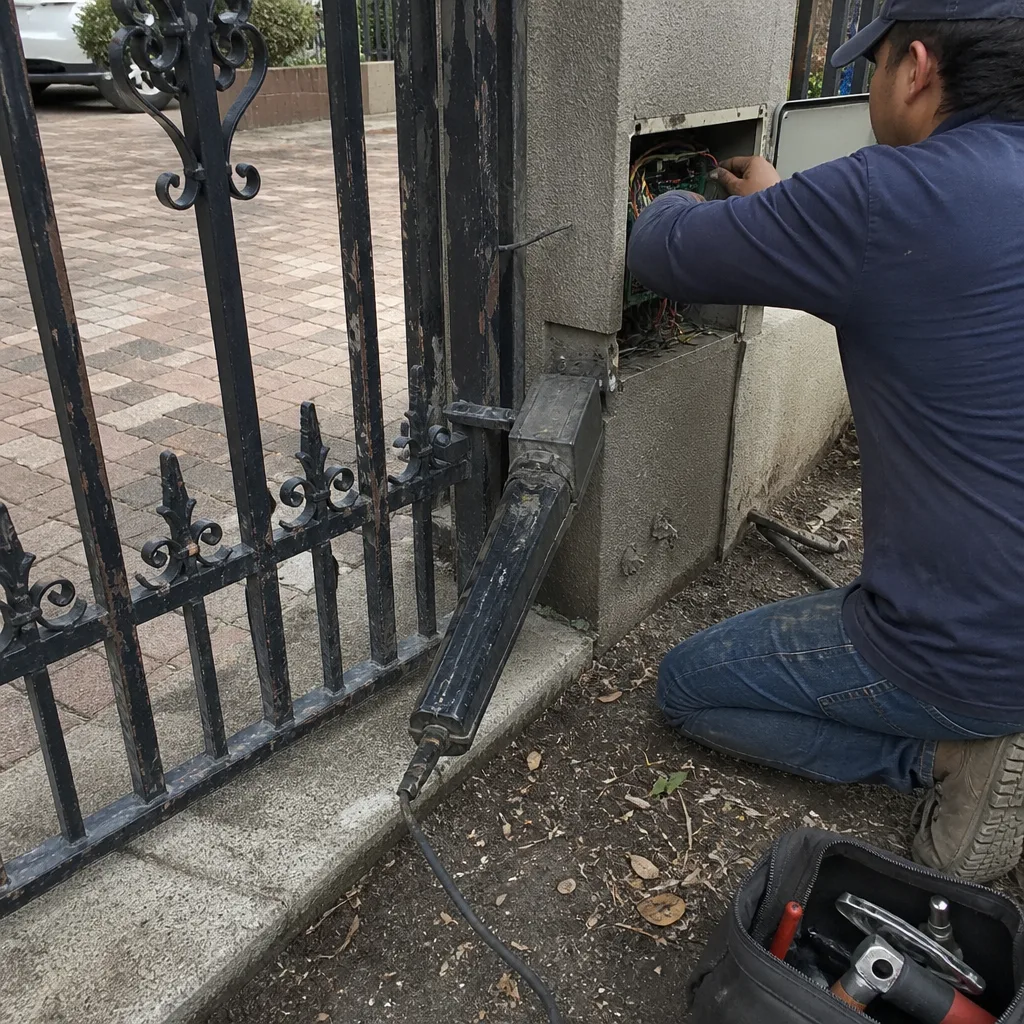 Before
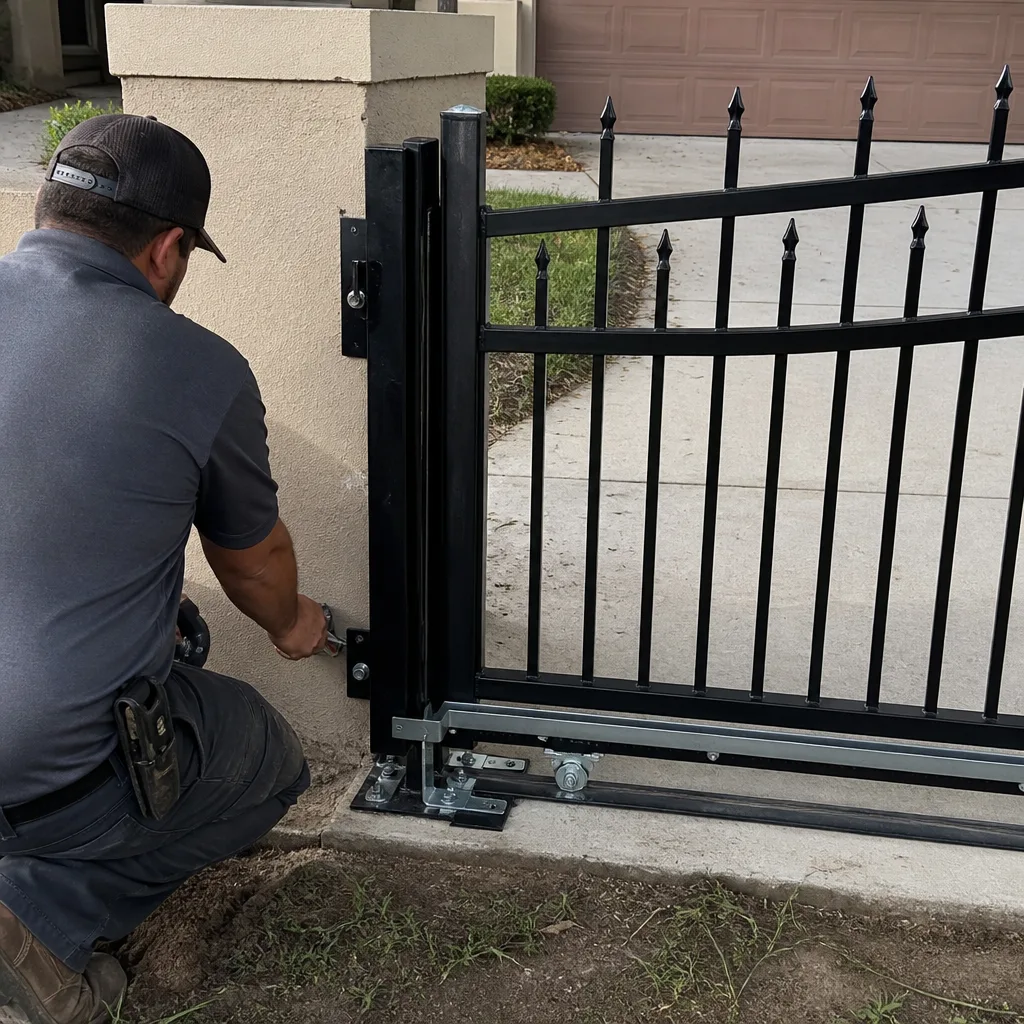 After
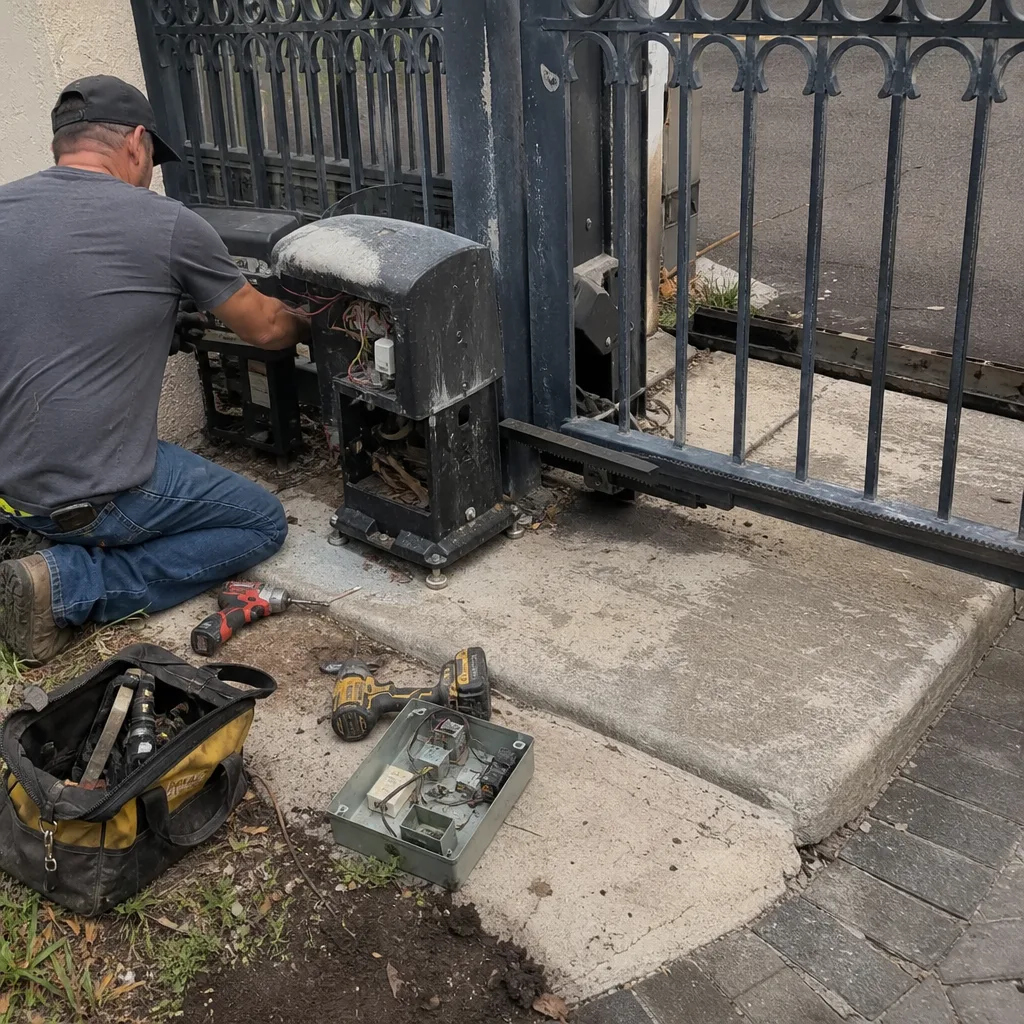 Before
 After
 Before
 After