Last updated October 31, 2026
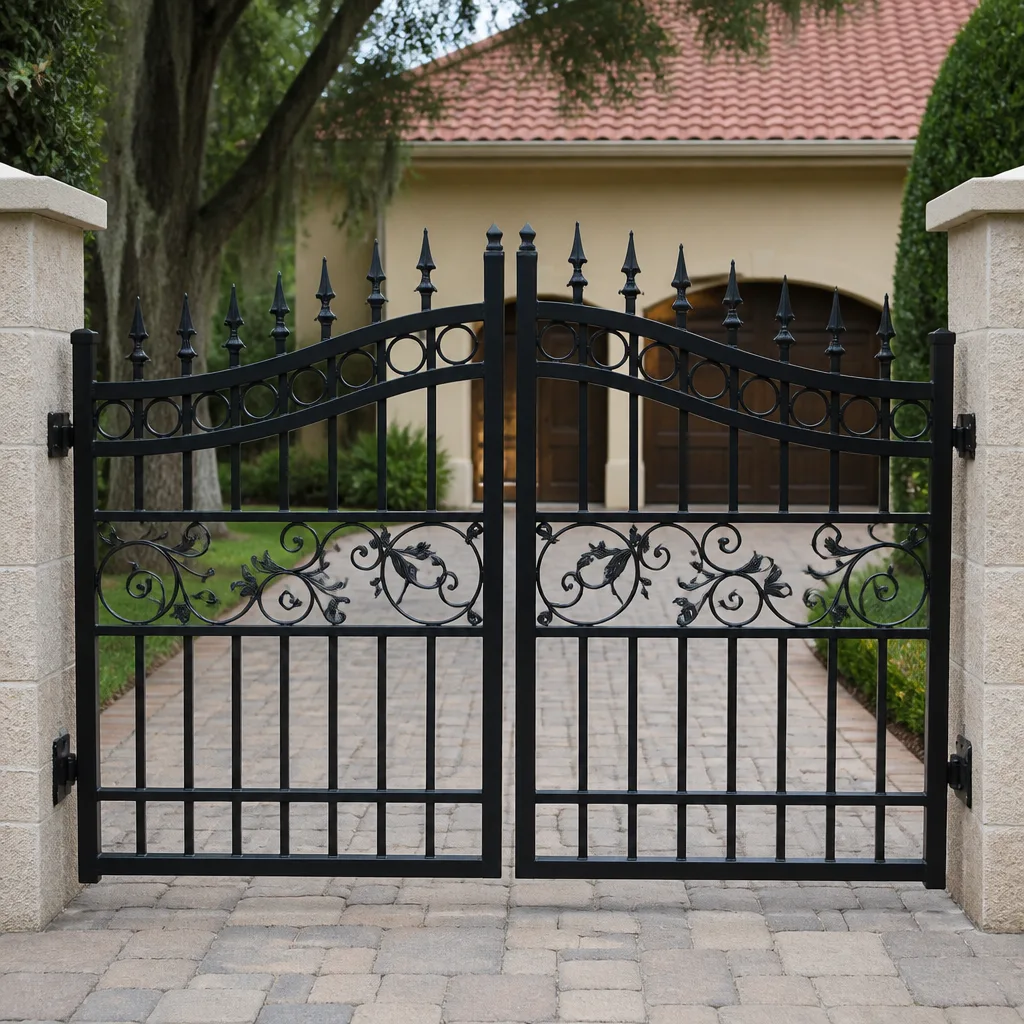 Wrought iron
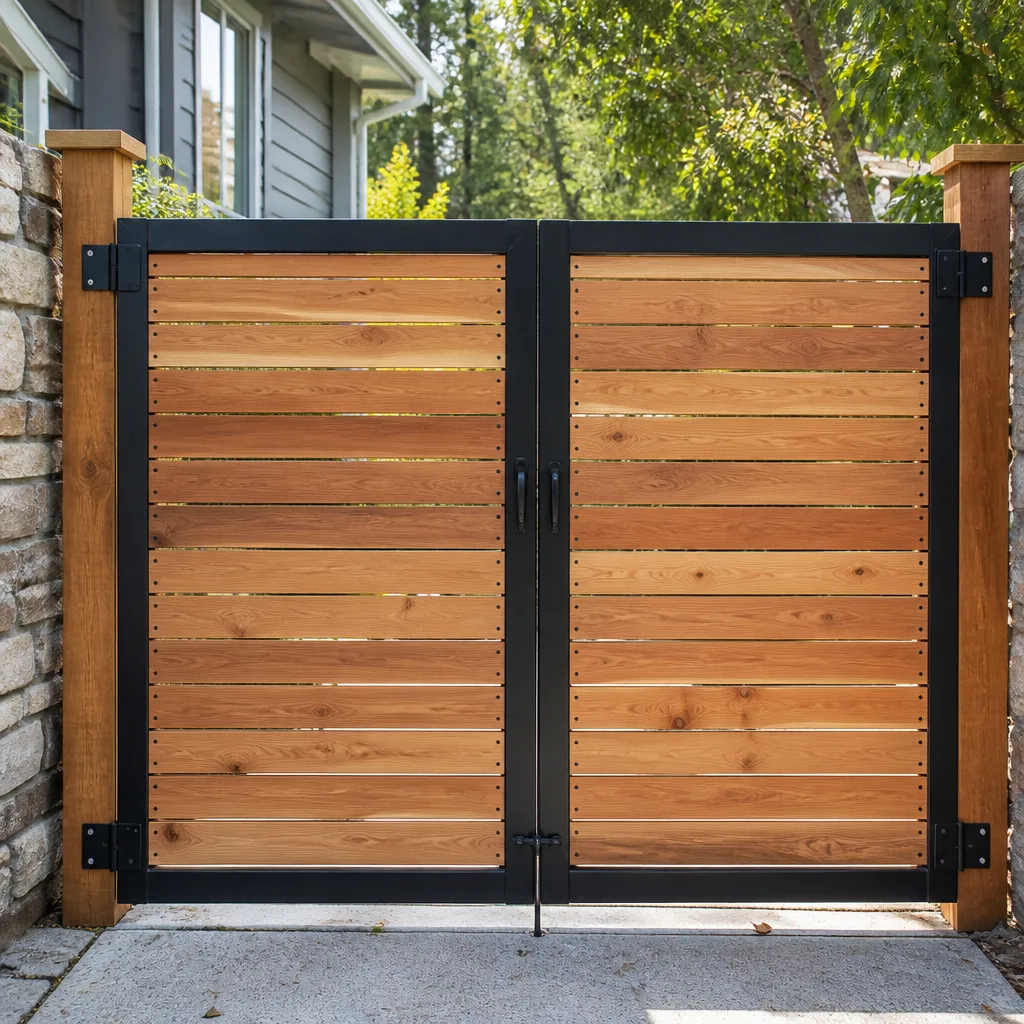 Wood & steel frame
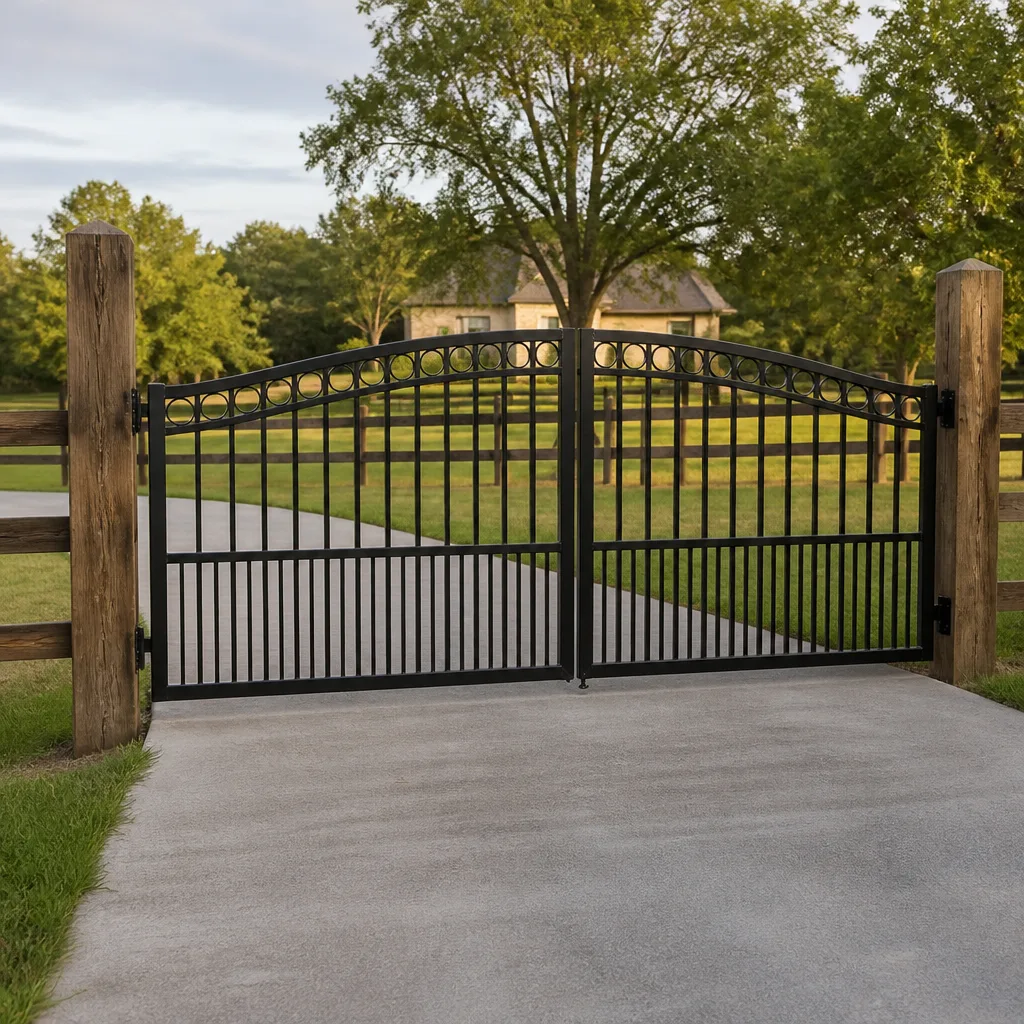 Farm & ranch
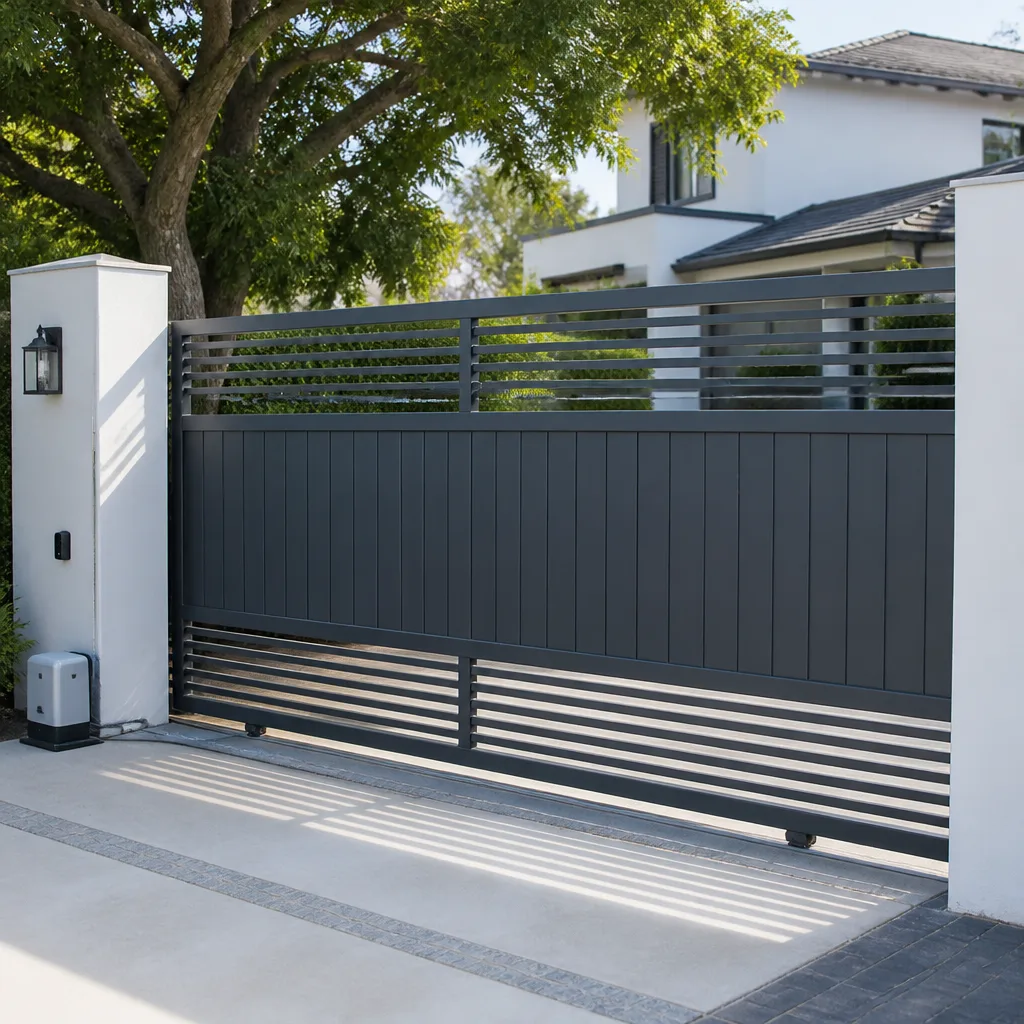 Sliding driveway gates
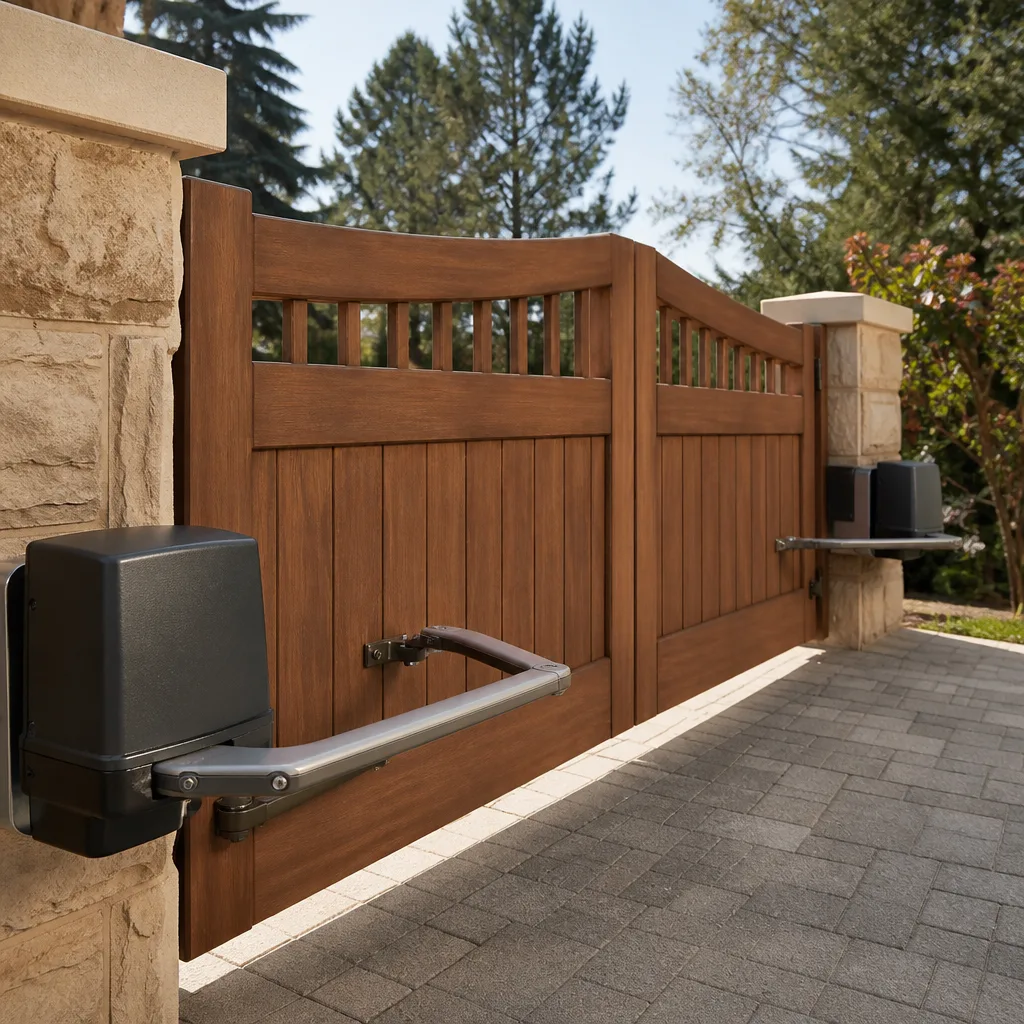 LiftMaster operators
Free on-site gate assessment - hinges, posts, and your LiftMaster or Nice gate operator checked before anything is quoted
The assessment is free and the quote is the invoice.
Get your free estimateThe Complete Guide to Gate Repair in Orlando
Orlando’s combination of 90% summer humidity, daily afternoon thunderstorms, and year-round UV exposure puts gate systems on a failure timeline roughly 30% faster than national averages. Most generic repair guides don’t account for that. This guide maps every major gate failure mode to Orlando’s specific conditions, from humidity-driven corrosion on hinges and wiring harnesses to the storm-season electrical issues that blur the line between mechanical and control board failure. You’ll learn how to diagnose what’s actually wrong, what typically fails on the brands most common in Orlando subdivisions, and when a repair is a legitimate fix versus a band-aid that delays an inevitable replacement.
Quick Answer
Gate repair in Orlando typically costs $150 to $600 for most mechanical and electrical fixes, with control board replacement running higher. The most common failures in this market are humidity-corroded hinges and rollers, storm-surge-damaged control boards, and heat-warped slide tracks. Arroyo Gate Repair services nine major gate operator brands across residential and commercial lines, including LiftMaster, FAAC, BFT, Linear, Viking, Ghost Controls, DoorKing, Elite, and Mighty Mule. Call (877) 851-6955 for a free estimate from a gate-only specialist.
Styles & brands we work with
Table of Contents
- Why Orlando’s Climate Destroys Gates Faster Than National Averages
- Mechanical Failure vs. Electrical Failure: Why Storm Season Blurs the Line
- The Gate Brands Most Common in Orlando and What Fails on Each
- How HOA-Governed Communities Add a Layer of Repair Complexity
- When a Repair Is a Real Fix vs. a Band-Aid Delaying Replacement
- How a Proper Gate Diagnostic Works, Step by Step
- Commercial Gate Systems: What Property Managers in Orlando Need to Know
- What You Can Safely Check Yourself (and What You Shouldn’t Touch)
Why Orlando’s Climate Destroys Gates Faster Than National Averages
Most gate maintenance schedules are written for dry climates. They don’t hold up in Orlando. The average relative humidity in Orlando hovers around 74% year-round and climbs past 90% during summer mornings. That moisture penetrates every exposed metal surface on a gate system, accelerating rust and galvanic corrosion on hinges, rollers, bolts, and wiring harnesses. A powder-coated steel gate that lasts 15 years in Arizona might show significant rust at the weld points within six years in Orlando, especially in neighborhoods near lakes or conservation areas where ambient moisture stays elevated all day.
What we consistently see in Orlando is corrosion that attacks from the inside out. Hinges look fine externally but grind internally because the bearing surfaces have pitted. Wiring harnesses that run through gate posts accumulate condensation inside the conduit, corroding copper connections until the control board receives intermittent signals. Slide gate rollers develop flat spots from grit and moisture working into the sealed bearings. These failures are faster, quieter, and harder to spot than the kinds of damage covered in generic gate guides.
UV exposure adds a second layer. Commercial-grade gate operator covers and plastic housing components degrade faster under Orlando’s sun than in northern markets. We’ve seen control board enclosures crack and allow water intrusion after just three or four summers. The heat also warps slide gate tracks, especially dark-colored gates facing west in the afternoon sun. A warped track of even a quarter inch will cause a gate to bind, strain the motor, and eventually trip the obstruction sensor repeatedly.
The takeaway: if you’re following a maintenance checklist from a gate manufacturer’s national documentation, cut the inspection intervals by a third for an Orlando property. Or better, work with a contractor who already knows what this climate does to gate hardware and checks for it proactively.
For a deeper look at the specific repair issues we handle across the city, see Gate Repair in Orlando.
Mechanical Failure vs. Electrical Failure: Why Storm Season Blurs the Line
Mechanical failure means something physical broke, bent, wore out, or seized. A hinge snapped. A roller bearing collapsed. A chain stretched past adjustment. A post shifted out of alignment. Electrical failure means the motor, control board, sensor, or wiring stopped functioning correctly. In most parts of the country, these are distinct categories with distinct symptoms. In Orlando, the line blurs from June through November.
Here’s why: afternoon lightning storms and hurricane-season power surges damage control board components in ways that mimic mechanical problems. A gate that binds halfway through its cycle might read as a mechanical obstruction when the actual cause is a relay on the control board that’s no longer supplying consistent power to the motor. A gate that reverses for no reason might look like a sensor issue when the real culprit is a capacitor that took a surge hit and now delivers fluctuating voltage. A technician who doesn’t understand both sides of the system will replace the wrong part, and the problem will return within weeks.
This is where a dedicated Electric Gate Repair in Orlando specialist matters. Electric and automated gate repair is a core specialty at Arroyo Gate Repair, not an add-on. We work on motors, control boards, sensors, and access hardware that purely mechanical shops often turn away. Diagnosing by system logic, not trial-and-error, is what separates a fast, accurate repair from a long sequence of unnecessary parts replacements.
The sequence to identify which category your gate problem falls into:
- Check what happens when you trigger the gate. Does the operator hum but nothing moves? Does the gate move halfway and stop? Does nothing happen at all?
- Test the manual release. If the gate moves freely by hand when disengaged, the mechanical path is likely sound and the problem is in the operator or electrical system.
- Look at the last weather event. If the problem appeared after a thunderstorm or power outage, prioritize the control board and power supply before touching mechanical components.
- Listen. Grinding or metal-on-metal sound is mechanical. Clicking without movement is electrical. Silence is electrical or power supply.
Brand-specific expertise means technicians diagnose by system logic, not trial-and-error. That’s faster diagnosis and fewer unnecessary parts replacements, which matters when you’re managing a property that can’t stay open for days.
The Gate Brands Most Common in Orlando and What Fails on Each
Orlando’s gate landscape is split between homeowner-installed systems in subdivisions like Avalon Park, Lake Nona, and MetroWest, and professionally installed systems in gated communities and commercial properties. The brand on the gate tells you a lot about what’s likely to fail, and what the repair will involve.
In residential Orlando, Mighty Mule and Ghost Controls dominate the DIY-install segment. These systems are affordable and accessible, which means many homeowners install them without professional guidance. The most common failure mode we see on Ghost Controls in Orlando is control board damage from power surges, followed by actuator arm wear from gates that were slightly misaligned at installation. Mighty Mule systems in this market tend to show limit switch failure and battery backup degradation, especially where the battery sits exposed to heat in a metal control box facing afternoon sun.
DoorKing and Elite appear most often in HOA entry gates and mid-size commercial properties. DoorKing operators are robust but their control boards are sensitive to the same surge issues that plague every Orlando property. We regularly replace DoorKing boards that failed after a lightning strike within a quarter mile. Elite slide gate operators are common on commercial lots, and in Orlando they show accelerated roller wear from grit and sand that gets into the track, especially on properties near construction or unpaved areas.
What we tell homeowners is this: we work on your brand, whatever it is. Our nine-brand coverage spans entry-level residential openers like Mighty Mule and Ghost Controls up through professional commercial systems from FAAC, BFT, and DoorKing. That’s the difference between a gate specialist and a generalist who’s only comfortable with one or two brands.
How HOA-Governed Communities Add a Layer of Repair Complexity
A lot of Orlando’s gated neighborhoods are governed by homeowners associations with their own architectural review processes, approved contractor lists, and aesthetic standards. If your gate serves a community entrance or sits on a corner lot visible from the street, a simple repair can require HOA approval before work starts. That’s a layer of coordination that doesn’t exist in unincorporated Orange County or in neighborhoods without deed restrictions.
The complexity shows up in three specific ways:
- Approved contractor requirements. Some HOAs maintain a short list of pre-approved gate contractors. If your preferred repair company isn’t on it, you may need to submit credentials, insurance certificates, and scope documentation before the board will approve the work.
- Aesthetic standards. Gate repair that involves visible hardware replacement, like a new operator arm, gate panel, or post cap, may need to match the original design or the HOA’s published style guide. A replacement that would be perfectly functional might be rejected because the finish doesn’t match.
- Permit routing. For larger repairs or full gate replacement, the HOA often requires permits pulled through the county or city, and they want evidence that the work complies with local code and wind-load requirements. Orlando’s location in a high-wind zone means gates must meet Miami-Dade or equivalent standards for structural anchoring.
If you’re an HOA board member or property manager, the fastest path is to hire a gate company that’s worked with HOAs before and can provide the documentation upfront. We’ve handled HOA gate repair across the Orlando metro and know what boards typically ask for. That beats a back-and-forth that extends the repair timeline by weeks.
When a Repair Is a Real Fix vs. a Band-Aid Delaying Replacement
Every gate eventually reaches the point where continued repairs cost more than replacement, but that threshold varies based on what’s wrong and how old the system is. See our Gate Repair Cost Breakdown: The Orlando Homeowner’s Reference for 2026 for typical pricing by repair type. The goal is to avoid throwing money at a gate that’s structurally compromised or electrically obsolete.
Here’s the honest framework we use with Orlando customers:
- Repair is the right call when the frame, posts, and general structure are sound, and the failing component is a wearable part: hinge, roller, sensor, control board, capacitor, or limit switch. These are designed to be replaced. A $400 control board on an otherwise solid DoorKing operator is a good repair.
- Replacement makes more sense when the gate structure itself is failing: rust through the frame, hinges pulling out of deteriorating posts, or a slide gate that’s tracked on a warped, pitted rail that requires more than localized fixes. If you’re past roughly 60-70% of the replacement cost in accumulated repairs over two years, you’re past the threshold.
- The gray zone is older systems where parts are discontinued or only available used. Mighty Mule and some older Linear models fall into this category. If every repair requires hunting down a used board on eBay, you’re one component away from another outage. That’s when a new installation starts looking like the smarter money.
When replacement is the answer, a full-cycle gate company like Arroyo handles it without referrals or hand-offs. We do repair, electric and automated system repair, and new gate installation under one roof. If you need a new gate, start at Gate Installation in Orlando to understand the scope.
How a Proper Gate Diagnostic Works, Step by Step
When we arrive at an Orlando property, our diagnostic process follows a consistent sequence. This is what separates a technician who understands the whole system from someone who guesses and swaps parts.
- Listen to the symptom history. When did it start? Was there a storm? Does it fail consistently or intermittently? Intermittent failures are almost always electrical, not mechanical.
- Disengage and test the gate manually. We release the operator and run the gate by hand through its full range of motion. This isolates mechanical problems from electrical ones in under two minutes.
- Inspect the power supply and connections. Check for corrosion at the terminals, proper voltage at the board, and any sign of surge damage like scorch marks or swollen capacitors.
- Test the control board outputs. At the board, we test the output to the motor, the safety sensor circuit, and any accessory inputs. On multi-brand systems, this requires knowing the board’s expected voltages and logic, not just continuity.
- Check the mechanical wear points. Hinges, rollers, chain tension, track alignment, and limit switch positions. In Orlando, we’re specifically looking for internal corrosion and UV damage.
- Confirm the diagnosis with a test cycle. After the fix, we run the gate through multiple full cycles including obstruction tests where safety sensors are present. We verify the auto-close timing and force settings.
We quote the repair cost before any work begins. The price is agreed upfront, so there’s no invoice surprise. That matters because a gate repair customer’s second biggest fear, right after the gate being down at all, is that the bill will exceed what they were told.
Commercial Gate Systems: What Property Managers in Orlando Need to Know
Commercial gate systems in Orlando serve apartment complexes, storage facilities, office parks, and industrial properties across the metro from Sand Lake Road’s tourism corridor to the distribution centers near the Turnpike in south Orlando. These are higher-cycle systems: a commercial slide gate might run 300 to 500 cycles per day versus 10 to 30 for a residential driveway gate. That cycle count changes the math on every component.
Commercial operators from FAAC, BFT, and DoorKing are built for that duty cycle, but the installation, maintenance, and repair work have to match. Common commercial failure points in Orlando include:
- Safety loop failures. Vehicle detection loops cut into the asphalt fail frequently in Orlando because of soil moisture and shifting. When the loop fails, the gate either won’t open for exiting vehicles or won’t hold open safely.
- Operator arm wear on high-cycle gates. Even industrial arms wear out. At 400 cycles per day, a gate arm that would last five years on a residential property might last 18 months commercially.
- Access control integration issues. Keypads, card readers, and telephone entry systems wired into the gate operator fail or fall out of sync. Diagnosing these requires understanding both the gate controller and the access system.
- Surge damage to shared electrical infrastructure. Commercial properties often have multiple systems on one panel. A surge that hits the gate also hits the lighting and security systems, complicating diagnosis.
Property managers in Orlando should expect a faster replacement cycle on wear parts than their counterparts in drier markets. A maintenance contract that includes quarterly inspections catches loop failures, arm wear, and corrosion before they become emergency outages. An emergency gate outage at an apartment complex is a security problem and a traffic problem at the same time.
What You Can Safely Check Yourself (and What You Shouldn’t Touch)
Some troubleshooting is safe and useful for a homeowner. Other work involves components that can cause serious injury if handled incorrectly. Our DIY vs Professional Gate Repair: The Orlando Homeowner’s Decision Guide walks through what’s safe to attempt and when to call a pro. Gate operators contain high-tension springs, heavy moving panels, and capacitors that hold a charge even when the unit is unplugged.
What’s safe to check yourself:
- Visual inspection of hinges and rollers. Look for rust, wear, or obvious misalignment. Don’t lubricate anything unless you know the manufacturer’s recommendation for that specific part.
- The track path. Check for debris, gravel, or vegetation that’s accumulated in the gate’s travel path. In Orlando, vine growth from aggressive plants like coral vine can choke a slide track in a single season.
- The sensor lenses. Photo-eye sensors get covered in pollen, dust, and insect debris in Orlando. A soft cloth can clear a sensor that’s causing phantom reversals.
- The power source. Confirm the operator is plugged in or that the breaker hasn’t tripped. After Orlando thunderstorms, a tripped breaker is a common and safe thing to check and reset.
What you should leave to a professional:
- Any work involving the control board or internal wiring. Capacitors retain dangerous voltage. A wrong connection can destroy the board or start a fire.
- High-tension spring or hinge replacement. Gate springs and heavy hinges are under severe load. When they let go, they can cause serious injury.
- Operator arm or motor replacement on a gate that’s under tension. The weight of a gate panel is concentrated at specific points. Removing the wrong fastener can release that weight suddenly.
If you’re not sure which category your problem falls into, call a gate specialist. A quick phone diagnosis from Arroyo Gate Repair home can tell you whether it’s a safe DIY check or a service call.
Common Mistakes to Avoid
- Calling a general handyman for an electric gate problem. Gate automation is a niche skill. A handyman who “fixes gates sometimes” will often misdiagnose an electrical issue as mechanical, replace parts unnecessarily, and leave you with the same failure weeks later.
- Ignoring corrosion until the gate stops moving. By the time Orlando humidity has seized a hinge or rotted a wiring connection, the damage is inside the component. Early inspection catches corrosion before it becomes structural.
- Replacing a control board without addressing the surge cause. If a surge killed your board and you don’t add surge protection, the new board is a ticking clock. Orlando’s storm season will take it out again.
- Buying the cheapest replacement part available online. Generic components sold for gate systems often don’t meet the voltage or duty-cycle specs of the original. A cheap capacitor or relay can shorten the life of a good control board.
- Forgetting the manual release during a power outage. Every automated gate has a manual release mechanism. Homeowners who don’t know where it is get locked in or out when Orlando’s power flickers out during a storm. Find it now, before you need it.
- Waiting until an HOA deadline to start the repair process. HOA approvals take time. If your community has a compliance letter out for a damaged gate, starting the process late means fines or failed inspections that could have been avoided.
- Skipping lubrication, then over-lubricating. Dry rollers and hinges wear faster, but the fix isn’t a spray can of WD-40. Wrong lubricants attract grit in Orlando’s sandy soil and accelerate wear. Use the manufacturer-specified product, or ask us what belongs on your specific hardware.
See the difference
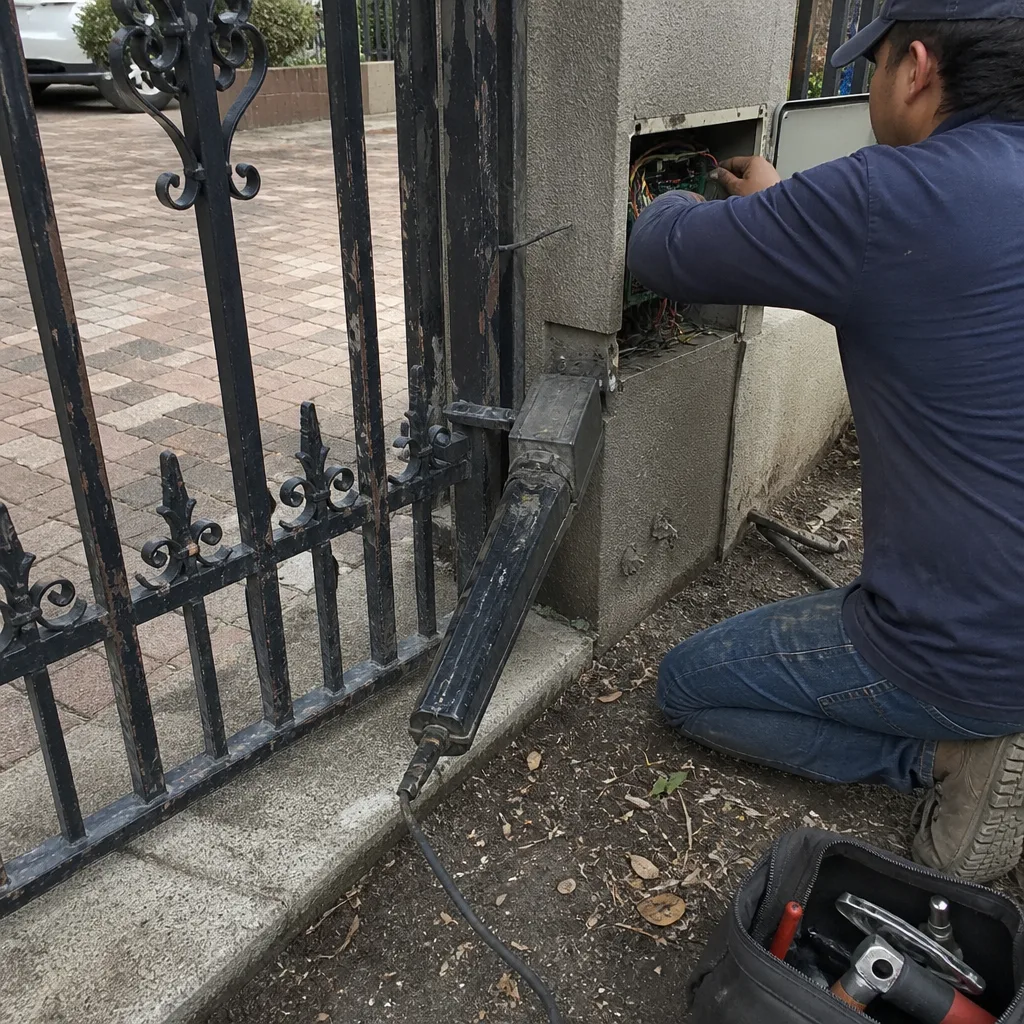 Before
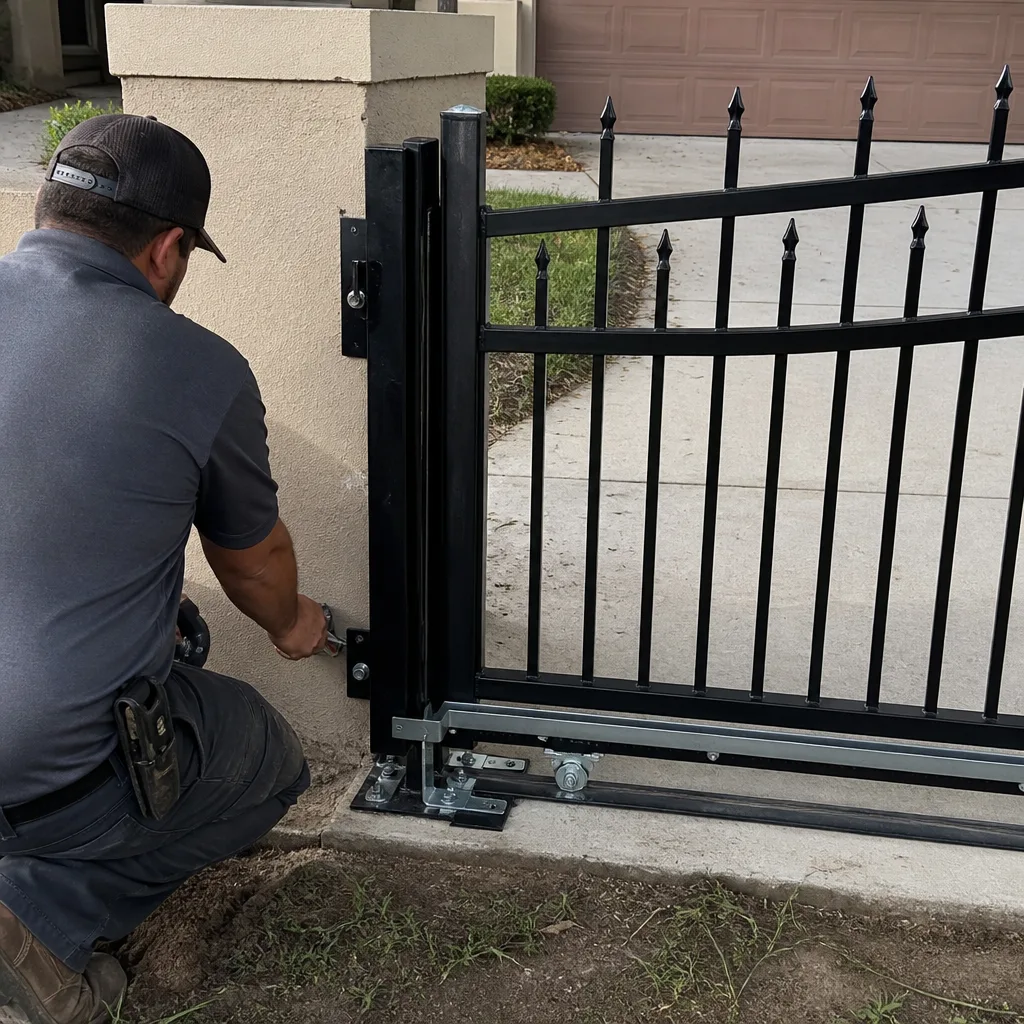 After
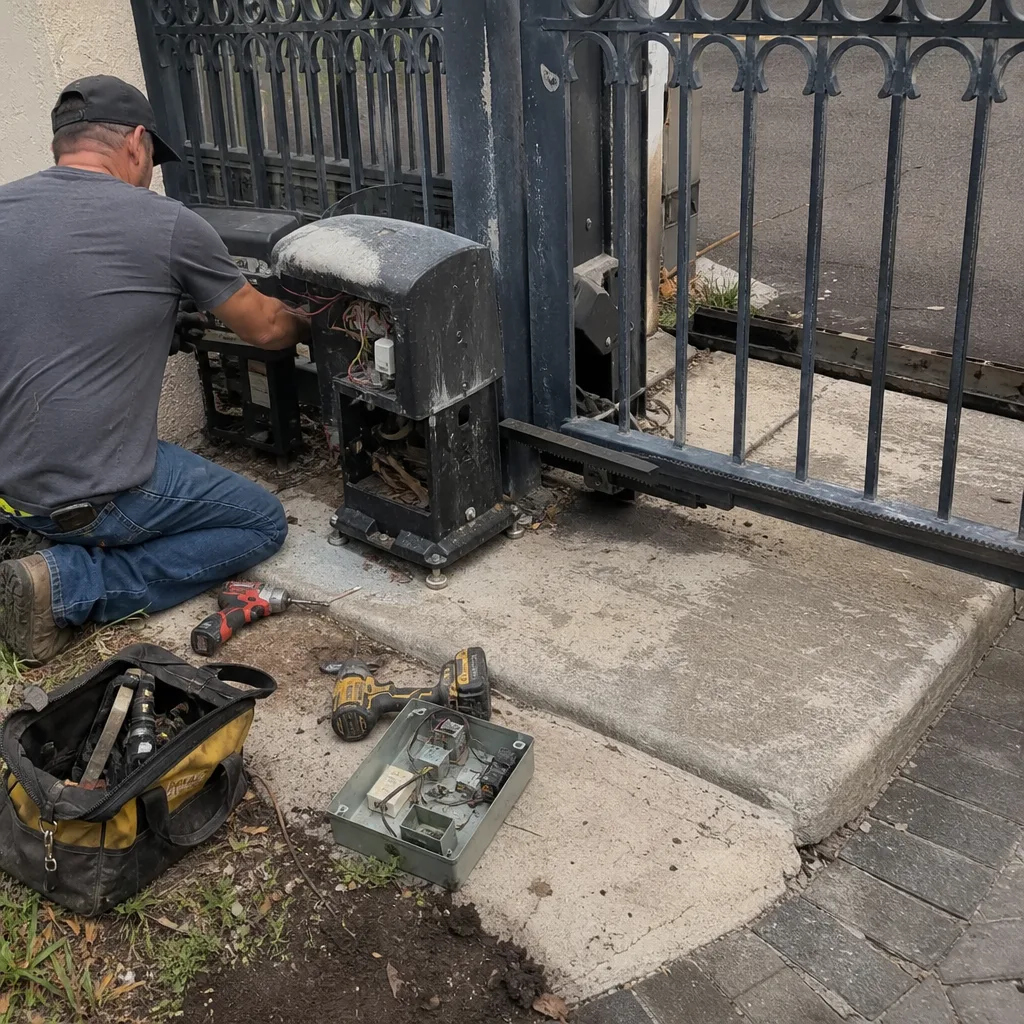 Before
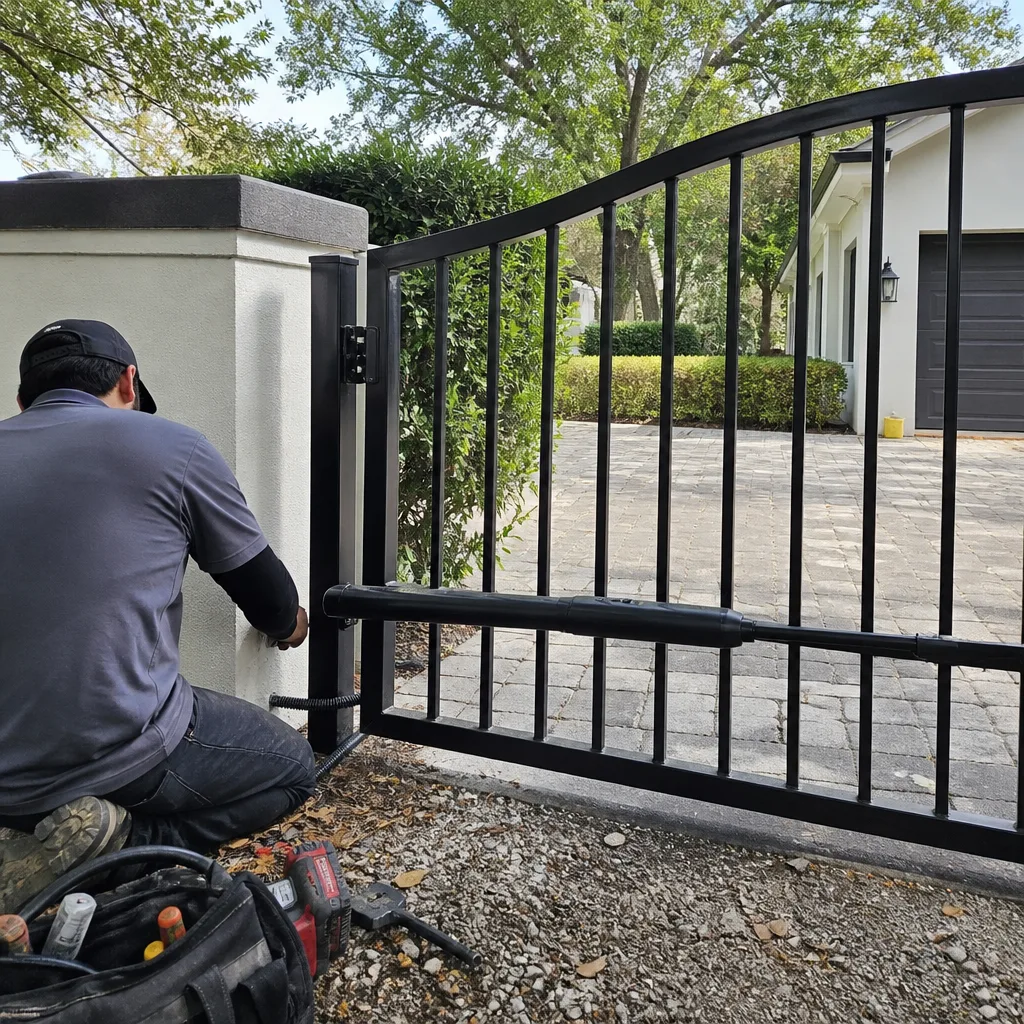 After
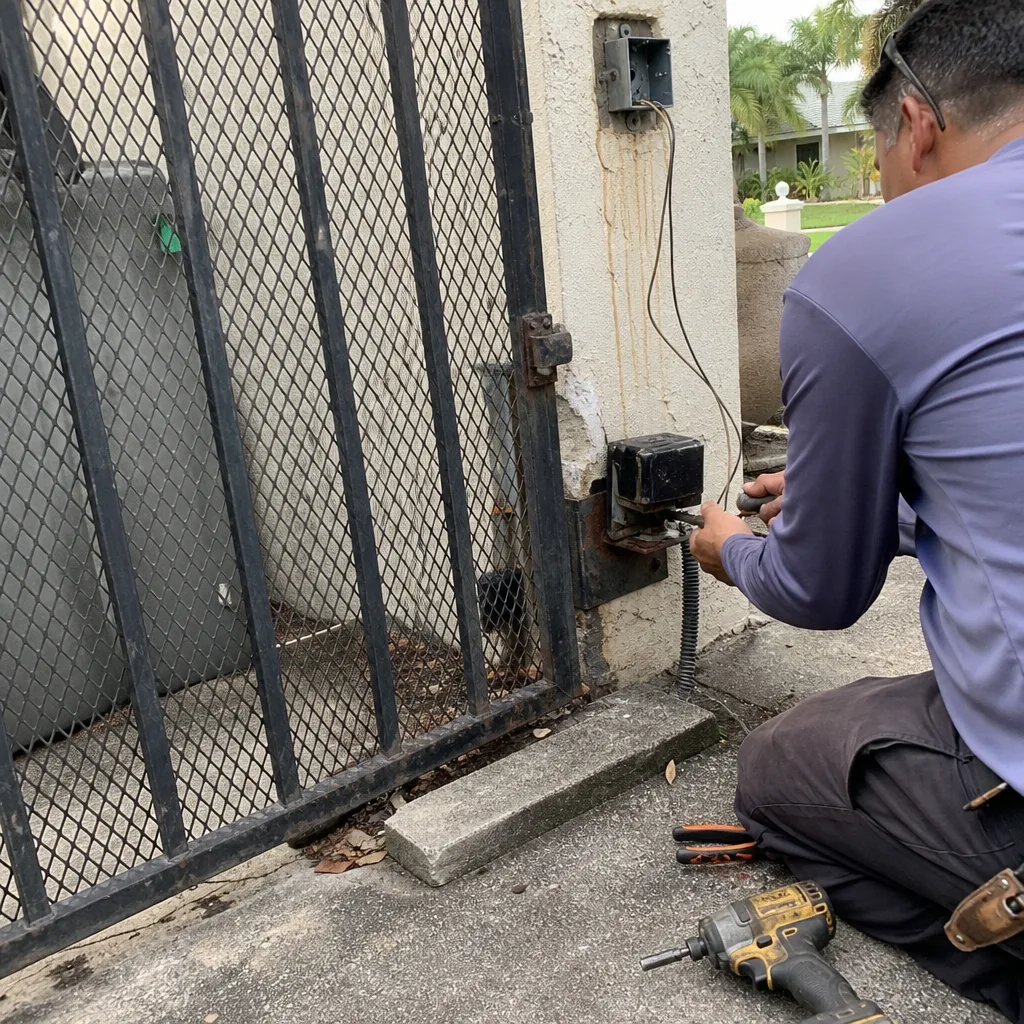 Before
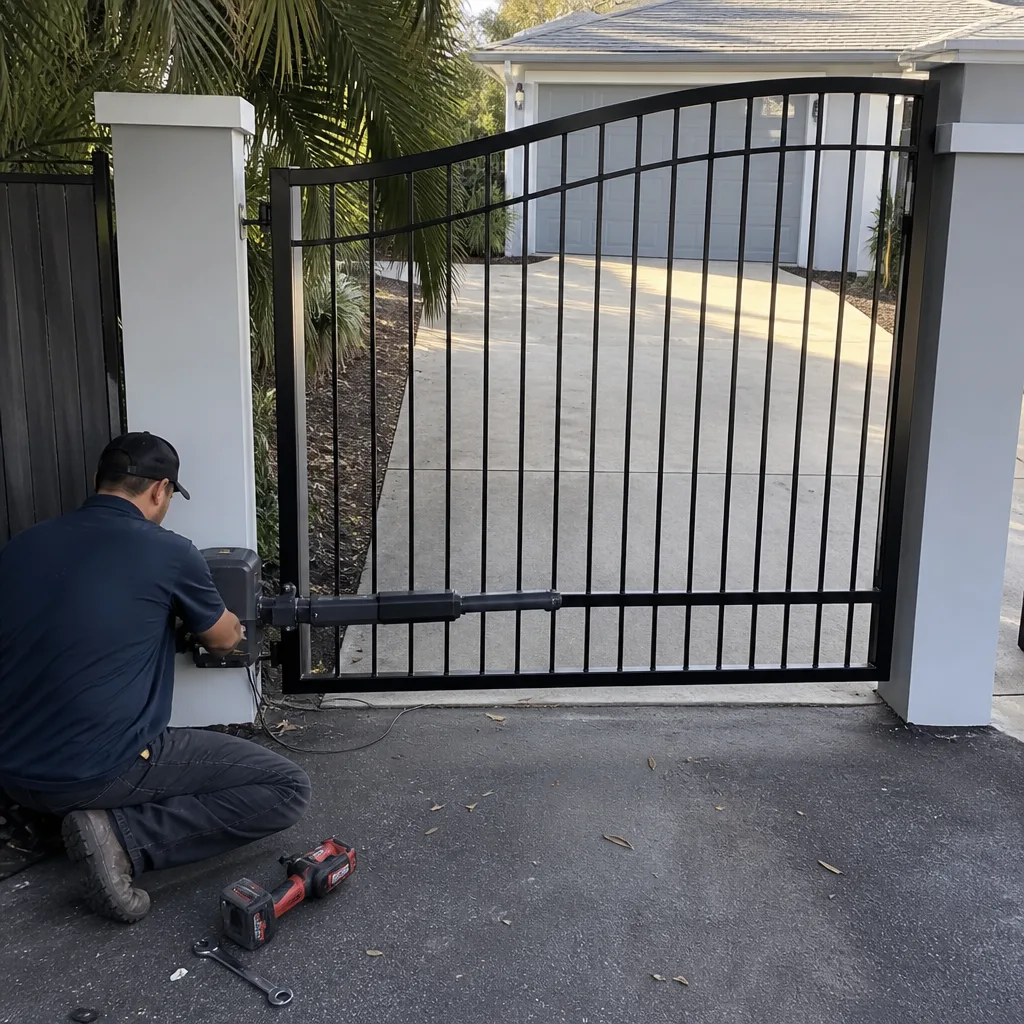 After
When to Call a Professional
Call a gate professional when the gate moves unevenly, makes grinding noises, fails to respond to the opener or keypad, reverses without obstruction, or trips its own breaker. Call immediately if the gate is stuck in the open position and serves a security function, or stuck closed and blocking vehicle access. Electrical issues after a storm, visible rust at weld points or hinges, and any HOA compliance issue involving the gate are also professional territory. Arroyo Gate Repair offers free estimates in Orlando. Call (877) 851-6955 and we’ll schedule a diagnostic at your property.
Frequently Asked Questions
Most gate repairs in Orlando run between $150 and $600 depending on the part and labor involved. Hinge and roller replacement typically costs $150 to $350, control board replacement runs $400 to $900, and motor replacement starts around $500 and goes up for commercial operators. The exact price depends on your gate’s brand, weight, and access. Call (877) 851-6955 for an exact quote, the estimate is free and the price is agreed before any work starts.
For most residential gate repairs, yes. We’re a gate-only operation, which means our technicians are dispatched specifically for gate problems, not routed through a general service queue. Emergency repairs where a gate is stuck open or blocking access are prioritized. Call (877) 851-6955 to check current availability in your part of Orlando.
Yes. We service Mighty Mule and Ghost Controls systems regularly, along with LiftMaster, FAAC, BFT, Linear, Viking, DoorKing, and Elite. That nine-brand coverage includes the DIY-installed residential brands and professional commercial operators. If you have a different brand, call us anyway; if we can’t service it correctly, we’ll tell you honestly.
The most common cause is a power surge that damaged the control board or tripped a safety circuit. Orlando’s lightning density is among the highest in the country, and a nearby strike can induce voltage on the gate’s power and low-voltage wiring without a direct hit. We recommend surge protection on any automated gate in this market. If your gate fails after storms, call (877) 851-6955 for a diagnostic, it’s likely the board, not the mechanical components.
With proper maintenance, a quality gate operator in Orlando lasts 8 to 12 years, and a well-built gate structure lasts 15 to 25 years depending on material and sun exposure. The climate accelerates corrosion and UV damage, so inspection intervals should be shorter than manufacturer general guidelines. Without maintenance, components like hinges, rollers, and control boards can fail in as little as 4 to 6 years in this market.
Yes. We work with HOA boards, property managers, and business owners across the Orlando metro. We’re familiar with approved contractor processes, aesthetic standards, and the documentation HOAs require. For commercial properties, we handle high-cycle operators, access control integration, and safety loop systems on gates from FAAC, BFT, DoorKing, and Elite.
The Bottom Line
Gate repair in Orlando isn’t the same as gate repair anywhere else. Humidity corrodes components from the inside, storm surges destroy control boards, and the sun warps tracks and covers. Fixing gates correctly here means understanding both the mechanical and electrical sides of the system, knowing the common failure points on the brands installed across Orlando’s neighborhoods, and working within the HOA and commercial constraints that shape the local market. A gate-only specialist with nine-brand fluency and full-cycle capability from repair through installation solves the problem faster and with fewer repeat calls. For more guides & resources on Orlando gate maintenance and repair, explore our blog. When your gate stops working, call (877) 851-6955 for a free estimate, diagnosed right the first time.
Written by the team at Arroyo Gate Repair, serving Orlando since 2013.