Last updated October 31, 2026
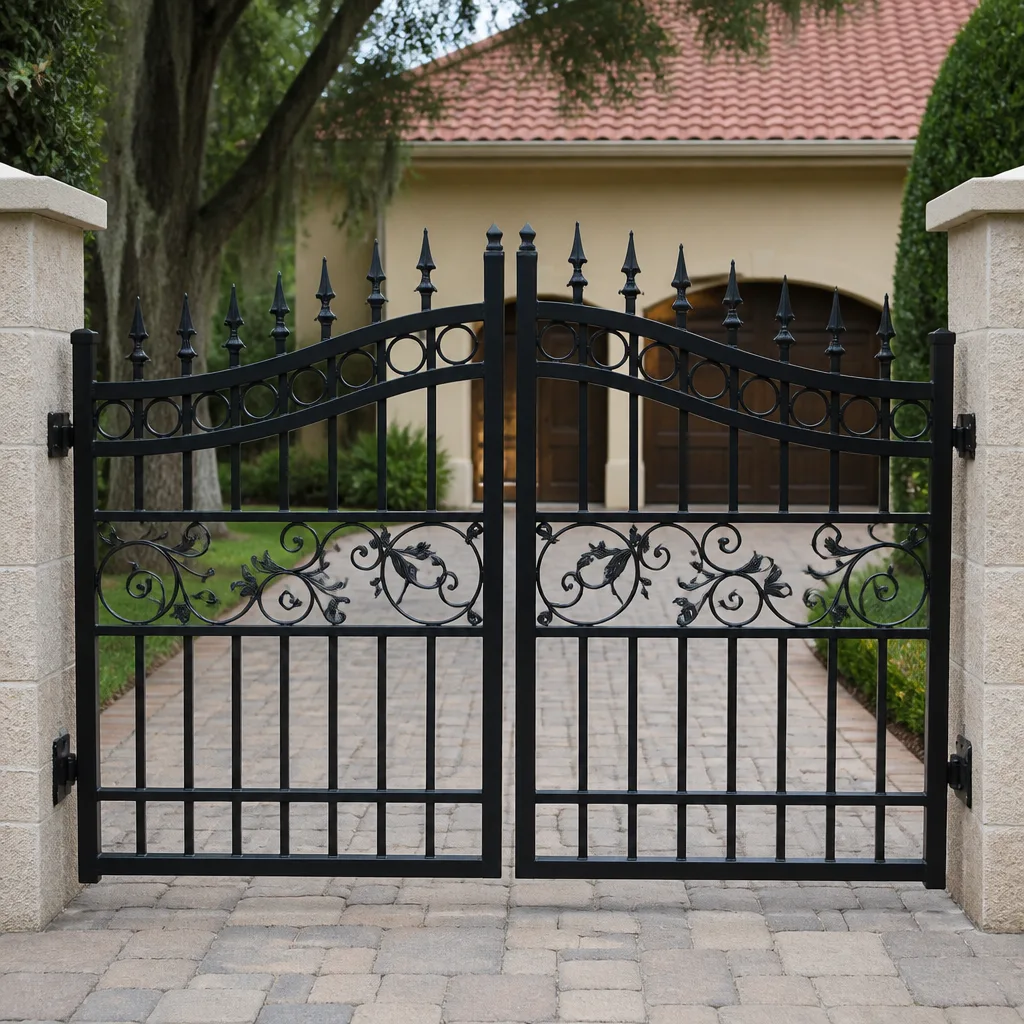 Wrought iron
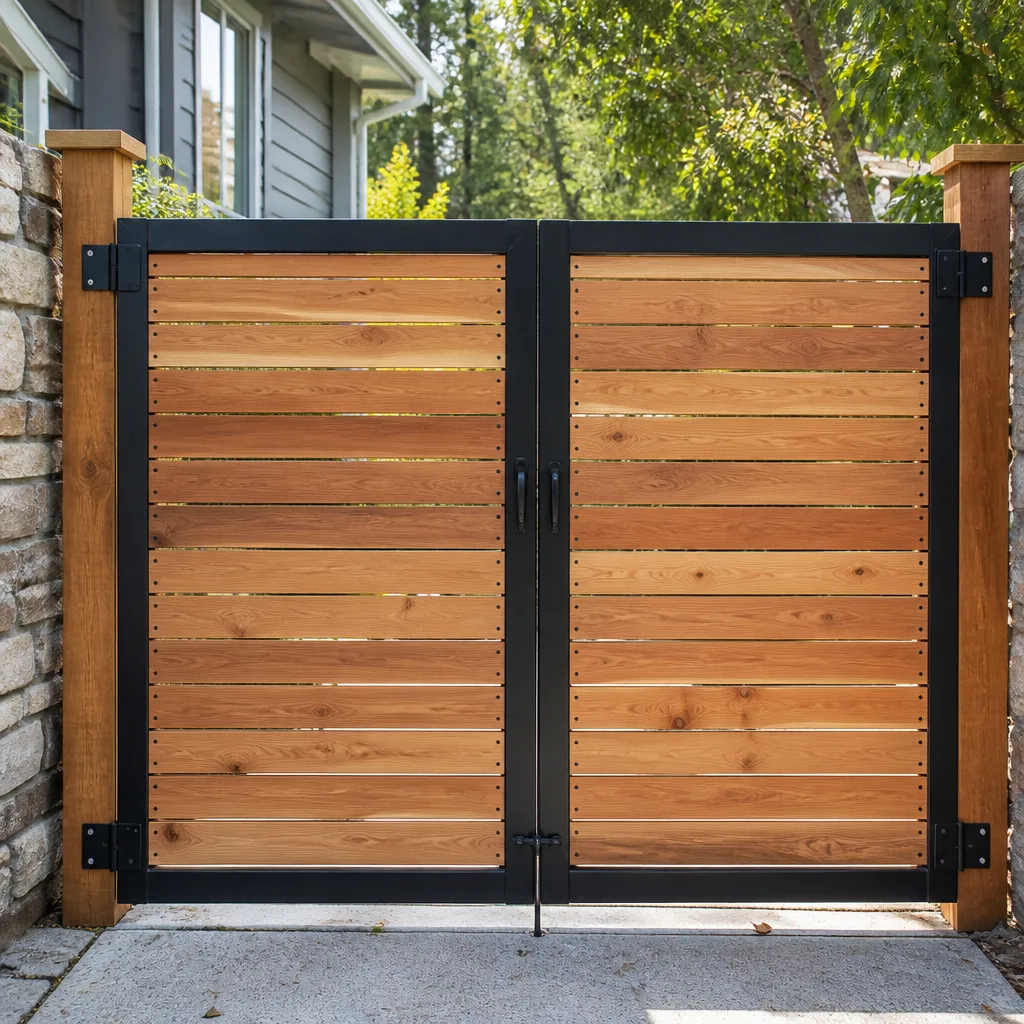 Wood & steel frame
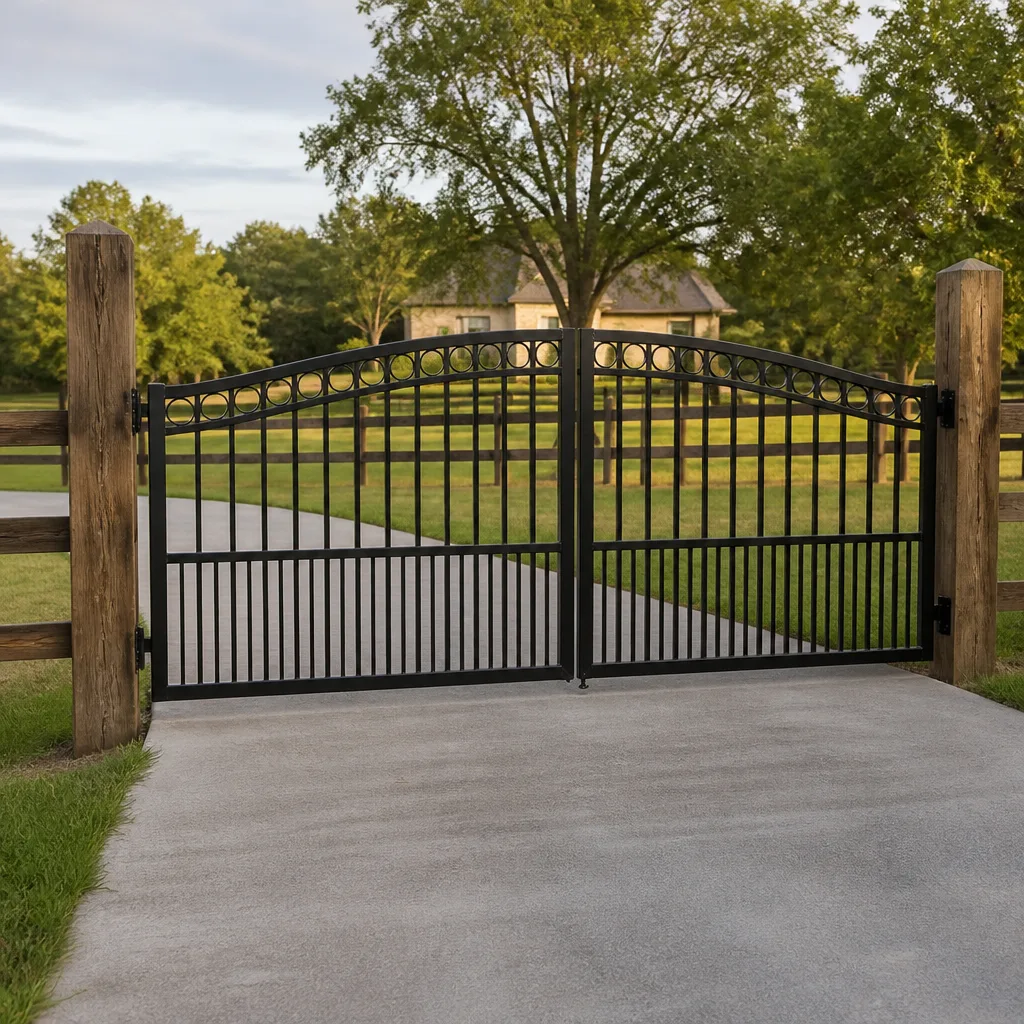 Farm & ranch
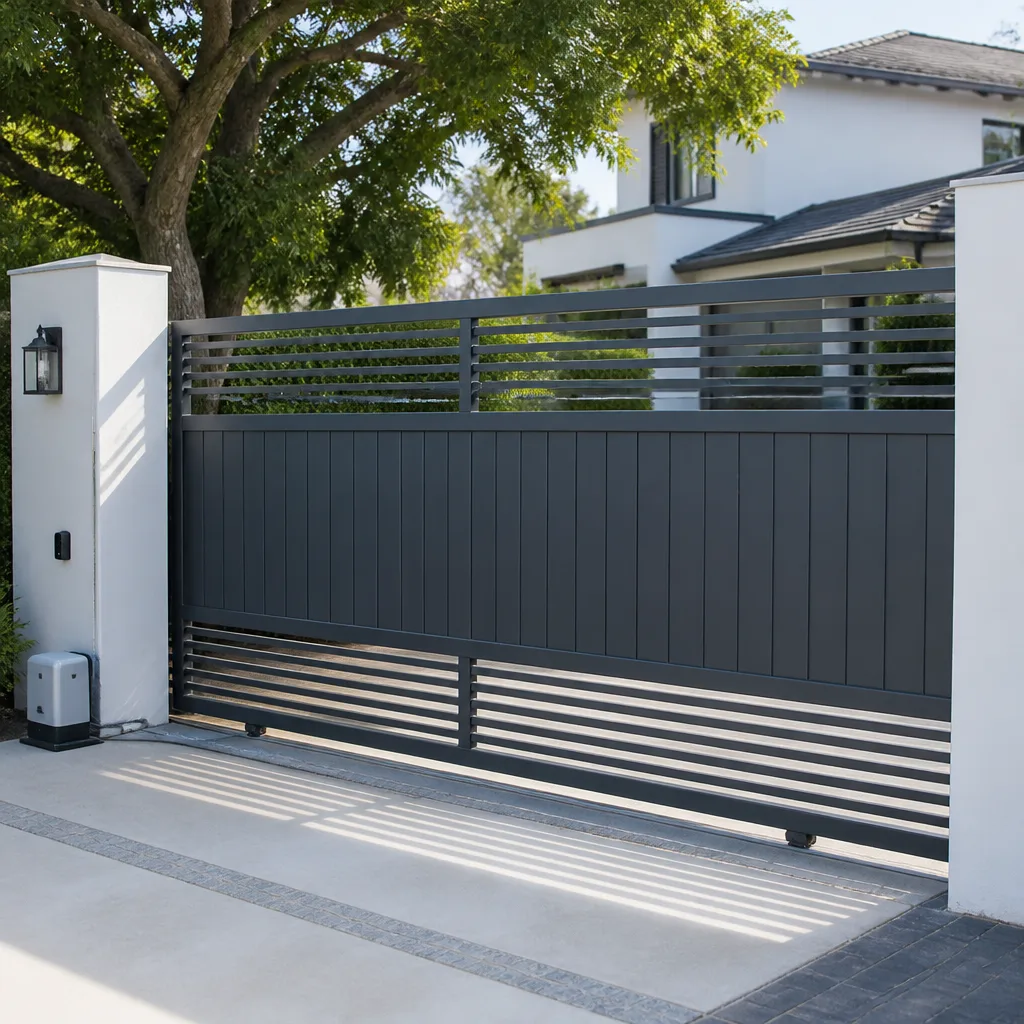 Sliding driveway gates
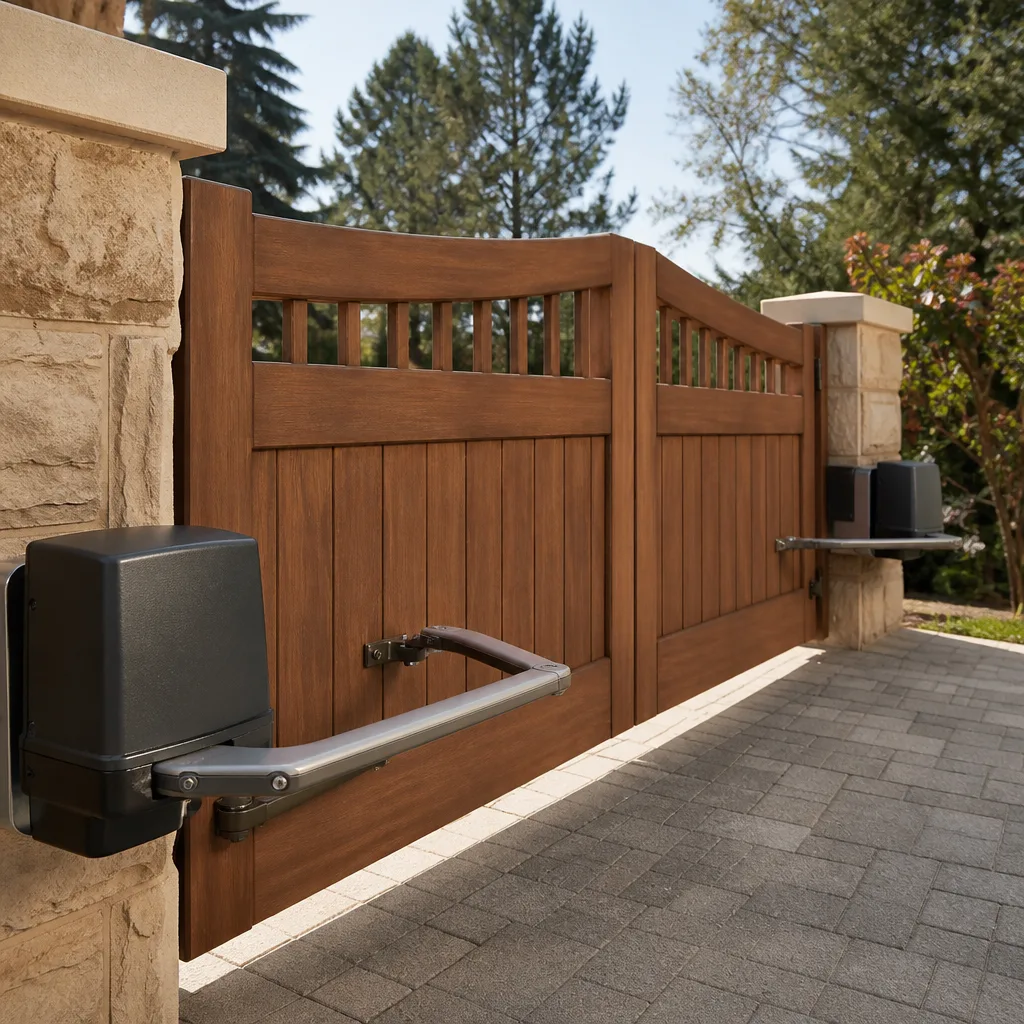 LiftMaster operators
Free on-site gate assessment - hinges, posts, and your LiftMaster or Nice gate operator checked before anything is quoted
The assessment is free and the quote is the invoice.
Get your free estimateDIY vs Professional Gate Repair: The Orlando Homeowner’s Decision Guide
Here’s a fact most gate repair guides won’t tell you: roughly half of the service calls we get in Orlando start as DIY attempts that went sideways. Not because the homeowner lacked skill, but because nobody gave them a straight answer about where the line actually is between safe and unsafe. A gate is one of the few things on your property that combines heavy moving steel, live electricity, and a legal safety standard written in response to documented injuries and deaths. This guide draws that line clearly for Orlando homeowners, so you know what you can confidently handle on a Saturday afternoon and what genuinely requires a technician who does this every day.
Styles & brands we work with
Quick Answer
Most mechanical gate repairs – loose hinges, sagging gates, stuck rollers, dead remote batteries – are genuinely DIY-able for a comfortable homeowner. But any repair involving the operator motor, control board, safety sensors, or entrapment protection calibration on an automated gate should be handled by a licensed gate technician, both because of the electrical risk and because UL 325 compliance carries legal liability that lands on whoever touched it last. In Orlando, where humidity accelerates corrosion and afternoon thunderstorms knock out control boards regularly, the practical split is: fix the steel yourself, leave the electronics to a specialist.
Table of Contents
- The Three-Tier System: What’s Actually DIY, What’s Borderline, What’s Not
- UL 325 and Why Entrapment Protection Is Never DIY
- The Parts Sourcing Reality in Orlando
- What a Failed DIY Repair Does to Your Warranty and Insurance
- The $150 Diagnostic That Saves a $600 Misdiagnosed Repair
- How Orlando’s Climate Changes the DIY Calculus
- Step-by-Step: Three Repairs You Can Actually Do Yourself
- Common Mistakes to Avoid
- When to Call a Professional
- Frequently Asked Questions
- The Bottom Line
The Three-Tier System: What’s Actually DIY, What’s Borderline, What’s Not
The DIY versus professional conversation gets muddy because most guides treat gate repair as one category. For more guides & resources that break this down differently, It isn’t. We break every gate issue in Orlando into three tiers, and we’re honest about all three because a homeowner who fixes a hinge correctly today is more likely to call us when the control board dies tomorrow.
Tier 1: Safe DIY for Any Reasonably Handy Homeowner
These are mechanical issues with no live electrical components and no entrapment risk. You need basic tools and an afternoon, not a license.
- Loose or worn hinges: If your gate scrapes the ground or the latch no longer lines up, hinge replacement or shimming is straightforward. You’ll need a drill, wrenches, and a level. Concrete anchors in Orlando’s sandy soil sometimes require epoxy, but that’s still within DIY range.
- Gate wheel or roller replacement: Sliding gates ride on wheels that wear out, especially in sandy neighborhoods like Pine Hills or Azalea Park. Sourcing a matching wheel and swapping it out takes an hour.
- Remote battery and transmitter programming: If your Mighty Mule or Ghost Controls remote stopped working, the battery is the culprit 80% of the time. Programming instructions are in your manual, and it’s low-voltage, low-risk work.
- Sagging gate adjustment: Most sagging comes from stretched or loose hardware, not a bent gate. Tightening and shimming the frame is DIY-appropriate.
Tier 2: Borderline Work for the Electrically Inclined
These repairs involve low-voltage wiring or operator logic but don’t require rewiring your panel. They’re safe if you know what a multimeter is and how to use one. They’re dangerous if you don’t.
- Limit switch adjustment: On LiftMaster and Linear operators, limit switches control how far the gate travels. Adjusting them is a mechanical task with a screwdriver, but done wrong, the gate over-travels and bends hardware. This is the single most common DIY error we correct.
- Photocell and safety edge alignment: If your gate reverses for no reason, a misaligned sensor is often the cause. Re-aligning is easy. Confirming the sensor still functions within UL 325 specifications requires a force test gauge, which is why it straddles the line.
- Keypad replacement: Outdoor keypads fail from water intrusion in Orlando’s rainy season. Swapping a like-for-like keypad is low-voltage and low-risk.
Tier 3: Not DIY. Full Stop.
These are jobs where the risk is not your skill level. The risk is the consequence of being wrong.
- Capacitor replacement on an operator motor: Capacitors store charge even with power disconnected. A charged capacitor can deliver a shock that stops your heart. This is licensed electrician or gate technician territory.
- Control board diagnosis and replacement: FAAC, BFT, and DoorKing control boards are not plug-and-play. A misdiagnosis sends you down a parts-replacement rabbit hole, and board replacement without proper grounding destroys the new board.
- Entrapment protection sensor calibration: This is the big one. We’ll cover it in the next section.
- Gate replacement or major structural repair: A 16-foot steel slide gate weighs between 400 and 800 pounds. When it comes off its track, it becomes a lethal object. This is never a one-person job.
For Orlando homeowners who want a professional assessment of which tier their issue falls into, our Arroyo Gate Repair home team performs diagnostics on every brand we service, from entry-level residential operators to heavy commercial systems.
UL 325 and Why Entrapment Protection Is Never DIY
UL 325 is the safety standard that governs automatic gate operators in the United States. It exists because entrapment incidents – mostly involving children – led to documented injuries and deaths before the standard was enforced. Every automatic gate operator manufactured since 2001 must comply with UL 325, including provisions for entrapment protection devices that reverse the gate when something obstructs its path.
Here’s the part most Orlando homeowners don’t realize: UL 325 compliance is not a manufacturing checkbox. It’s a field-installation standard. The operator leaves the factory compliant. It becomes non-compliant the moment a technician (or homeowner) installs it without calibrating the entrapment protection sensors to the specific installation. A gate that reverses too late, or with too much force, is a non-compliant gate even if every part on it carries a UL listing.
What This Means for DIY Repairs
When you adjust a limit switch, replace a safety edge, or re-align a photocell, you are technically modifying an entrapment protection system. If you calibrate it wrong and someone is injured, the liability falls on you. In Florida, where personal injury claims are frequent and juries are not sympathetic to unlicensed work, this is a genuine legal exposure, not a theoretical one.
We’ve seen Orlando homeowners confidently recalibrate their own gate after watching a YouTube video, only to discover during a later professional inspection that the gate was applying 80 pounds of force at the entrapment point. The legal standard allows far less. They had no idea until we tested it. That’s the problem with this type of work: a gate can look and sound correct while being dangerously out of compliance.
Entrapment protection calibration requires a force gauge, which costs between $200 and $500. It requires knowing the specific force thresholds for your operator brand, and those thresholds vary between LiftMaster, FAAC, BFT, and Linear models. It requires documenting the calibration. And it requires knowing which of the two entrapment protection methods your gate uses – Type A (inherent reversal) or Type B (photocells and safety edges). Most homeowners don’t know the difference, and that’s not a criticism. It’s just not common knowledge.
For electric gate system work in Orlando, our Electric Gate Repair in Orlando page covers what’s involved in bringing a gate back to full UL 325 compliance.
The Parts Sourcing Reality in Orlando
One of the least-discussed factors in the DIY-versus-professional decision is parts availability. In Orlando, you’re not far from industrial suppliers along the 441 corridor and in the Pine Castle area, but what’s actually on the shelf matters more than geographic proximity.
What You Can Actually Buy Locally
- Mechanical hardware: Hinges, gate wheels, rollers, track brackets, and post caps are available at local fence and gate supply houses. These are commodity parts, and DIY replacement is realistic.
- Low-voltage accessories: Keypads, remotes, and basic photocells for common residential brands like Ghost Controls and Mighty Mule are stocked by some Orlando suppliers and available online with fast shipping.
- Batteries and solar panels: Most solar gate batteries are standard sealed lead-acid or lithium units available at battery retailers or online.
What You Cannot Buy Locally
- OEM control boards for FAAC, BFT, and DoorKing: These are distributor-licensed parts. They are not sold to the public through normal channels, and generic replacements are rarely reliable. A licensed dealer pays for access to genuine OEM boards with manufacturer warranties.
- Proprietary safety edges and force modules: These are matched to specific operator firmware. Using a generic edge on a DoorKing operator can create a false sense of compliance while failing to trigger reversal at the right threshold.
- Operator-specific programming tools: Many commercial-grade operators require proprietary handheld programmers to change settings. These are dealer-only tools, not available for rent or purchase by consumers.
We service nine major operator brands – including LiftMaster, FAAC, BFT, Linear, Viking, Ghost Controls, DoorKing, Elite, and Mighty Mule – which means we have access to OEM parts channels that a homeowner simply doesn’t. When a DIY repair stalls because the right part isn’t available to the public, the repair isn’t just delayed. It’s often replaced with an inferior substitute that fails within a season.
If you’re weighing a DIY repair against a professional fix, our Gate Repair in Orlando page gives you a clear picture of what full service looks like across brands.
What a Failed DIY Repair Does to Your Warranty and Insurance
This is the section most guides skip because it’s uncomfortable. Here’s what actually happens in Orlando when a DIY gate repair goes wrong.
Manufacturer Warranty Voiding
Every operator manufacturer writes warranty exclusions for unauthorized repairs. When you open a LiftMaster or BFT operator housing and start swapping wires, you typically void the operator warranty immediately. This isn’t a vague threat buried in fine print. It’s a standard exclusion, and manufacturers enforce it.
We’ve had Orlando homeowners bring us operators with failed control boards they attempted to replace themselves. The board failed again within months. The manufacturer declined warranty coverage because the serial number showed unauthorized board swaps. The homeowner ended up paying for a professional repair that would have been covered if they’d called first.
Homeowner’s Insurance Complications
Florida homeowner’s insurance policies generally cover property damage, but they also contain exclusions for damage caused by unlicensed or negligent work. If your gate operator shorts out and starts a fire, and the insurance adjuster determines the short was caused by an amateur wiring job, your claim can be denied. If a gate falls because you removed a safety component during a DIY repair, your liability coverage may not respond the way you’d hope.
More specifically, if your automatic gate injures someone and your entrapment protection system had been modified outside of UL 325 compliance, the personal injury claim against you faces a much harder fight. The plaintiff’s attorney will argue you created the hazard. In a state as litigious as Florida, that’s a losing position.
What Actually Survives a Failed DIY Attempt
Not all DIY failures void anything. Replacing a gate wheel, tightening hinges, or swapping a keypad doesn’t touch warranty-covered components and doesn’t create insurance exposure. The line is consistent with our tier system: mechanical work on the gate itself is low-risk. Electrical or safety-system work on the operator is high-risk. If you’re unsure which side of the line your repair falls on, a diagnostic call is cheaper than a denied claim.
For gate installation work that preserves your warranty from day one, our Gate Installation in Orlando page walks through what a compliant installation actually includes.
The $150 Diagnostic That Saves a $600 Misdiagnosed Repair
Here’s a pattern we see repeatedly with Orlando DIY repairs: a homeowner’s gate stops closing. They search online, find a forum thread about a similar symptom, and conclude the control board is dead. They order a $150 aftermarket board from a marketplace seller. It arrives, they install it, and the gate still doesn’t close. Now they have a dead original board, a non-returnable aftermarket board, and no working gate. They call us. The actual problem is a $30 limit switch that took 20 minutes to replace.
That $150 diagnostic – the one they skipped – would have identified the limit switch immediately. Instead, they’re out $150 on the wrong board, plus the cost of a new OEM board, plus the diagnostic they needed all along.
Why Gate Diagnostics Are Harder Than They Look
Gate systems are not complex, but they are interdependent. A failing limit switch mimics a control board problem. A misaligned sensor mimics a motor failure. A low battery mimics a receiver issue. Without test equipment and experience across multiple brands, you’re guessing. And in our experience, gate repair guesses are wrong more than half the time.
We diagnose by system logic across nine brands: LiftMaster, FAAC, BFT, Linear, Viking, Ghost Controls, DoorKing, Elite, and Mighty Mule. That means we’ve seen the same symptom present differently across different operator logic. A homeowner who has only ever owned one gate, with one brand, doesn’t have that pattern-matching context. That’s not a knock on the homeowner. It’s a reality of specialization.
If you’re inclined to DIY the repair but can’t confidently identify the failing component, hire a diagnostic call first. You don’t have to hire the repair. But a $150 diagnostic that gives you an exact parts list and a clear repair path is often the best money you’ll spend on the whole project. Our diagnostic work comes with a written list of what’s wrong and what it takes to fix it, whether you hire us for the repair or not.
How Orlando’s Climate Changes the DIY Calculus
Orlando’s climate isn’t like the national average, and it changes the economics and the timeline of gate repair in ways that generic DIY guides don’t account for.
Humidity and Corrosion
Orlando’s average humidity stays above 70% for most of the year. That means steel gate hardware rusts faster here than it does in dryer climates, especially in lakeside neighborhoods like College Park or Conway where you get the double hit of humidity and moisture off the water. Hinges, gate wheels, and operator housings all corrode. But corrosion on the mechanical side is visible and DIY-addressable. Corrosion on the electrical side – on connector pins, terminal blocks, and ground wires – is invisible until it causes intermittent failures. Those intermittent failures are the most-misdiagnosed gate issues we see.
Lightning and Power Surges
Central Florida has one of the highest lightning strike frequencies in the United States. Afternoon thunderstorms from June through September routinely knock out gate operators, control boards, and sensors across Orlando. When a control board fails after a storm, the surge damage is usually confined to the board itself, but confirming that requires testing. Homeowners often replace the board and discover the surge also took out the safety edge input, the transformer, or the receiver. A professional surge diagnostic traces the full path of damage before any parts are ordered.
Sand and Gate Track Wear
In Orlando neighborhoods built on sandy soil – much of east Orlando, including areas around Azalea Park and Goldenrod – sliding gate tracks accumulate grit faster than parts can handle. This accelerates wheel and roller wear, which is a Tier 1 DIY repair. But it also wears out safety edges faster, which is a Tier 2 or Tier 3 repair depending on the operator. The right DIY move in sandy Orlando is frequent track cleaning and wheel lubrication. The wrong move is ignoring the safety edge because you cleaned the track and the gate still fits.
The climate reality is simple: Orlando’s weather makes gates fail in patterns that experienced local techs recognize instantly. If your repair involves chasing an intermittent electrical problem during rainy season, that’s the hardest diagnostic in gate repair and the worst place to start a DIY education.
Step-by-Step: Three Repairs You Can Actually Do Yourself
We’re not here to discourage DIY entirely. We’re here to tell you which DIY projects are worth your Saturday. Here are three we’ve seen Orlando homeowners complete successfully many times over.
1. Replacing a Worn Gate Wheel on a Sliding Gate
- Disconnect the operator from the gate. On most systems, there’s a manual release lever on the operator. Pull it. You do not want the operator to activate while you’re working on the wheel.
- Raise the gate with a jack. Place a block under the gate frame so the wheel clears the track. Do not put any part of your body under the gate while it’s raised.
- Remove the wheel assembly. On most residential gates, the wheel is held by a single bolt or a bracket with two bolts. Use penetrating oil if it’s rusted, which it will be in Orlando’s climate.
- Take the old wheel to the parts supplier and match it exactly. Gate wheels come in different diameters, widths, and bearing types. A mismatch accelerates wear.
- Install the new wheel, lower the gate, and re-engage the operator. Run the gate through two full cycles and listen for binding or scraping. Adjust if needed.
2. Replacing a Dead Remote Battery
- Open the remote case. Most Ghost Controls and Mighty Mule remotes use a small Phillips screw or a slide-off back panel.
- Read the battery type printed inside the case or on the old battery itself. It’ll be something like CR2032, A23, or 9-volt depending on the brand.
- Replace the battery with the same type. Do not substitute a different chemistry, even if the voltage matches.
- Test the remote at the gate. If it doesn’t work, check whether the operator’s receiver light blinks when you press the button. If it blinks but the gate doesn’t move, the problem is not the remote – likely it’s the operator logic. That’s a Tier 2 or Tier 3 issue.
3. Tightening a Sagging Gate
- Identify where the sag is. Most gate sag happens at the hinge side of a swing gate or the wheel side of a slide gate. Check for loose bolts, stretched hinges, or a worn top track.
- Tighten all hinge bolts with a wrench. If a bolt spins without tightening, the hinge post thread is stripped. You’ll need larger bolts or a thread insert. This is still DIY range.
- Check the gate post for lean. If the post tilts, the gate will always sag no matter how many times you tighten hinges. Post straightening or resetting is often a professional job because the post carries the entire gate load.
- After tightening, open and close the gate fully. If the latch engages cleanly and the gate doesn’t drag, you’re done. If it still sags, the hinge itself may be worn beyond service. Replacing hinges is still Tier 1, as long as the post is sound.
If any of these repairs reveals a deeper problem – an operator that won’t re-engage, a post that’s structurally failing, or a safety device that’s damaged – stop. That’s the point where DIY stops and a call to a gate specialist makes sense.
Common Mistakes to Avoid
- Forcing the gate open manually without releasing the operator. We see this weekly in Orlando. It bends the rack, strips the gear, or breaks the manual release mechanism. Always pull the release lever first.
- Replacing a control board before testing the limit switch. Limit switches fail more often than boards and cost a tenth as much. Replacing the board first is the most expensive misdiagnosis in gate repair.
- Using a generic safety edge on a brand-specific operator. Safety edges are matched to operator input impedance. A generic edge can fail to trigger reversal, leaving you with a gate that feels safe but isn’t. This is a UL 325 compliance issue, not a preference issue.
- Adjusting entrapment force settings without a force gauge. Setting force by feel is how gates end up applying dangerous pressure. You cannot calibrate force correctly without a gauge, and guessing is how injuries happen.
- Ignoring intermittent symptoms during Orlando’s rainy season. A gate that only malfunctions after thunderstorms has a moisture or surge problem. Waiting it out in the dry season doesn’t fix the underlying electrical corrosion. The next surge takes out more components.
- Renting or borrowing a generic gate operator for a gate it wasn’t rated for. Operators have duty cycles and weight ratings. Pushing a residential operator to run a heavier gate shortens its life and voids warranty coverage. Match the operator to the gate.
- Attempting to straighten a bent gate with heat or force. Gate steel is structural. Heating it weakens the temper. Hammering it back into shape stresses the welds. A bent gate is a replacement or professional repair job, not a DIY correction.
When to Call a Professional
Call a professional gate technician when the repair involves any of these: the operator motor or gearbox, the control board or its wiring, any entrapment protection device, any electrical work beyond swapping a like-for-like low-voltage accessory, or any repair on a gate heavier than you can comfortably lift with two people. Also call when you’ve already attempted a DIY fix and the gate still isn’t working right – second-attempt repairs are more complex because the original problem now has a layer of modifications on top of it.
If you’re in the Orlando area and need a gate assessed, Arroyo Gate Repair offers free estimates and diagnostic calls at (877) 851-6955. We’re a gate-only operation specializing in electric and automated systems across nine brands, so the technician who answers your call is the same one who shows up and the same one who does the work. No hand-offs, no generalist guessing.
Frequently Asked Questions
Yes. Replacing the battery in a gate remote is the easiest gate repair you’ll ever do, and it works for every brand including LiftMaster, Linear, Ghost Controls, and Mighty Mule. If a new battery doesn’t fix it, the problem is in the operator’s receiver, not the remote, and that’s a professional diagnostic. Call us at (877) 851-6955 if you’re not sure – we’ll help you identify the issue over the phone before you spend a dime.
Most Orlando gate repairs fall between $150 and $600 depending on the component, with limit switch adjustments and sensor alignments at the low end, control board replacements and operator rebuilds in the middle, and full operator replacement at the high end. For a detailed Gate Repair Cost Breakdown: The Orlando Homeowner’s Reference for 2026, The price is agreed before any work starts, so you’ll never get an invoice that surprises you. Call (877) 851-6955 for a free estimate on your specific gate.
Florida does not prohibit homeowners from repairing their own automatic gates, and no license is required for basic mechanical work. But unlicensed electrical work that creates a hazard can create insurance and liability exposure, especially if the repair modifies UL 325 entrapment protection. Mechanical repairs are generally safe DIY territory. Electrical and safety-system repairs are not.
Yes. Manufacturer warranties on LiftMaster, FAAC, BFT, DoorKing, and most other operator brands exclude damage caused by unauthorized repairs. Opening the operator housing and modifying wiring typically voids the warranty on affected components, which is why a professional repair that preserves warranty coverage is often cheaper in the long run than a DIY attempt gone wrong.
Storm-related gate failures in Orlando are usually caused by moisture intrusion into connectors or control board surge damage from lightning. Because grounding and surge protection degrade over time in humid climates, intermittent storm-related behavior is common. This is a diagnostic-heavy issue that benefits from a technician who knows which components fail first in Central Florida’s storm season.
For emergency gate repair – a gate stuck open, stuck closed, or posing a safety risk – many Orlando gate companies can schedule same-day or next-day service depending on workload. See our Gate Repair Emergency Preparedness Guide for Orlando Homes to prepare before you need it, Non-emergency diagnostics and repairs are typically scheduled within a few days. Call (877) 851-6955 to check current availability and get a free estimate over the phone for straightforward repairs.
The Bottom Line
The DIY-versus-professional gate repair decision isn’t about your skill level. It’s about risk type. Mechanical work on the gate itself – hinges, wheels, rollers, remote batteries – is safely DIY-able for most Orlando homeowners, and we encourage it because a well-maintained gate is a reliable gate. Electrical work on the operator, control board, or safety devices is different. The risk isn’t that you’ll do it wrong. The risk is that you’ll do it wrong without knowing it, and the penalty for being wrong is a damaged operator, a voided warranty, or an entrapment hazard on a gate that weighs hundreds of pounds. When the line is unclear, spend the diagnostic money. It’s the cheapest insurance you’ll ever buy on a repair.
For homeowners and property managers in Orlando who want a gate assessment without the guesswork, call Arroyo Gate Repair at (877) 851-6955. We work on your brand, diagnose right the first time, and handle everything from a stuck driveway gate to full commercial access systems.
Written by the team at Arroyo Gate Repair, serving Orlando since 2013.
See the difference
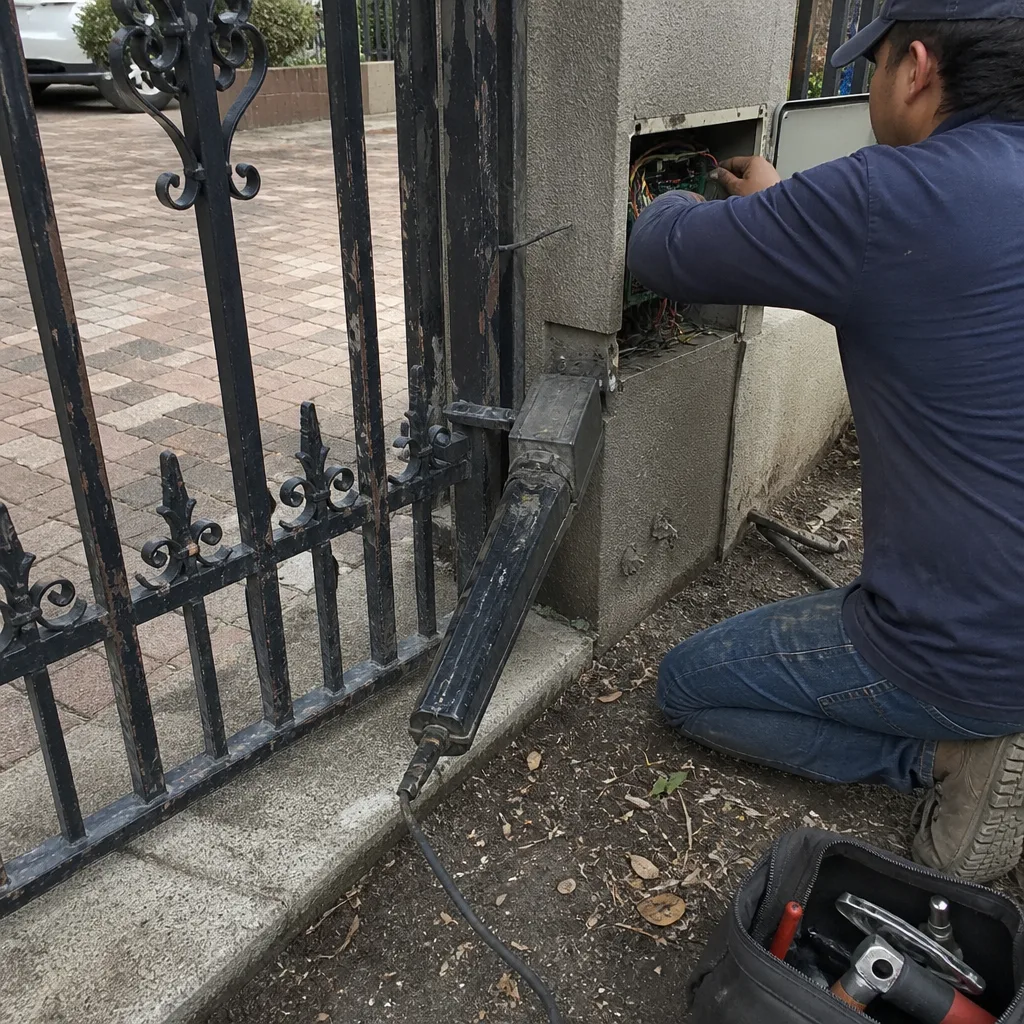 Before
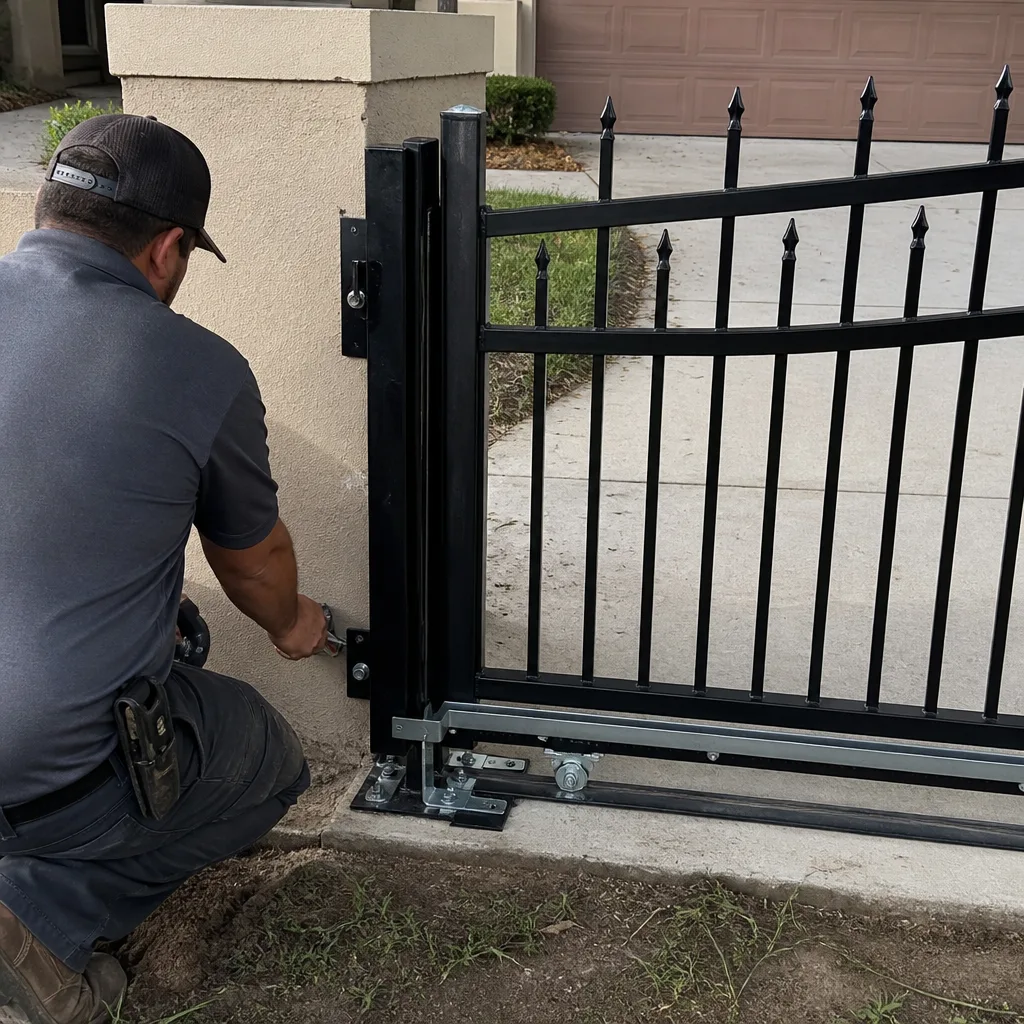 After
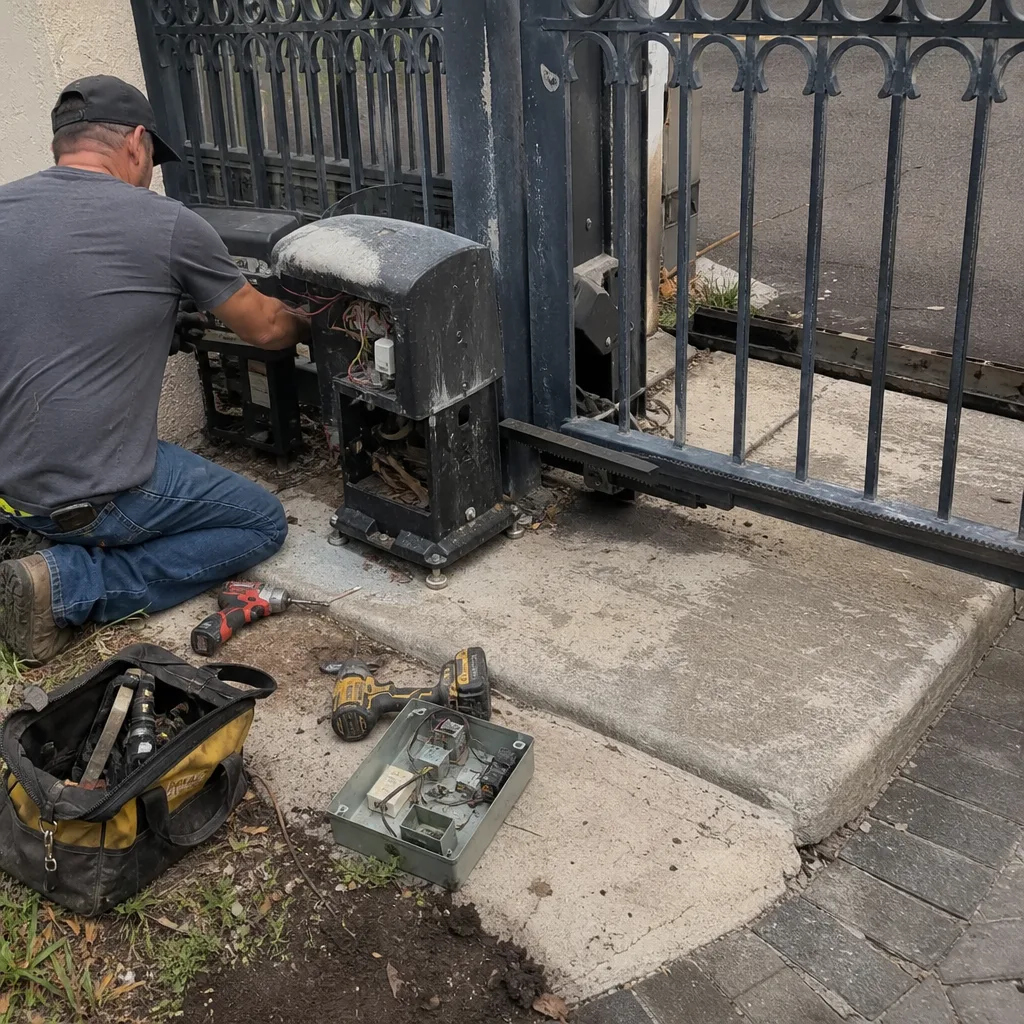 Before
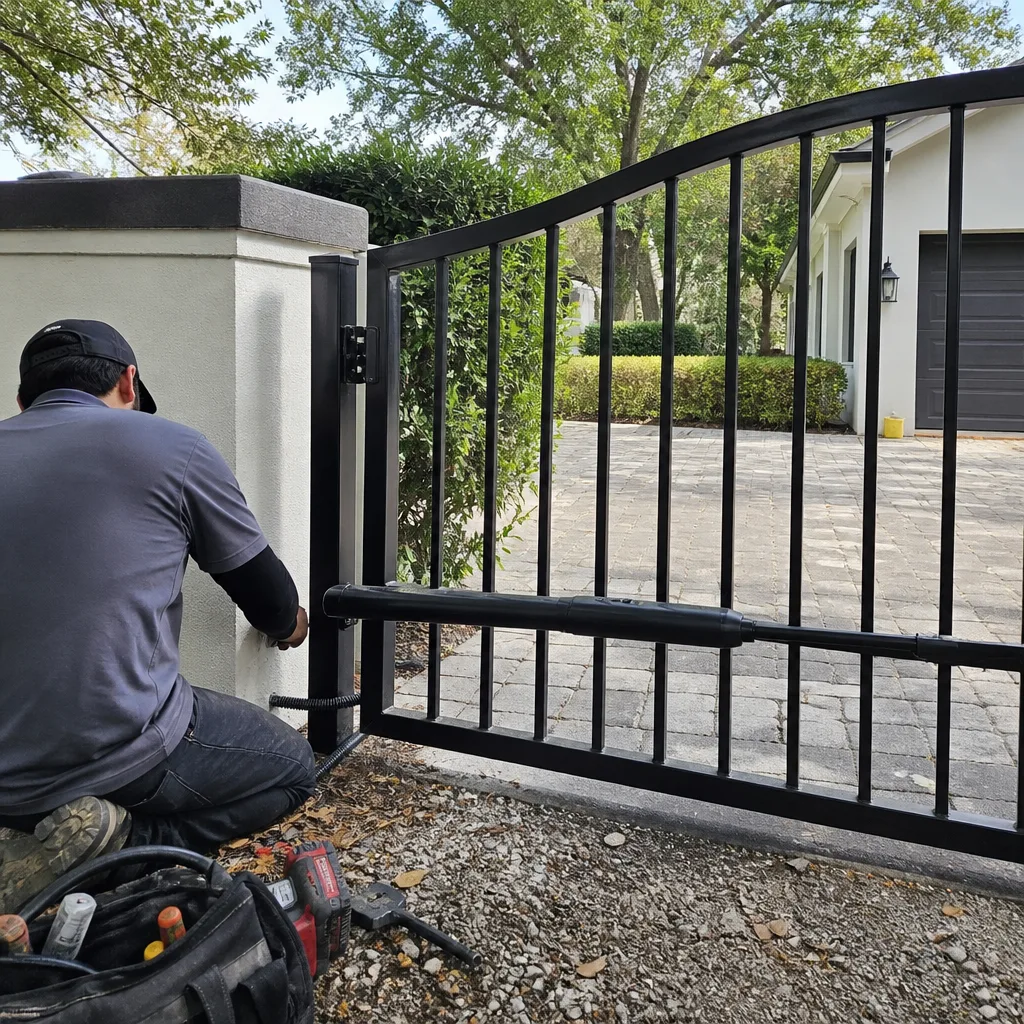 After
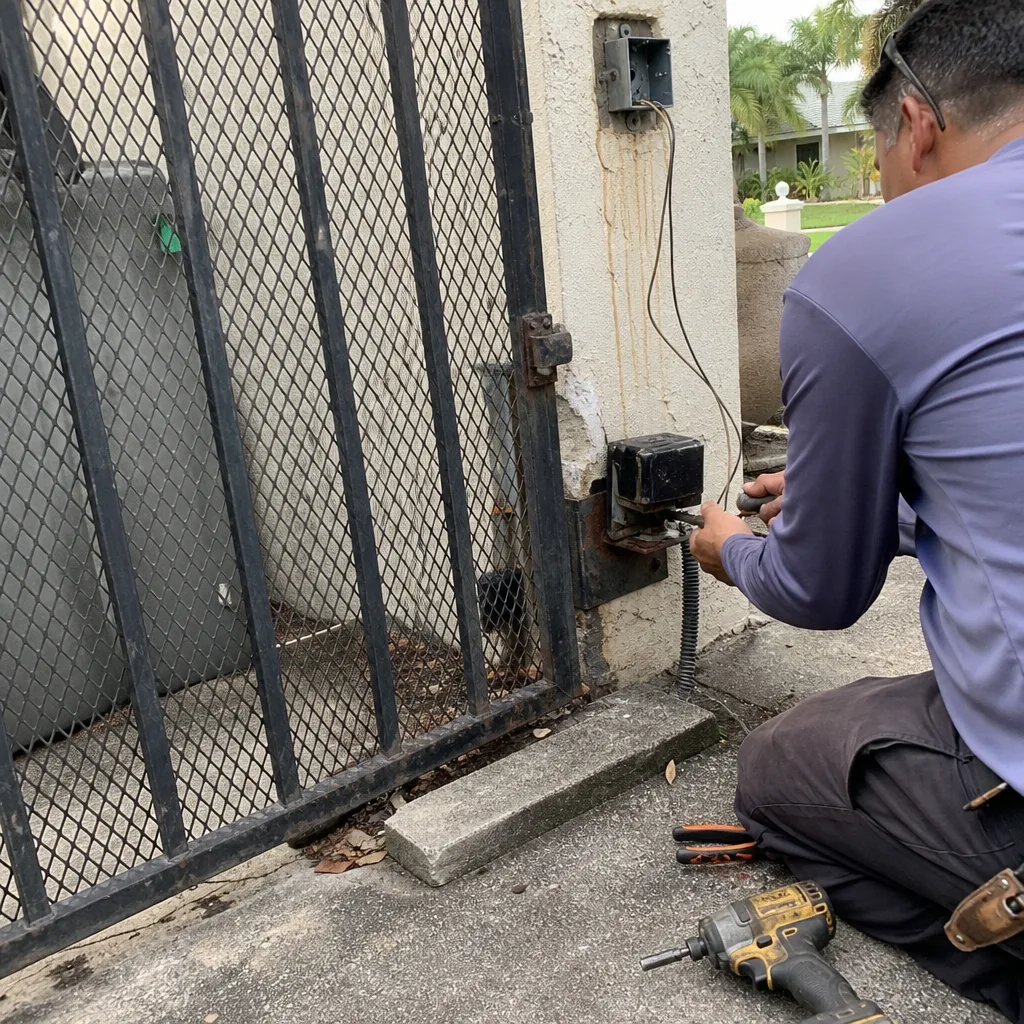 Before
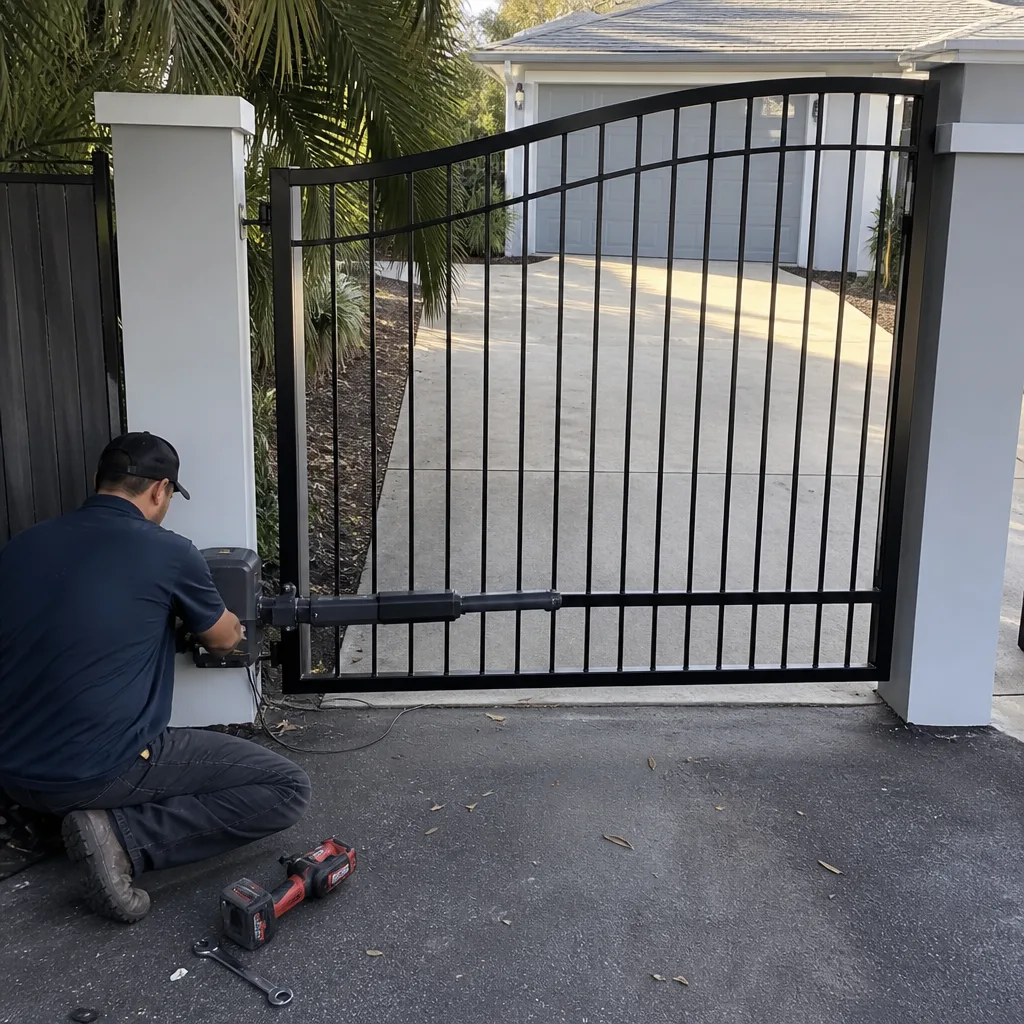 After