
Last updated October 31, 2026
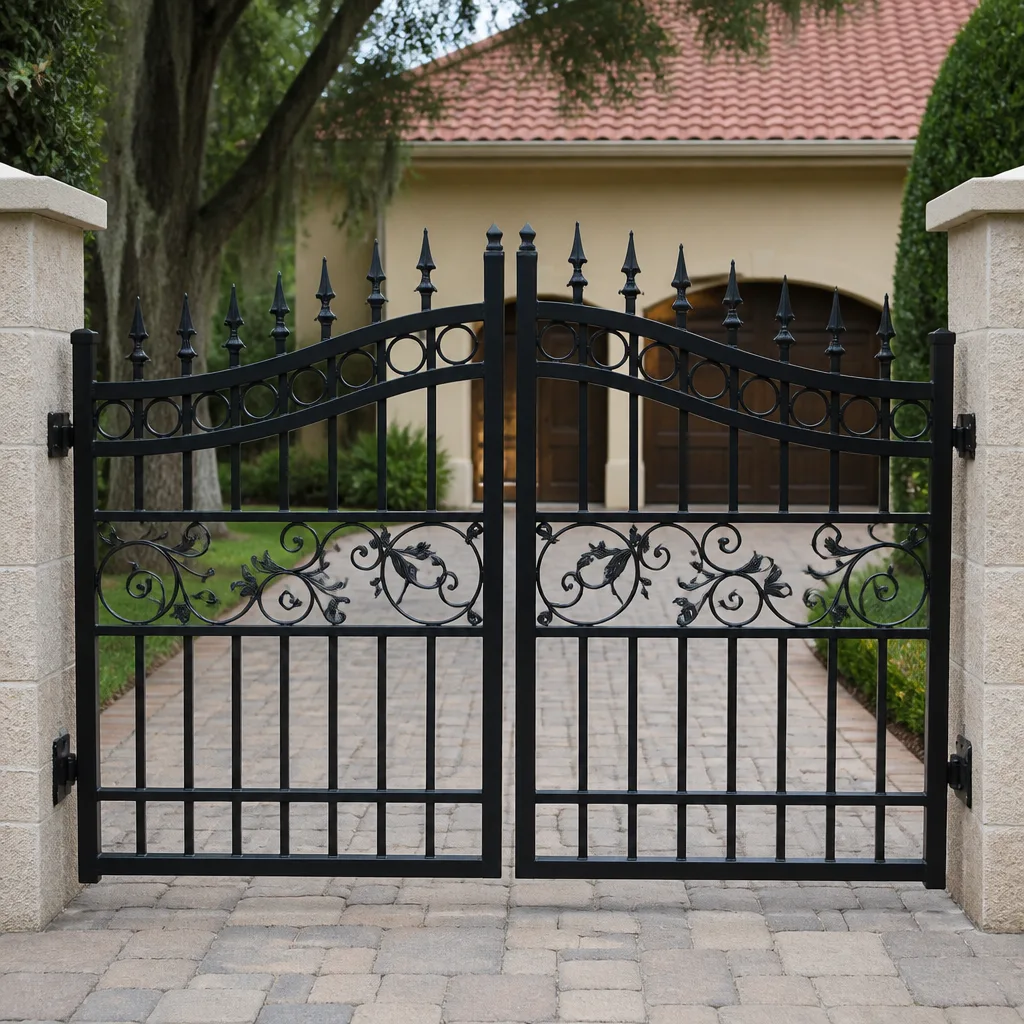 Wrought iron
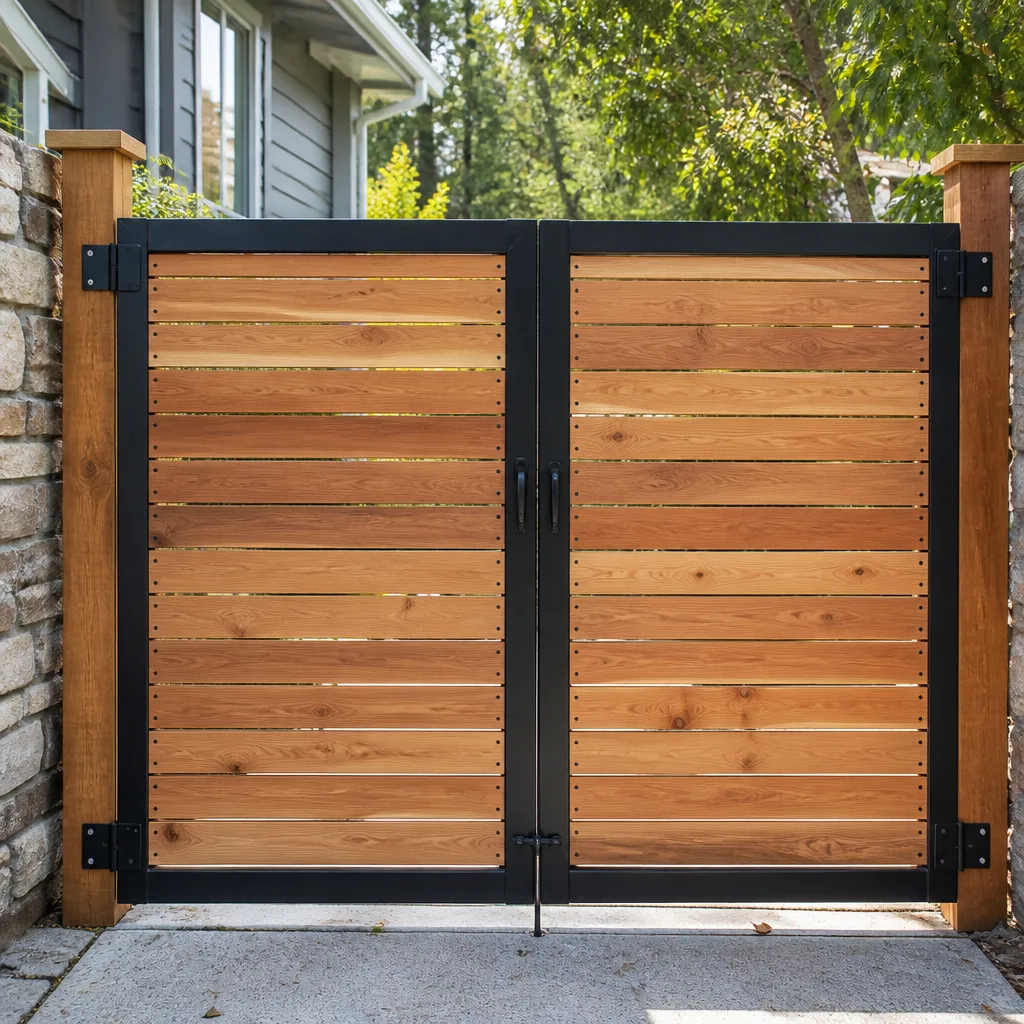 Wood & steel frame
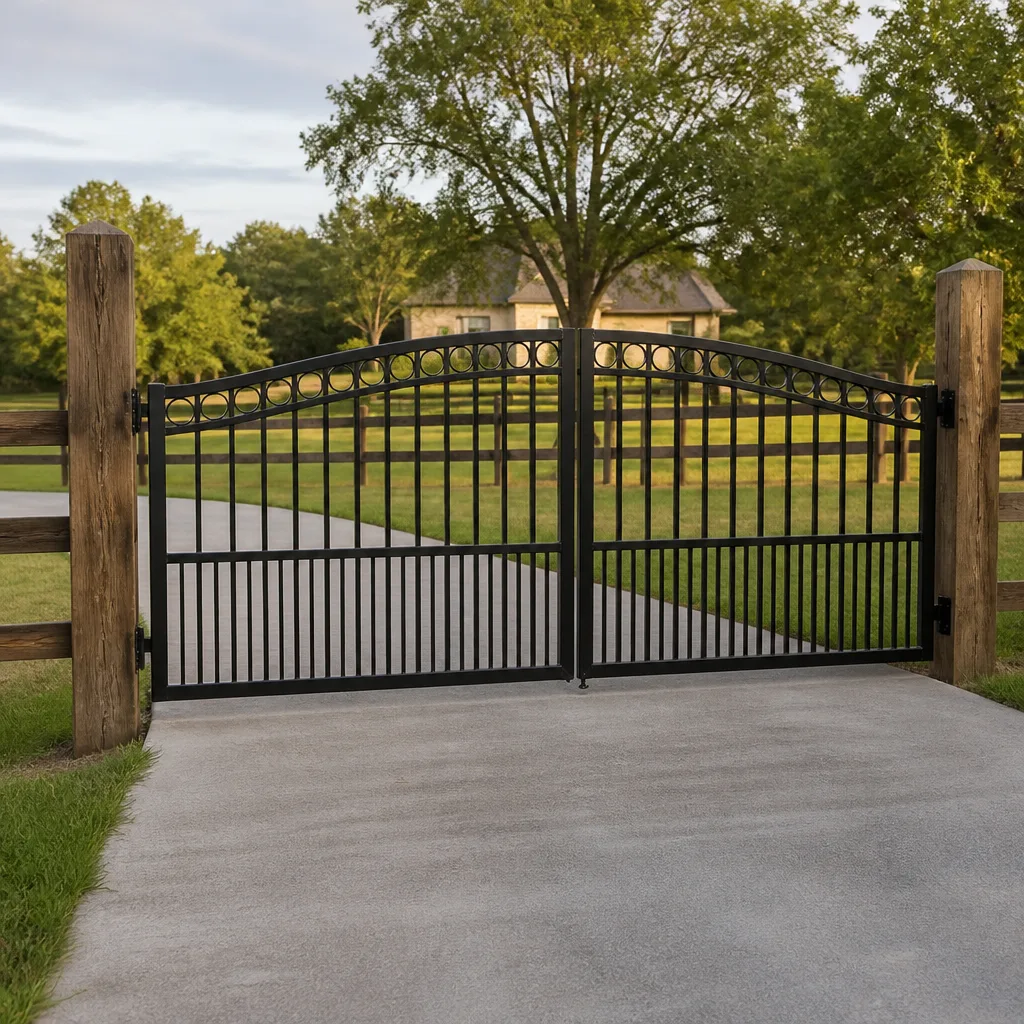 Farm & ranch
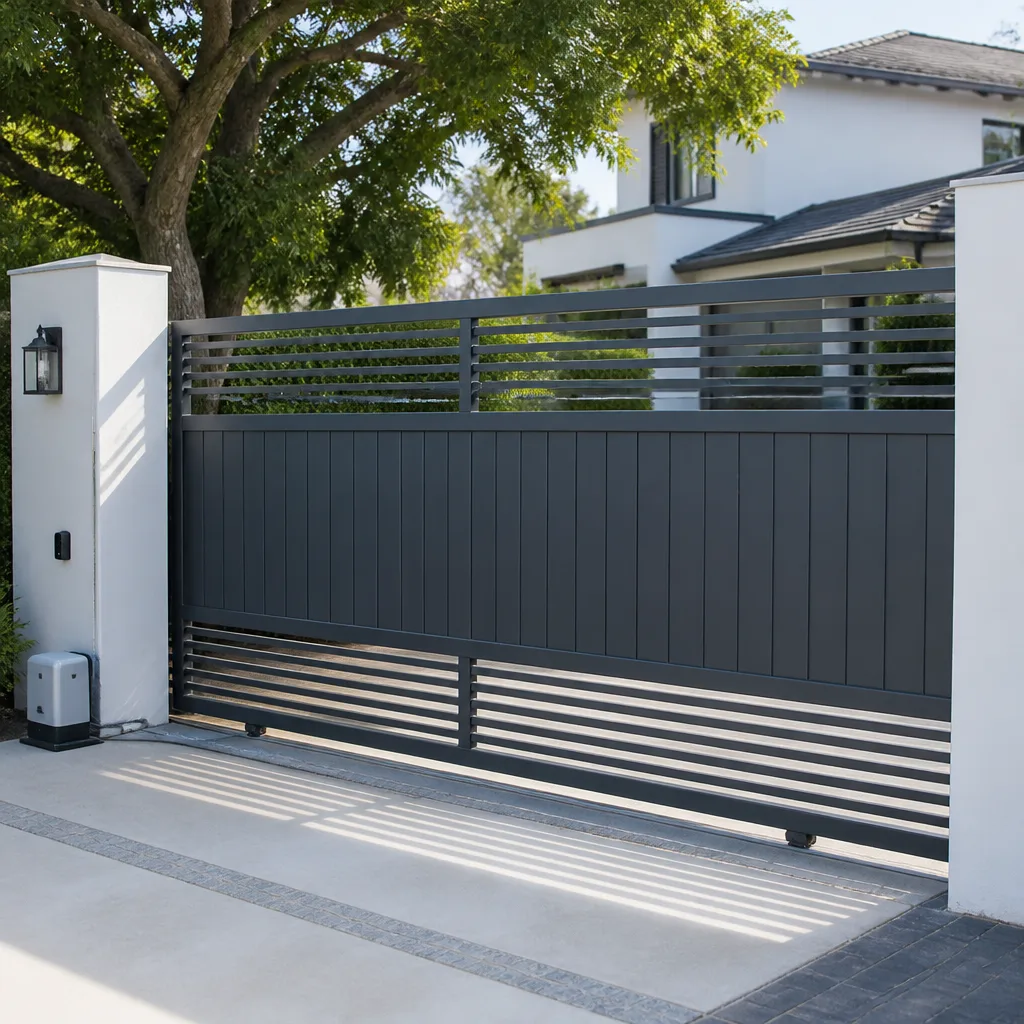 Sliding driveway gates
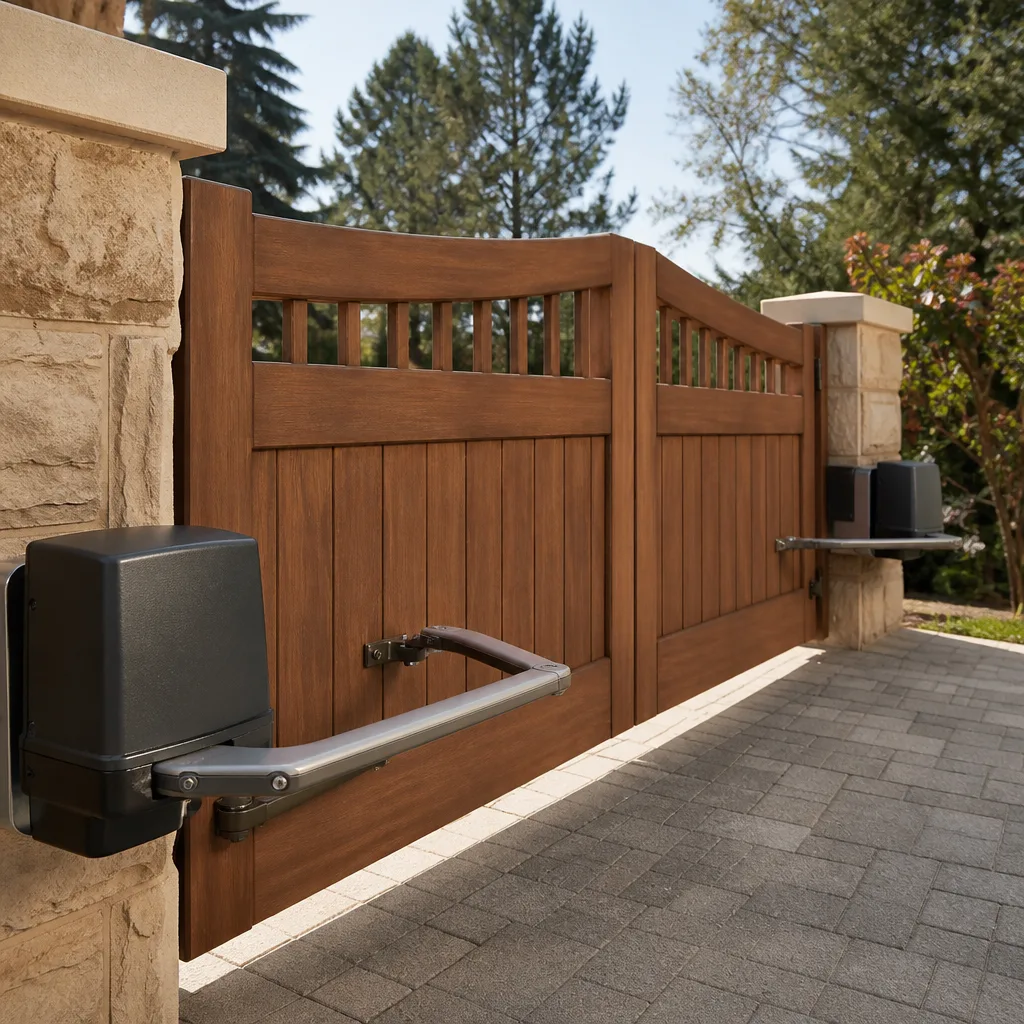 LiftMaster operators
Free on-site gate assessment - hinges, posts, and your LiftMaster or Nice gate operator checked before anything is quoted
The assessment is free and the quote is the invoice.
Get your free estimateGate Repair Maintenance Checklist for Orlando Homeowners
In July, the single most common call we get at Arroyo Gate Repair is a gate that “just stopped working”. The homeowner is frustrated, the gate is stuck halfway open, and the humidity is brutal. But here’s what most people don’t realize: in eight out of ten of those Orlando service calls, the failure was visible weeks earlier. A slowing cycle time. A grinding noise that got dismissed as “normal.” A control board that was already showing signs of moisture damage. The gate didn’t suddenly break in July heat. It had been asking for help since May, and nobody was listening.
This maintenance checklist is built around Orlando’s actual seasonal stressors. Not a generic “lubricate annually” template you could print for a gate in Phoenix or Seattle. We’re talking about rain, lightning, humidity that corrodes circuit boards, and the particular wear patterns that Florida’s climate imposes on gate hardware. We’re also separating the checklist by system type: because a slide gate on a commercial property has fundamentally different maintenance needs than a swing gate on a residential driveway.
What you’ll learn here: how to benchmark your gate’s cycle time and catch failures early, exactly which Orlando-specific checks to run before and after rainy season, the maintenance tasks most people skip that void warranties, and when you’re better off calling a specialist than reaching for a wrench.
Quick Answer
A gate maintenance checklist for Orlando homeowners should be organized by season and by gate system type, with particular focus on humidity control, post-storm inspection, and cycle-time benchmarking. The core tasks are: clean and lubricate moving parts every 90 days, inspect wire conduit seals and control board enclosures before June, run a full post-thunderstorm check before re-enabling automatic operation, and time your gate’s open/close cycle monthly to catch motor degradation early. Skip these routines and most gate failures quietly announce themselves weeks before the actual breakdown.
Styles & brands we work with
Table of Contents
- Seasonal Maintenance Calendar for Orlando Gates
- Cycle-Time Benchmarking: The Early Warning System
- Humidity-Specific Checks Before Rainy Season
- Post-Storm Protocol: What to Inspect After a Florida Thunderstorm
- Component-Specific Maintenance Intervals by Gate Type
- The Three Maintenance Tasks That Void Warranties When Skipped
- Common Mistakes to Avoid
- When to Call a Professional
- Frequently Asked Questions
Seasonal Maintenance Calendar for Orlando Gates
Orlando’s calendar doesn’t have four seasons. It has two: the dry stretch from roughly October through May, and the rainy season from June through September. The maintenance rhythm follows that split. Here’s what should happen month by month.
October through May (Dry Season)
- Monthly: Time the full open and close cycle. Note any deviation from your benchmark.
- Monthly: Walk the gate track or hinge line. Clear sand, leaf litter, and debris that accumulates faster than you’d think, especially in neighborhoods with oak trees, like College Park or Winter Park.
- Every 60 days: Grease the hinge points on swing gates, or clean and lubricate the track on slide gates. Use a silicone-based lubricant. Avoid petroleum-heavy products that turn gummy in Florida’s heat.
- Every 90 days: Check all bolts, bracket mounts, and anchor points for torque. A gate is a moving structure; hardware backs off over time.
- January (or your driest month): The best month for repainting or touching-up rust spots on steel gates. Humidity stays low enough for proper curing.
June through September (Rainy Season)
- Before June 1: Inspect every wire conduit seal, junction box gasket, and control board enclosure for cracks, gaps, or dried-out weatherstripping. This is the single highest-ROI task on the whole checklist.
- Bi-weekly: Check the gate’s response to the access control signals. Lightning storms can create voltage spikes that scramble remotes, keypads, and loop detectors.
- After any storm with wind over 40 mph: Run the post-storm protocol below.
- August (peak heat): Listen closely during a full cycle. Hot asphalt and concrete radiate heat that can soften lubricants and change how the gate sounds. A new squeak in August is a clue, not a coincidence.
You’ll notice this calendar is specific. It has to be. Orlando’s climate doesn’t give you the luxury of a “whenever you get around to it” maintenance schedule. The gates that survive a decade here are the ones maintained on a rhythm tied to the weather patterns that actually happen.
For a broader look at the services that keep gates running in this climate, see our Gate Repair in Orlando page.
Cycle-Time Benchmarking: The Early Warning System
Every automatic gate has a baseline: how long it takes to go from fully closed to fully open, and back again. That number changes over time as motors wear, batteries degrade, and hinges pick up friction. The problem is that most homeowners never establish the baseline in the first place. So when the gate slows from 14 seconds to 22 seconds over six months, they don’t notice the change. They notice the failed motor on a Tuesday morning when they’re late for work.
Here’s how to build the benchmark and use it.
- Pick a reference point. Stand at the same spot each time you time the cycle, preferably directly in line with the gate’s middle.
- Time a full open and close. Use your phone’s stopwatch. Record the open time, the close time, and the total. Note the temperature and time of day. Hotter weather can add a second or two on some operators.
- Repeat for three cycles. Average the total time. That’s your baseline.
- Re-time monthly. Any change of 15% or more in total cycle time, sustained across two measurements, is a sign of either a fading motor, increasing mechanical resistance, or a dying battery backup.
- Log what you find. A simple note on your phone works. “January 14: 16 seconds total. March 16: 18 seconds. April 19: 21 seconds.” That progression told a homeowner in Dr. Phillips their slide gate needed motor service before it actually failed. They caught it at 21 seconds. They saved themselves a Saturday-morning no-open.
We’ve written before about electric gate diagnostics, but the principle bears repeating: a slowing cycle time is the earliest reliable indicator of a problem. It’s not subtle. You don’t need diagnostic equipment. You need a stopwatch and the willingness to pay attention.
If you’re seeing the slowdown, it’s worth looking at our Electric Gate Repair in Orlando page for what’s involved in a proper motor and control board diagnosis.
Humidity-Specific Checks Before Rainy Season
Orlando humidity is the enemy of every electronic component on your gate. That’s not hyperbole. We regularly pull control boards out of their enclosures in June and find corrosion that started in April. Condensation works slowly, then suddenly.
The fix is inspection, not replacement, and the critical window is the six weeks before June 1. Here’s the checklist.
- Wire conduit seals: Look at every point where low-voltage wire enters a conduit. The sealant should be intact, not cracked or peeling. A gap the size of a pencil eraser is enough for humid air to follow the wire into the control board enclosure.
- Control board enclosure gaskets: Open the enclosure (power off first) and inspect the rubber gasket. If it’s brittle, compressed flat, or missing a section, replace it. On gates we service near Lake Conway or along the Butler Chain of Lakes, gasket failures are the number one cause of board-level moisture damage.
- Hinge grease consistency: Florida humidity thickens some greases and washes others away. Squeeze a hinge pin. If the grease feels gummy or looks like it’s separating into oil and solid, clean and reapply with a silicone-based product.
- Battery backup terminals: If your gate operator has a battery backup, pull the terminal connections and look for white or green corrosion. Clean with a wire brush and reconnect. In our experience, this is the most commonly ignored humidity check on residential Mighty Mule and Ghost Controls installations.
- Capacitor visual check: If you’re comfortable opening the operator housing, look at the motor-start capacitor. A bulging top is an early sign of heat and humidity stress. If it looks swollen, call a gate specialist before it pops.
If this feels like a lot, it is. But it’s also the difference between a gate that runs through September and a gate that dies the first week of July. Humidity is not an abstract threat. It’s the reason we recommend every automated gate in Orlando get a pre-rainy-season inspection, even if nothing seems wrong.
Post-Storm Protocol: What to Inspect After a Florida Thunderstorm
Florida thunderstorms are not gentle. Wind gusts over 50 mph, sideways rain, lightning strikes that can induce voltage into gate wiring even when the gate lets itself get hit directly. After a storm, before you re-enable automatic operation, there’s a short checklist to run.
- Clear debris from the track and hinge line. Palm fronds, branches, and roof shingles end up exactly where they cause the most damage: inside slide gate tracks and under swing gate leaves.
- Look at the gate’s position. Did the wind physically move the gate? If it’s no longer seating fully against the closed stop, the limit switches or the physical stops may have shifted.
- Check the operator for water intrusion. Look for water beading inside the control board enclosure or around the motor housing. If there’s any sign of moisture, leave the power off and call a professional.
- Test the safety edges and photo eyes. Put something in the gate’s path during a test cycle. The gate should reverse or stop immediately. Lightning and water can compromise these sensors even when the main board survives.
- Listen during the first cycle after a storm. Any new grinding, clicking, or hesitation is meaningful. Post-storm failures on DoorKing and Viking operators often start as a click that gets ignored.
One thing we want to be very clear about: if you see any sign of water inside the operator or control board, do not power it back on. The risk of shorting the board or sending voltage somewhere it doesn’t belong is real. This is the point where you call a professional. It’s also the reason we recommend a gate-level surge protector on every automated system in Orlando. The investment is small; the board replacement is not.
Component-Specific Maintenance Intervals by Gate Type
A slide gate and a swing gate are not the same machine. Neither are a residential gate and a commercial access system. Here’s how maintenance intervals differ.
Residential Swing Gates
- Hinges: Grease every 60 days. Inspect the hinge pins for bending or wear every 90 days. On heavy iron gates, hinge replacement becomes a factor around the 7-10 year mark, sometimes sooner if the gate gets used heavily.
- Operator arms (articulated arms, piston operators): Check mounting bolts monthly. On Linear and Mighty Mule swing arms, the attach points take more stress than the motor itself.
- Chain-driven swing operators: Inspect chain tension monthly. Too loose and the gate jerks and slams. Too tight and you’re loading the gearbox. The sweet spot on most brands is about 1/4 inch of deflection.
Residential Slide Gates
- Track and rollers: Clean debris weekly during oak-leaf season. Lubricate the rollers every 60 days. Rollers on a slide gate in the Orlando area rarely last more than 5-7 years without showing flat spots.
- Chain or belt drive: Inspect for elongation monthly. A chain that’s stretched past the tensioner’s limit will skip teeth on the drive sprocket, which sounds like a grinding noise and guts the sprocket quickly.
- Limit switches: Test monthly. Open the gate fully and listen for the motor to shut off cleanly. If it runs on after the gate stops, the limit switch is misaligned and you’re stressing the motor every cycle.
Commercial Slide Gates and Barrier Arms
- Hydraulic operators (if equipped): Check fluid levels quarterly. Low fluid in a FAAC or BFT hydraulic unit changes the closing force and can destroy the pump over time.
- Battery backup systems: Professional-grade operators, including Viking and DoorKing commercial units, often carry battery backups. Test them monthly by cutting AC power and running a full cycle. A battery that hasn’t been cycled in months can fail on the day you actually need it.
- Loop detectors and free-exit systems: Test monthly. The most common failure at commercial properties in Orlando is a loop detector that stops recognizing vehicles, which often presents as a “gate won’t open” when the truth is the loop failed.
The point of separating intervals by system type is simple: what keeps a residential Ghost Controls swing gate healthy is not the same thing that keeps a commercial DoorKing slide gate operational. If you’re managing a mixed-use property or an HOA gate, you need a maintenance schedule that respects each machine’s specific demands.
If the gate is at a property with high traffic and you’re not sure of its full service history, a complete inspection is a better starting point than a checklist. Our Gate Installation in Orlando page talks about the lifespan and service profile of different gate types, which helps you evaluate whether your current gate is worth maintaining or approaching replacement territory.
The Three Maintenance Tasks That Void Warranties When Skipped
Every gate operator warranty has fine print. And buried in the fine print of most major brands, including the ones we service daily as a multi-brand shop, there are three maintenance requirements. Skip them, and your warranty claim gets denied, even if the failure is a manufacturing defect.
- Documented lubrication of moving parts. Manufacturers expect hinges, rollers, and drive chains to be maintained on a schedule. If a bearing seizes and the warranty claim comes in, the manufacturer will ask for maintenance records. No records, no coverage. We tell our Orlando customers to keep a simple log: date, what was done, what product was used. A photo with a timestamp works too.
- Seasonal inspection of safety equipment. Photo eyes and safety edges must be tested regularly. On most brands, a safety component that failed because it was blocked, painted over, or disconnected voids the operator warranty entirely. This is not a gray area.
- Preventive care for outdoor enclosures. Control boards and wiring enclosures must be kept free of standing water and debris. A board that corrodes because the enclosure’s gasket was never checked is a maintenance failure, not a covered defect.
Here’s the part most people don’t consider: warranty coverage is worth protecting because it’s the difference between a $400 repair and a $1,800 operator replacement. And the documentation isn’t hard. A five-minute note after each maintenance task is enough. We’ve helped homeowners in Orlando file warranty claims, and the ones who come with logs get approved. The ones who can’t remember when the gate was last lubricated don’t.
As a gate-only shop, we work on nine major operator brands: LiftMaster, FAAC, BFT, Linear, Viking, Ghost Controls, DoorKing, Elite, and Mighty Mule. That breadth matters for warranty work, because we know each brand’s specific maintenance documentation requirements, not just the generic version.
Common Mistakes to Avoid
- Using petroleum-based grease on gate hinges. It attracts dirt, hardens in Florida’s heat, and turns into an abrasive paste. Use a silicone-based lubricant. We see this mistake constantly on gates in older Orlando neighborhoods where homeowners reach for whatever’s in the garage.
- Ignoring a slowing cycle time because “it still works.” The failure is already happening; you’re just not on the clock yet. A motor that’s working harder every cycle to overcome increasing friction is a motor that’s dying faster.
- Painting over rust without treating the metal. On steel gates, surface rust that gets painted over keeps spreading under the new paint. In Orlando’s humidity, that rust becomes structural. Strip, treat, then paint.
- Powering the gate back on after water intrusion. This turns a $150 board dry-out into a $600 board replacement. If you see moisture inside the operator housing, call a professional and leave the power off.
- Testing safety edges only when something goes wrong. Safety edge testing should be monthly, not reactive. A failed safety edge is a liability issue that also damages the operator when it slams closed on an obstruction.
- Treating a residential gate and a commercial gate as the same maintenance problem. They’re not. A slide gate on an HOA entrance sees more cycles in a week than most residential gates see in two months. The maintenance calendar has to scale accordingly.
- Doing electrical work on an automated gate without disconnecting power. Even low-voltage wiring carries enough current to damage the control board if you short the wrong terminals. And some operators carry line voltage into the housing. If you’re not sure, don’t open the cover.
When to Call a Professional
Some things on this checklist are safe DIY: cleaning a track, clearing debris, timing a cycle, logging what you find. Others are not. If the gate makes a grinding noise from the operator housing, call a professional. If the gate hesitates or reverses on its own, call a professional. If there’s any sign of water inside the control board enclosure, call a professional. If the gate failed a safety edge test, call a professional the same day. Gates under tension, gates that weigh hundreds of pounds, and operators wired into line voltage are not weekend projects. A gate that moves unexpectedly can hurt someone, and the components that fail quietly are the ones that create real hazards.
Arroyo Gate Repair offers free estimates in Orlando. We’re a gate-only specialist, so when we come out, we’re looking at the whole system, not guessing at one symptom. Call (877) 851-6955 if you’d rather have a professional handle the diagnosis. We’d rather you call before the failure than after.
Frequently Asked Questions
Basic professional maintenance, including lubrication, safety testing, and a full inspection, typically runs $150 to $300 for a residential gate in Orlando, depending on system type and access. Commercial gate maintenance contracts range higher based on traffic and equipment. It’s a fraction of the cost of an emergency motor replacement, which can run $700 to $1,500 or more. Call (877) 851-6955 for a free maintenance estimate and we’ll give you a written price before any work starts.
Twice a year is the right cadence for most automated gates in Orlando: once before the rainy season starts in June, and once during the dry season in the fall. If your gate sees daily heavy use or serves a commercial property, quarterly inspections are justified. The pre-storm and post-storm checks are things you can handle yourself between inspections.
In our experience, moisture intrusion into the control board or wiring connections is the most common failure point, followed closely by motor stress from neglected mechanical resistance. The humidity in Orlando accelerates corrosion on unprotected electronics, while skipped lubrication adds enough drag to burn out motors prematurely. Both are preventable with the maintenance routine in this guide.
You can lubricate hinges, rollers, and track yourself as long as you use the right product, a silicone-based spray or grease, and you’re only touching the mechanical parts. Do not open the operator housing or spray lubricant into the motor. The electrical side is where DIY maintenance goes wrong. If you’re not sure where the line is, have a specialist show you once.
A well-maintained residential gate operator in Orlando should last 10 to 15 years, though the electronics may need board or capacitor replacement during that span. Commercial operators in high-traffic settings typically last 5 to 10 years on the motor, with component replacements along the way. Gates that fail before year five almost always have a maintenance gap somewhere in the history.
Yes, we serve the entire Orlando area, including Baldwin Park, College Park, Dr. Phillips, Winter Park, and the surrounding communities. We work on residential driveway gates, HOA entrance gates, and commercial access systems across the region. Call (877) 851-6955 with your cross streets and we’ll let you know when we can be there.
The Bottom Line
Orlando gates fail more from neglect than from age. The humidity attacks electronics, the storms test hardware, and the overlooked maintenance tasks quietly void warranties. But the maintenance routine that prevents most failures is not complicated: time your cycle monthly, seal and inspect before June, run the post-storm checklist, and lubricate the right parts on the right schedule. What matters is consistency and specificity. A slide gate on a commercial loop detector is not the same machine as a swing gate on a residential driveway, and treating them the same is how problems get missed. If the checklist points you toward something you’re not comfortable doing, call a gate specialist or browse more guides & resources. The diagnostic cost is always lower than the break-fix cost.
If you’d rather not manage the checklist alone, Arroyo Gate Repair home is where you’ll find the full scope of our services. You can also reach us directly for a free estimate at (877) 851-6955.
Written by the team at Arroyo Gate Repair, serving Orlando since 2013.
See the difference
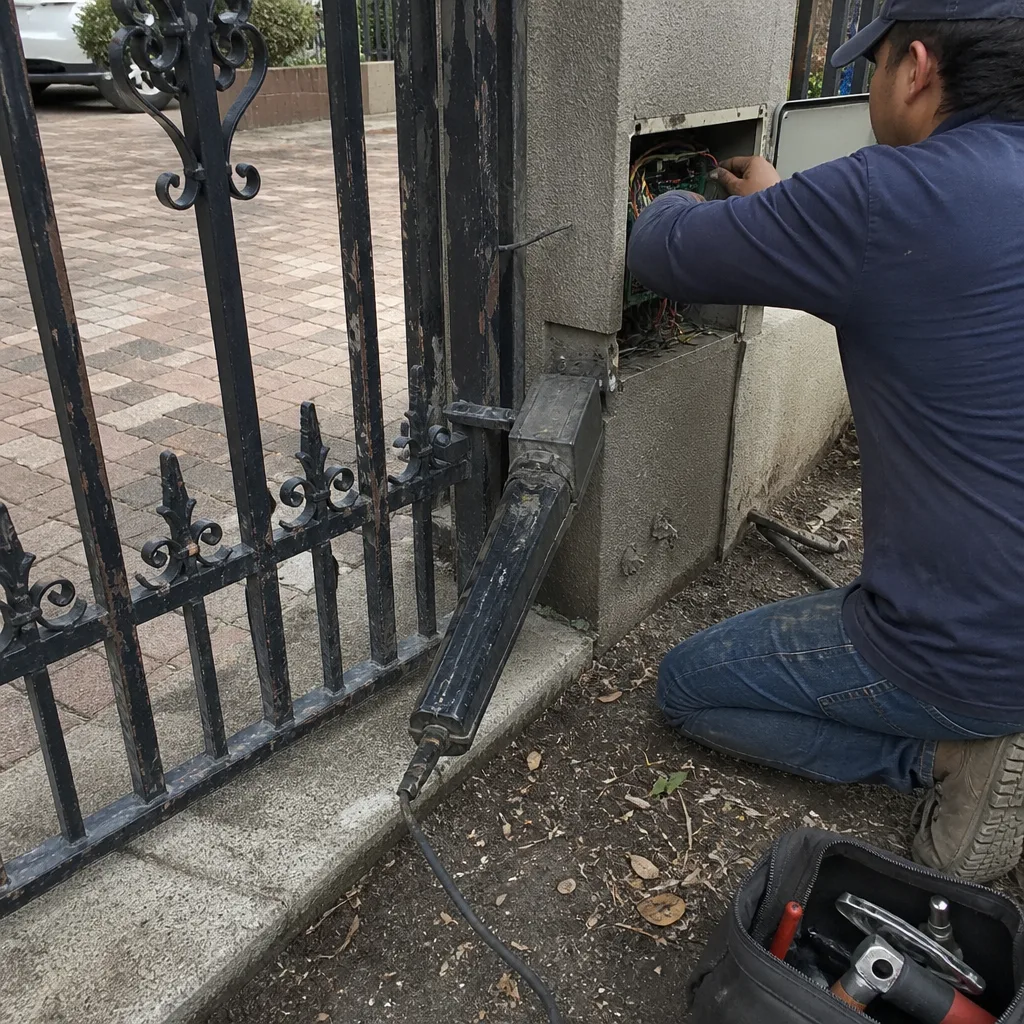 Before
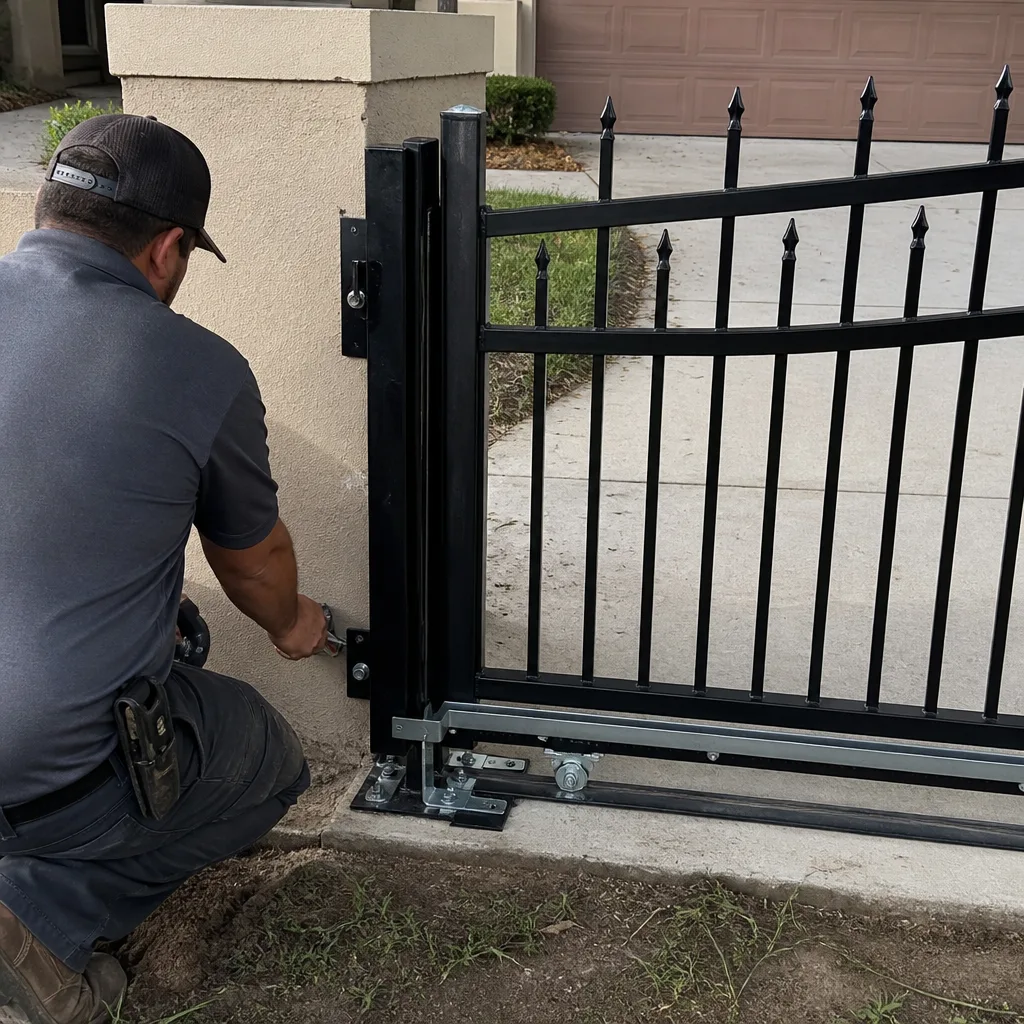 After
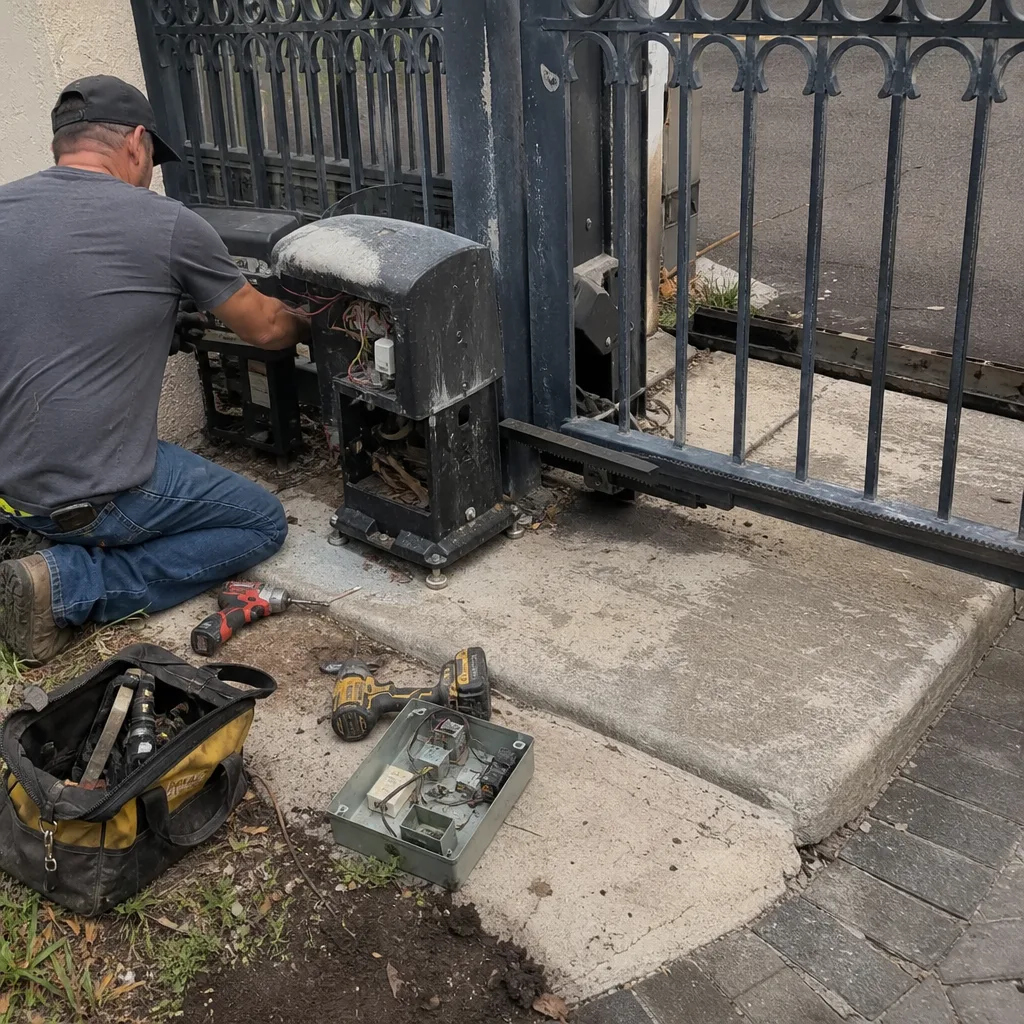 Before
 After
 Before
 After