Last updated October 31, 2026
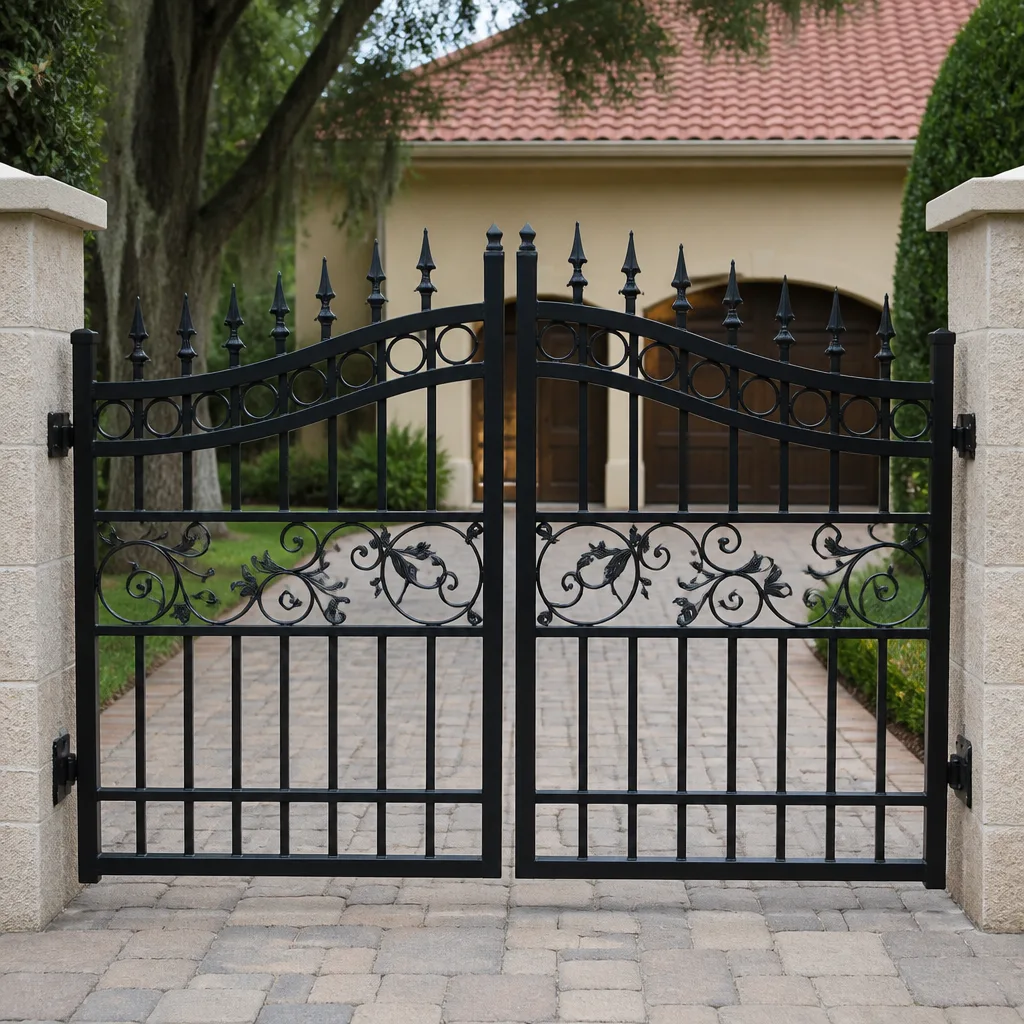 Wrought iron
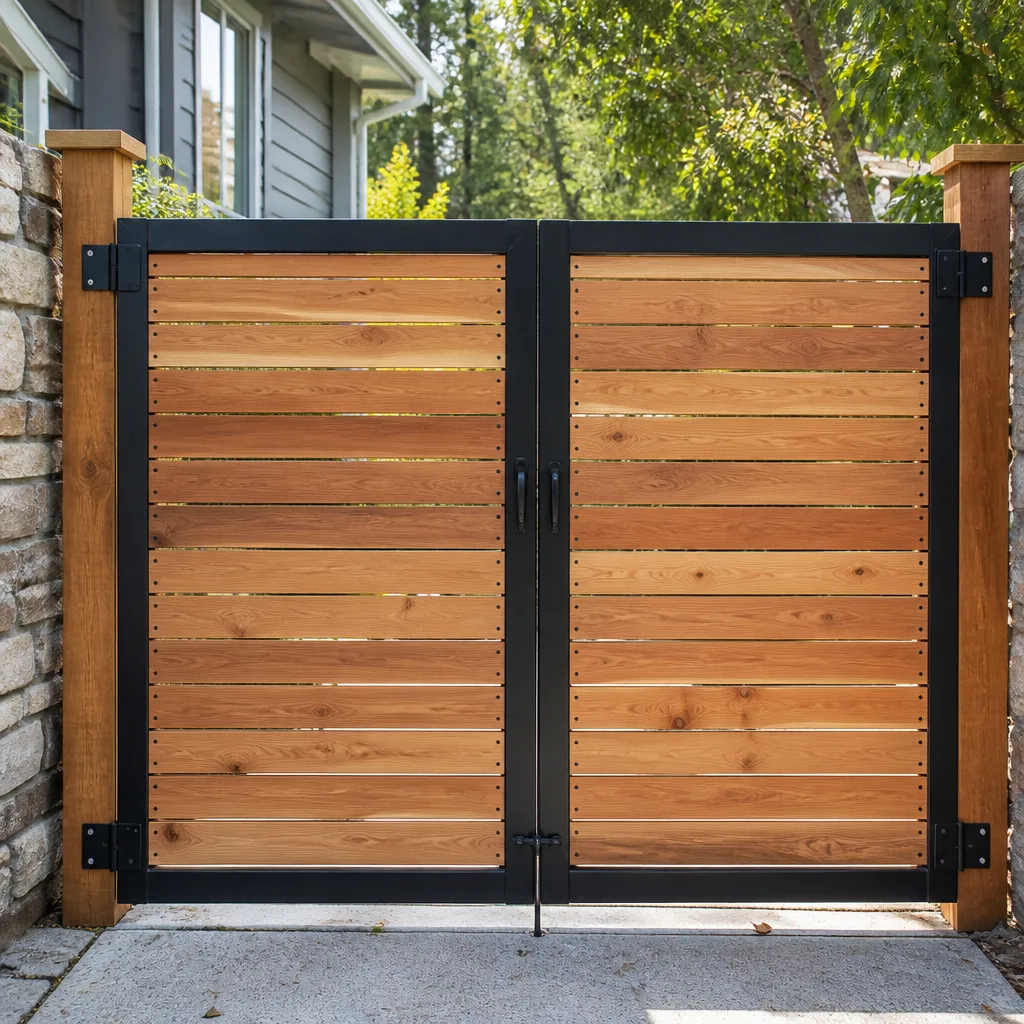 Wood & steel frame
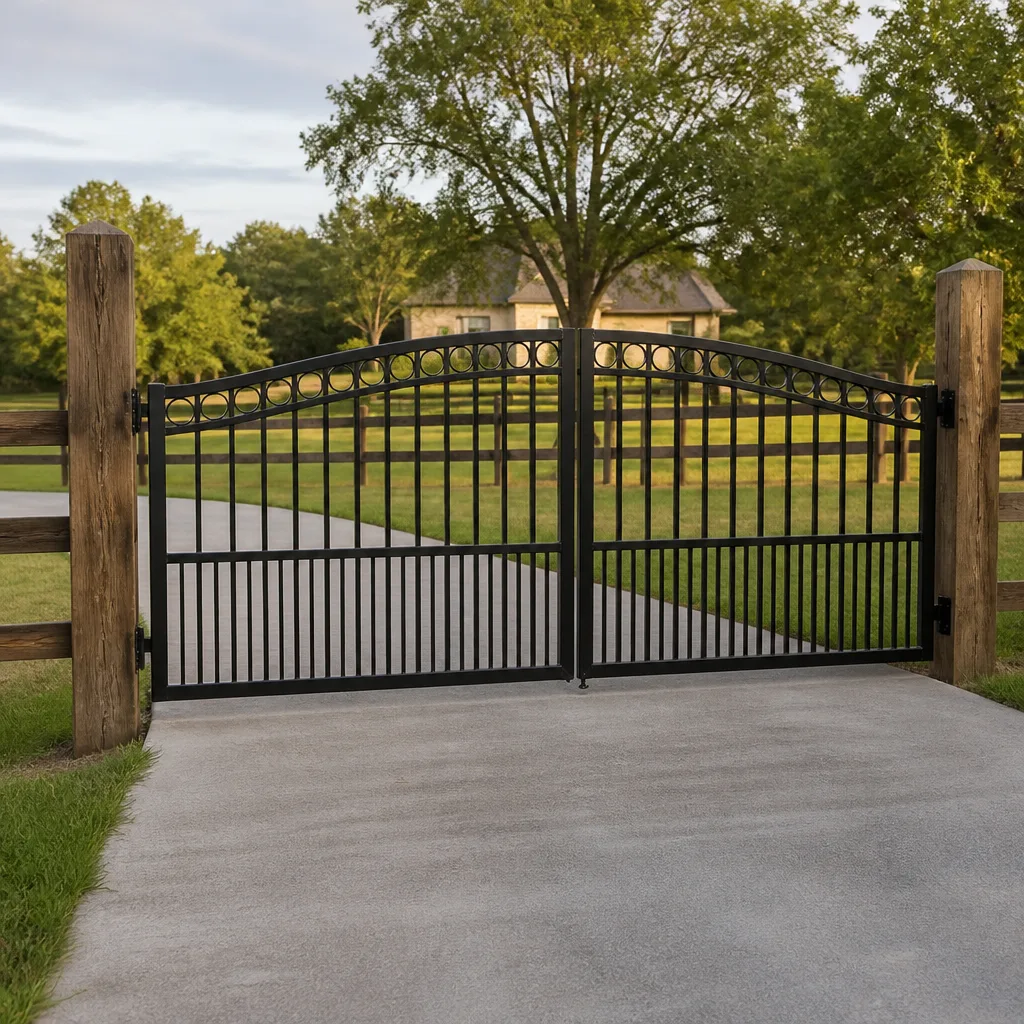 Farm & ranch
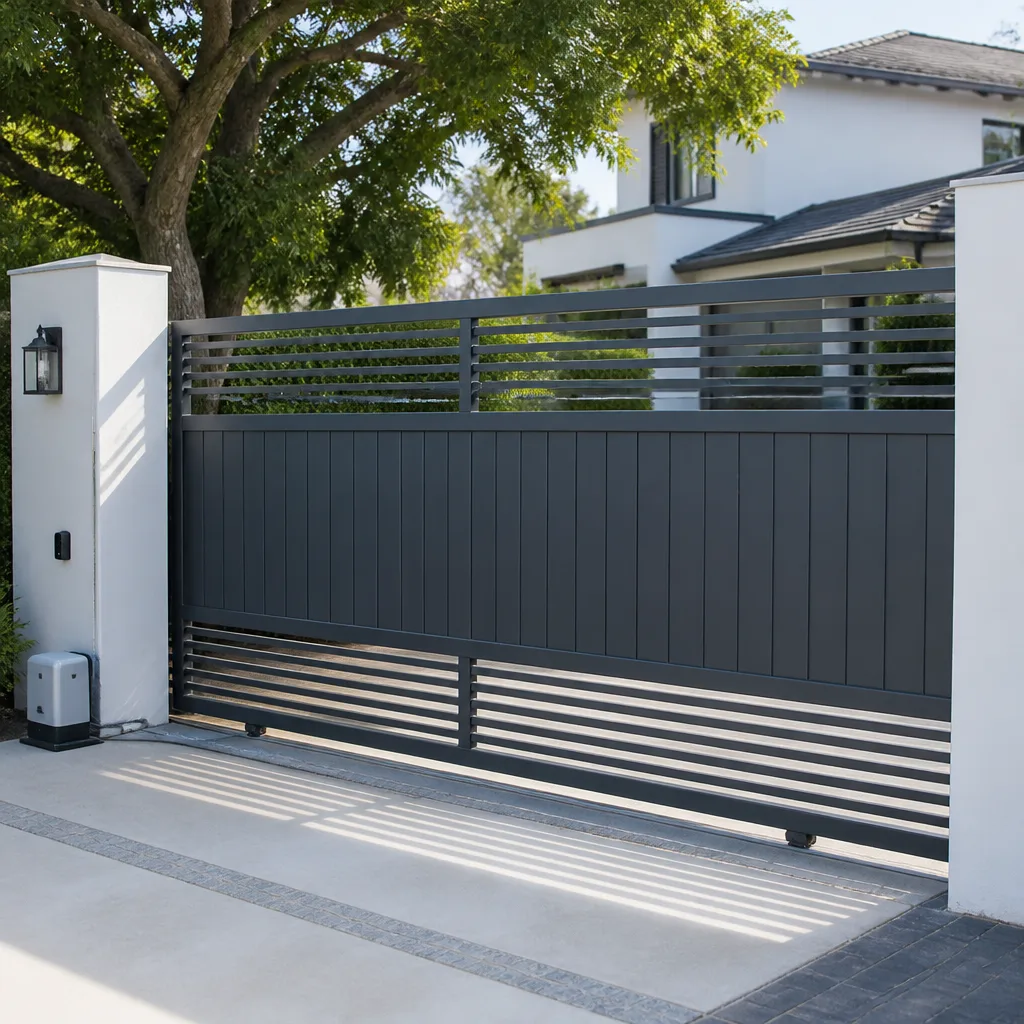 Sliding driveway gates
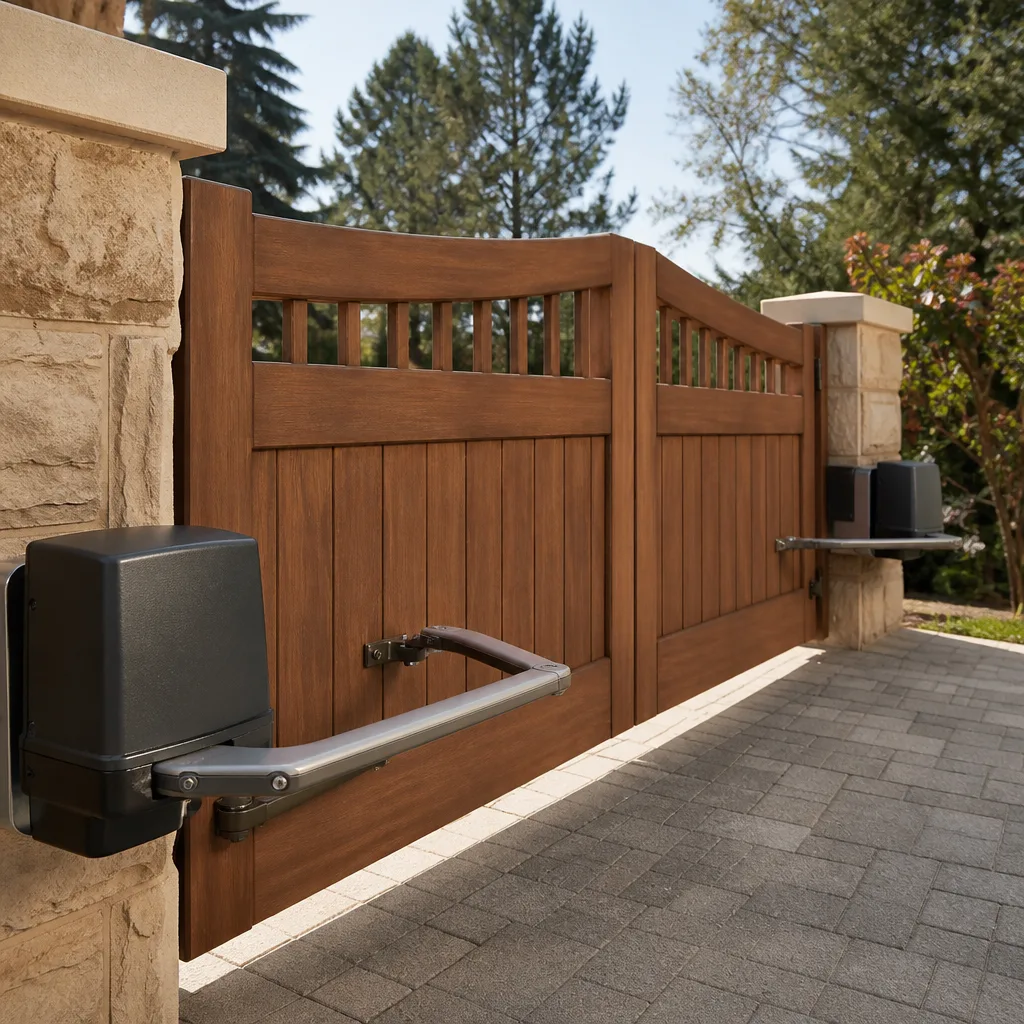 LiftMaster operators
Free on-site gate assessment - hinges, posts, and your LiftMaster or Nice gate operator checked before anything is quoted
The assessment is free and the quote is the invoice.
Get your free estimateThe Complete Gate Repair Guide for Orlando Homeowners
Orlando averages 53 inches of rain per year, nearly double the national average, and most residential gate openers are rated for weather exposure, not weather immersion. That distinction is why so many “repaired” Orlando gates fail again within six months. This guide walks through every major gate failure mode and ties it directly to Central Florida’s actual environmental conditions: humidity, thunderstorms, sandy soil, and the particular strain our climate puts on motors, circuit boards, hinges, and posts. By the time you finish reading, you’ll know what’s actually wrong with your gate, what’s worth fixing yourself, and when to call a gate specialist in Orlando. For DIY vs Professional Gate Repair: The Orlando Homeowner’s Decision Guide, see our companion piece.
Quick Answer
Gate repair in Orlando typically costs $150 to $600 for common mechanical fixes like hinge replacements, wheel and track work, or post realignment, while electric gate repairs involving motors, control boards, or sensors run $300 to $1,200 depending on the opener brand and fault. Most Orlando gate failures stem from three root causes: moisture intrusion into electronics, post shifting caused by sandy or clay-heavy soil, and corrosion from relentless humidity. Diagnosis is the single most important step, because replacing a motor when the actual problem is a corroded limit switch or a shifted post wastes hundreds of dollars.
Styles & brands we work with
Table of Contents
- How Orlando’s Climate Damages Gate Systems
- Post Shifting and Soil Movement: The Misdiagnosed Culprit
- Electric Gate Failure vs. Mechanical Gate Failure
- Brand-by-Brand Durability in Central Florida Conditions
- Orlando-Specific Seasonal Maintenance Calendar
- Florida Licensing: What Requires an Electrical Contractor
- What Gate Repair Costs in Orlando
How Orlando’s Climate Damages Gate Systems
Every gate component in Central Florida fights a three-front war: moisture, heat, and salt-adjacent airborne particulates from the coast. The mechanics are straightforward, but the failure patterns are surprisingly specific.
Humidity hovers above 70% most mornings, even in winter. That means condensation forms inside gate operator housings almost daily during temperature swings. Over months, that condensation settles onto logic boards, battery terminals, and wiring connectors. The result is the single most common electric gate failure we see across Orlando neighborhoods like Baldwin Park, College Park, and Dr. Phillips: intermittent operation that worsens after rain and sometimes resolves itself for days before failing completely.
What Moisture Actually Does, Component by Component
- Logic boards: Corrosion bridges across adjacent solder joints, causing phantom inputs. The gate opens on its own, refuses to close, or triggers the obstruction sensor for no apparent reason.
- Battery terminals: Corrosion at the positive terminal increases resistance, so the gate operates slower than normal before the battery eventually fails to hold charge.
- Weld joints on steel gates: Orlando’s humidity combined with afternoon thunderstorms creates a wet-dry cycling effect that accelerates rust at every weld point. Gate frames rot from the inside out, and a rust bubble at a weld typically means the structural integrity is already compromised.
- Hinges and bearing surfaces: Unlubricated steel-on-steel contact points gall and bind faster in this climate than in drier regions. A gate that’s hard to push manually is usually a hinge problem, not an opener problem.
- Low-voltage wiring and photocell sensors: Splices and connector blocks not sealed with dielectric grease wick moisture and fail within one to two wet seasons.
After any extended wet period, the first inspection points should be the control board’s terminal strip, the backup battery terminals, and the low-voltage splice points near the gate. These fail before motors do, and replacing them costs a fraction of a full operator replacement.
Post Shifting and Soil Movement: The Misdiagnosed Culprit
Orlando’s soil alternates between sandy, fast-draining zones and clay-heavy pockets that hold water and expand dramatically. That combination makes gate post shifting one of the most common structural failures we diagnose, and one of the most frequently missed by generalist repair crews.
When a post shifts even an inch out of plumb, the gate leaf hangs lower, the latch alignment fails, and the opener has to pull against constant binding. The symptoms read as a weak motor: slow operation, grinding, the gate stopping halfway. In reality, the motor is fine and the foundation has moved.
How to Diagnose Post Movement vs. Mechanical Failure
- Open the gate manually. Disconnect the opener, if equipped, and push the gate by hand. If it binds at the same point every time regardless of speed, you’re looking at mechanical alignment, not motor weakness.
- Check the gap at the latch. If the gap has widened at the top or bottom, the gate has sagged. That sag traces back to the hinge post, the latch post, or both.
- Look at the gap between the gate frame and the post. A consistent gap says the hinges are fine. An uneven gap says the post has rotated or leaned.
- Inspect the ground around each post. After heavy rains, look for small gaps or cracks in the soil or concrete collar at the base of the post. These open up as the post works back and forth in the ground.
- Use a level. Place a 4-foot level against the post face and side. Anything more than a quarter bubble off is enough to cause binding in automatic systems.
Post realignment in Orlando usually involves excavating around the base, re-plumbing the post, and resetting it in concrete designed for our soil conditions. In sandy zones, that means digging wider than in clay; the concrete needs more bearing surface. Shimming a shifted post with wedges is a temporary fix that fails again after the next rainy season.
Electric Gate Failure vs. Mechanical Gate Failure
The most important fork in any Orlando gate repair decision is whether the problem is electric or mechanical, because the skill sets, licensing requirements, and costs are completely different. Misdiagnosing one as the other is the most expensive mistake a homeowner can make.
Mechanical Gate Failures
Mechanical issues involve anything that moves by force: hinges, wheels, tracks, chains, cantilever roller assemblies, and the gate frame itself. A mechanical gate repair is usually a job for a skilled gate technician who works with steel, welding, and foundation-level alignment. Symptoms of mechanical failure include visible sag, scraping sounds, resistance at a specific point in the swing or slide range, and gates that open by hand but stop under motor power at the same point consistently.
Electric and Automated Gate Failures
Electric gate failures involve the motor, control board, limit switches, photo eyes, loop detectors, keypads, and access hardware. An electric gate repair in Orlando requires the technician to understand system logic across multiple brand architectures, not just swap parts until something works. Symptoms specific to electric failure include: the gate doing nothing at all despite a manual override working fine, intermittent behavior without a consistent pattern, and reversed or absent safety sensor responses.
The distinction matters because the repair approaches differ. On a mechanical fix, you’re dealing with metal, fasteners, and load paths. On an electric fix, you’re tracing voltage, checking grounds, and reading fault codes. When a company only does one or the other, they routinely misdiagnose the opposite type of failure. A handyman who replaces a hinge on a gate that actually has a failing capacitor on the control board won’t solve anything, and an electrician who replaces a motor on a gate with a seized wheel bearing wasted your money.
Arroyo Gate Repair handles both mechanical and electric systems as a gate-only specialty. That’s the core of our diagnostic approach: we work on your brand, not around it.
Brand-by-Brand Durability in Central Florida Conditions
Every opener brand handles Florida weather differently. These observations come from service call patterns across Orlando, not marketing literature. The difference in how brands respond to humidity and heat is frequently the difference between a five-year opener and a fifteen-year opener.
Residential Brands We Service Regularly
- Mighty Mule: The most common DIY-installed residential opener in Orlando. Entry-level pricing means we see more Mighty Mule units than any other residential brand. Their weak point in Florida is the control board’s moisture tolerance; units mounted without an aftermarket weather hood fail more often after the first wet season. The motors themselves are serviceable, but board corrosion accounts for roughly three out of four Mighty Mule service calls in our experience.
- Ghost Controls: Stronger board potting and better wire harness sealing than Mighty Mule, and the mechanically simpler drive system holds up well in sandy environments. Ghost Controls hardware tends to tolerate Orlando’s humidity better at the board level, though the arm assembly needs regular lubrication in rainy seasons. A well-installed Ghost Controls unit with silicone-sealed connections is one of the more durable residential options for Central Florida.
- Elite: Sits between consumer and light-commercial. In Orlando applications, Elite operators on slide gates perform well if the track is maintained, but the limit switch contacts corrode faster than other brands when not mounted in a properly ventilated enclosure. We see fewer catastrophic Elite failures and more slow-degradation issues: contact oxidation, minor board faults, intermittent limit sensing errors.
Commercial and High-Cycle Brands
- DoorKing: The most common commercial operator we see on Orlando apartment complexes, HOA entrances, and business parks. DoorKing’s swing and slide operators are built for high cycle counts, but the older generation’s control boards suffer from the same humidity-related capacitor failures as residential brands, just on a longer timeline. DoorKing’s support infrastructure in Florida is strong, which matters when a part fails and you need it tomorrow morning.
- FAAC, BFT, and Viking: These are commercial-grade systems where the boards are generally better sealed than residential units, but installation quality remains the biggest variable. A poorly sealed conduit run or an improperly grounded power feed will damage a FAAC board just as thoroughly as a cheap opener. These systems are also more expensive to repair when they do fail, which makes preventive maintenance more economically justified.
The takeaway: in Orlando’s climate, the installation quality of the enclosure, sealing, and grounding matters more than the brand name on the motor. A $400 Mighty Mule with a properly sealed board and dielectric-greased connectors will outlast a $2,500 commercial operator installed with exposed splices. The installer’s understanding of Central Florida conditions is the single biggest longevity variable.
Orlando-Specific Seasonal Maintenance Calendar
Generic maintenance advice about “winterizing” or “fall tune-ups” misses how Orlando’s climate actually works. We have two distinct seasons that matter for gate maintenance: the wet season from June through October, and the dry-but-humid season from November through May. Each demands different attention.
Wet Season (June through October)
- Early June: Inspect and refresh all sealing points before daily thunderstorm cycle fully sets in. Check the operator housing gasket, reseal wire entry points, and reapply dielectric grease to any exposed low-voltage connectors. This one hour of work prevents most rainy-season electrical failures.
- Monthly through October: Check battery terminals for early corrosion, especially after weeks with heavy rain. Wipe down and re-grease. Inspect the drain holes in the operator enclosure for blockage.
- After any named storm or 4+ inch rain event: Check post bases for new gaps or cracks, test the opener’s manual operation, and inspect the track or hinges for freshly washed-in grit. Sandy runoff collects in tracks faster after heavy rain.
- Late October: Full system diagnostic. Lubricate hinges and bearing points. Clean track surfaces. Test the photo eye alignment and safety reversal. Inspect the control board for any early moisture staining.
Humid Season (November through May)
- Every 6-8 weeks: Wipe down the gate frame with a corrosion-inhibiting treatment and check weld joints for new rust blooms. In Orlando’s humid winter, surface rust appears in weeks, not months.
- January: Test the backup battery under load. Cooler weather masks a weak battery; you won’t know it’s dead until the first time the gate runs without shore power.
- March-April: Adjust limit switches. Springs and expansion joints shift slightly through temperature cycles, and a gate that was perfectly adjusted in December may over-travel by April.
- May: Prepare for the wet season transition. Inspect enclosures, replace any cracking gaskets, and schedule any board-level work before the summer storm cycle begins.
This calendar reflects the maintenance patterns that actually reduce service calls in Orlando. Homeowners who follow it get three to five additional years out of their operator, and they avoid most emergency callouts entirely. Explore more guides & resources for year-round gate care.
Florida Licensing: What Requires an Electrical Contractor
Florida’s licensing rules for gate work are specific, and knowing the line between what requires a licensed electrical contractor and what doesn’t protects you from both overpaying and hiring unqualified people.
Under Florida regulations, the installation and repair of low-voltage gate operators (typically 12V to 24V DC systems running on battery or solar with a plug-in transformer) does not require a licensed electrical contractor when the work is limited to the low-voltage side. The replacement of control boards, photo eyes, keypads, loop detectors, and low-voltage wiring falls into this category.
However, any work that touches the line-voltage side (120V or 240V AC supply wiring, dedicated circuit installation, direct-wired power feeds, or the addition of a new electrical service for a gate) requires a licensed electrical contractor under Florida law. This is not optional. Where homeowners get into trouble is hiring a handyman to run new power to a gate that never had an opener, or to rewire the AC feed for a larger commercial operator. If the work is done incorrectly and the house burns, insurance will often refuse to pay.
The practical takeaway: if your gate already has operational power and the repair is on the low-voltage or mechanical side, a specialist gate technician can handle the scope. If the job involves running new line voltage or adding a dedicated circuit, Florida requires an electrical contractor for that portion. The two scopes are routinely bundled into a single project by competent gate companies through a licensed subcontractor, but the distinction matters for permits, insurance, and code compliance.
What Gate Repair Costs in Orlando
Gate repair pricing in the Orlando market varies by the scope of work and the specific component. The figures below reflect typical service prices in the Greater Orlando area, including the suburbs and unincorporated Orange County.
Common Residential Gate Repair Costs
- Hinge replacement (pair): $150 – $350 depending on gate weight and whether welding is required
- Post realignment and re-setting: $300 – $700 depending on excavation depth and concrete requirement
- Wheel and track replacement on slide gates: $200 – $500
- Photo eye sensor repair or replacement: $150 – $350 per sensor
- Control board replacement (residential operator): $250 – $500 including labor
- Motor replacement (residential operator): $300 – $800 depending on brand
- Full operator replacement (commercial): $1,500 – $4,500 installed
- Diagnostic service call (no parts): $75 – $150, often credited toward repair
These ranges reflect what we see across Orlando neighborhoods, from Waterford Lakes to Winter Park and out through Kissimmee. The spread exists because gate size, weight, accessibility, and the operator brand all materially change the labor and part cost.
Every quote at Arroyo Gate Repair home is given before work begins. You’ll know the exact price, and we don’t proceed until you approve it. That’s how we handle every gate repair in Orlando, whether it’s a simple hinge job or a full gate installation in Orlando.
Common Mistakes to Avoid
- Replacing the motor before checking the power source. A dead gate is more often a tripped GFCI, a corroded battery terminal, or a blown low-voltage fuse than a failed motor. Replacing a motor without checking the feed first is the most common waste of money we see in Orlando.
- Ignoring post movement and adjusting hinges to compensate. Re-drilling hinge plates to re-level a sagging gate masks the post shift temporarily. The post continues to move, and the misalignment returns within months. Fix the foundational problem first.
- Using WD-40 on gate hinges. WD-40 is a water displacer, not a lubricant. It washes out in Florida’s rain within days and leaves the hinge dryer than before. Use a proper lithium grease or a dedicated bearing lubricant.
- Skipping the weather seal on the operator enclosure. In Orlando, an unsealed control board enclosure is a standing invitation for humidity failure. The seal costs a few dollars. The board it protects costs hundreds.
- Hiring a generalist to troubleshoot an electric gate. Automated gate systems use brand-specific control logic. A handyman who “fixes roll-up doors too” is likely to guess at the fault and replace parts until something works. That process is expensive. A gate-specific diagnostic should identify the failed component before any part is purchased.
- Running new power without a licensed electrical contractor. In Florida, this isn’t a preference; it’s the law. If your gate needs a new line-voltage feed, that portion of the work legally requires a licensed electrical contractor.
- Deferring maintenance through the wet season. The problems you ignore in June become emergency failures in August. Preventive maintenance in Orlando is less about extending the life of the gate and more about avoiding a failure during the most inconvenient months of the year.
See the difference
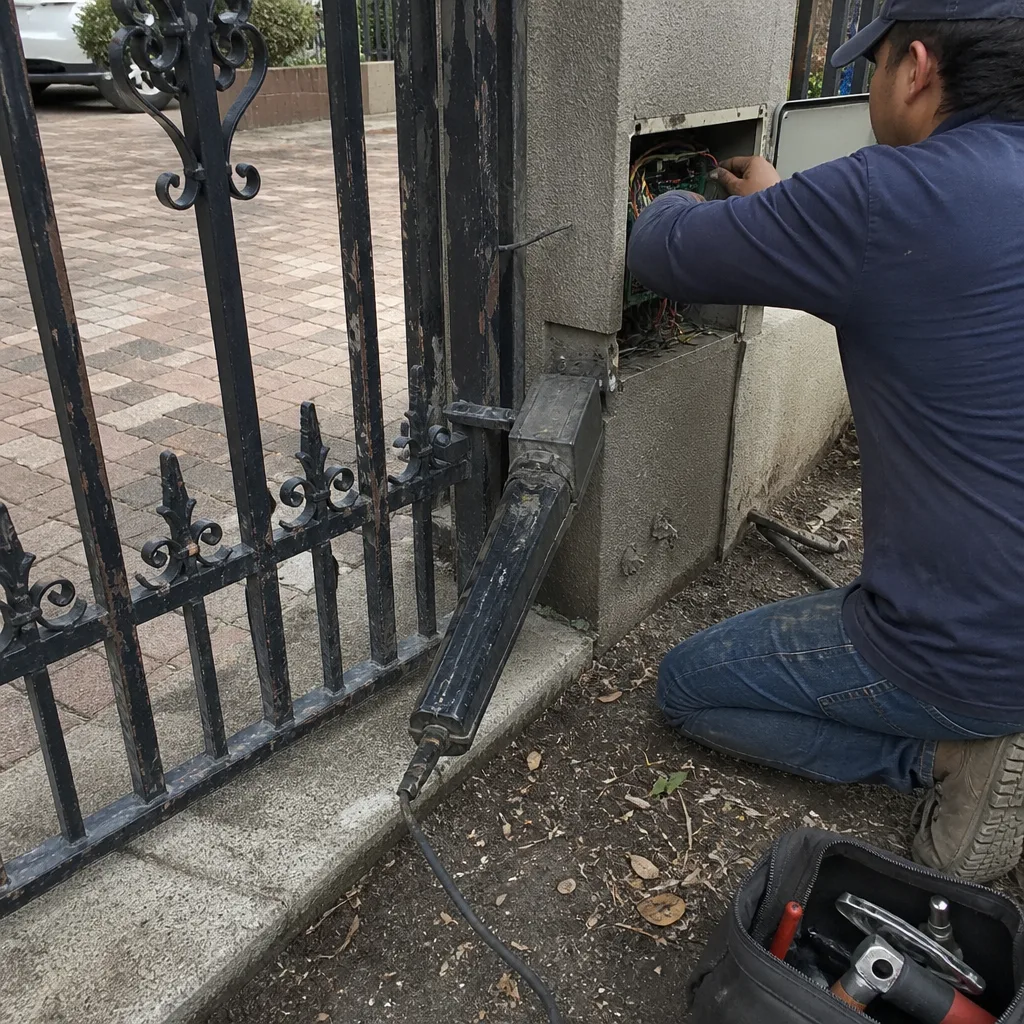 Before
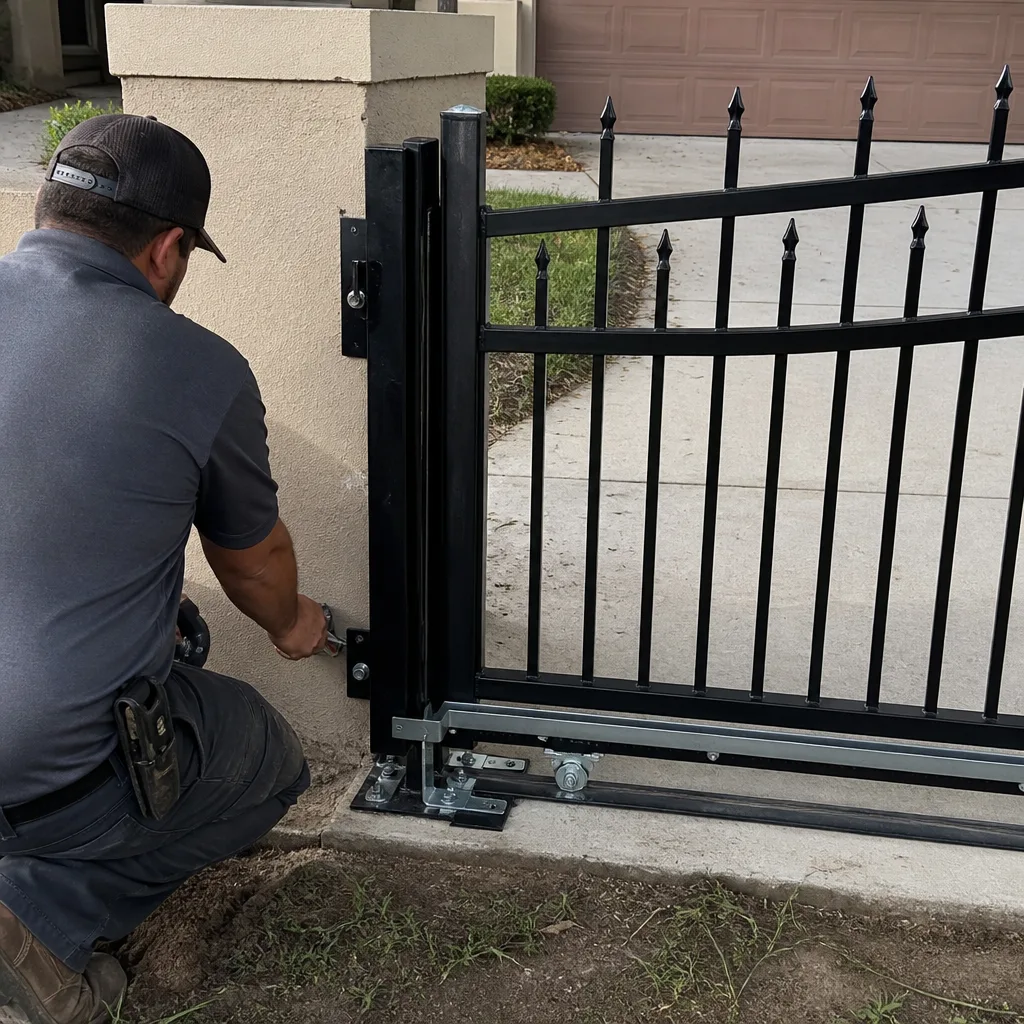 After
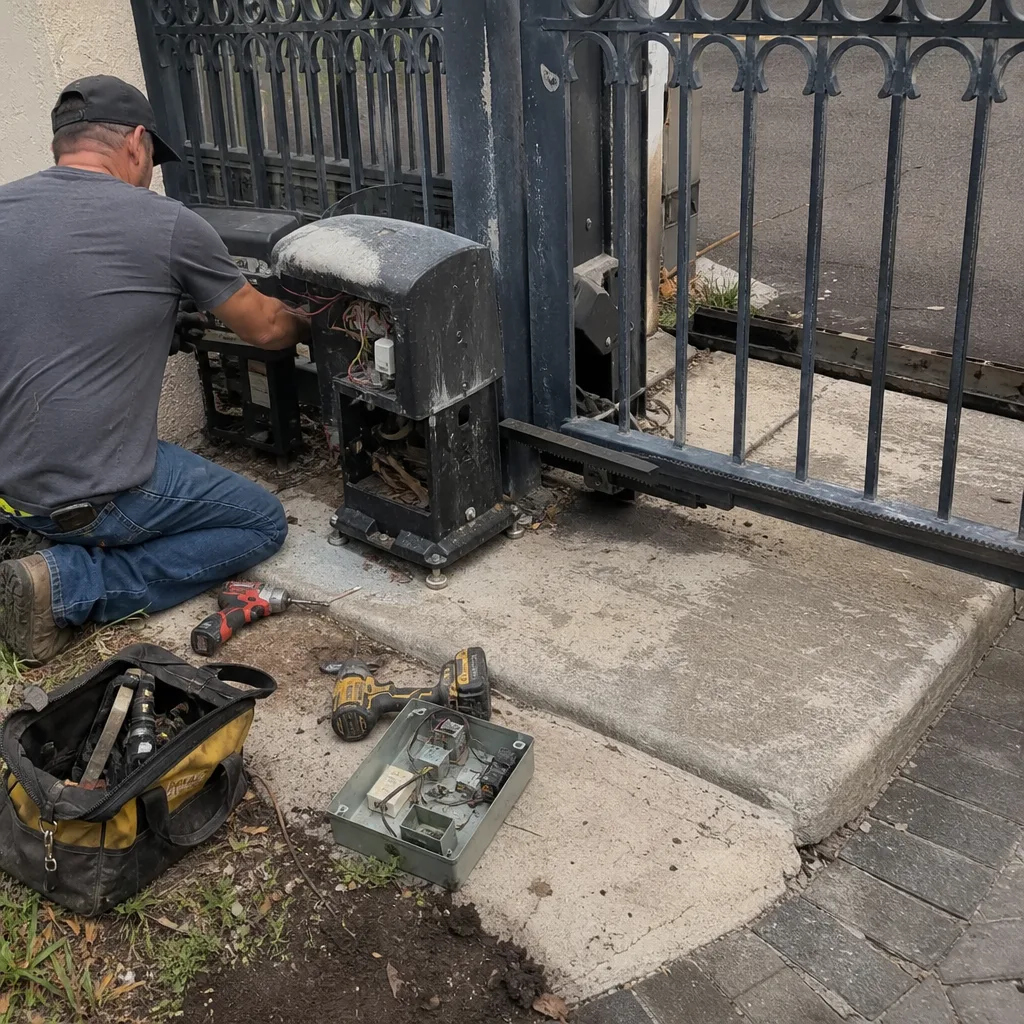 Before
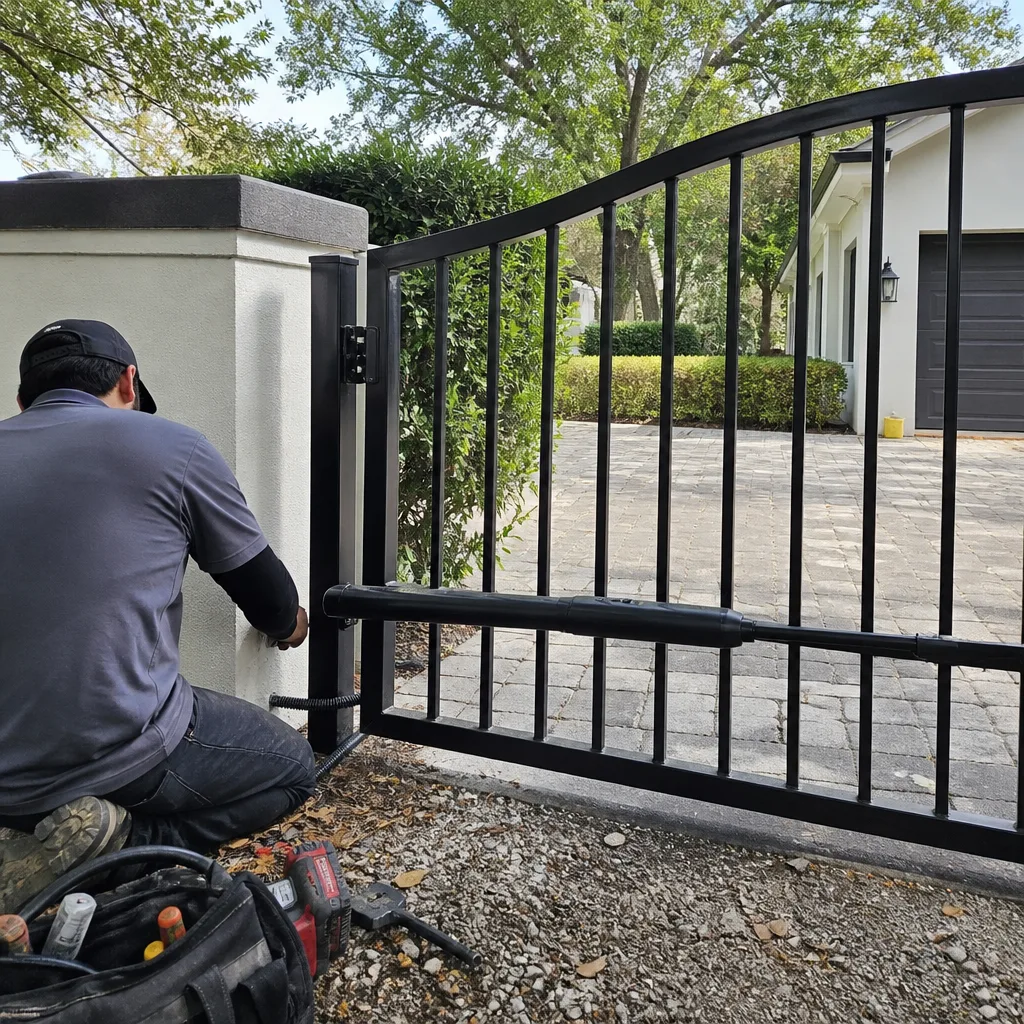 After
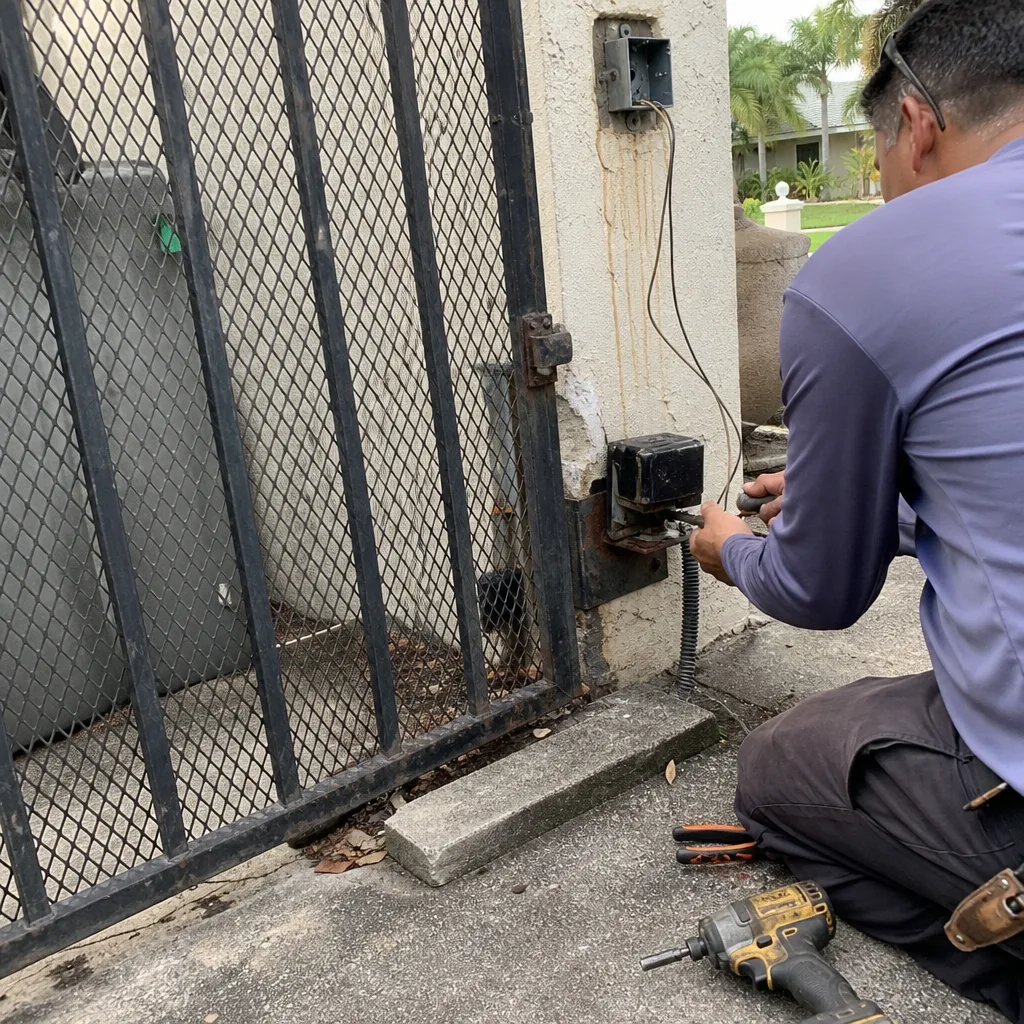 Before
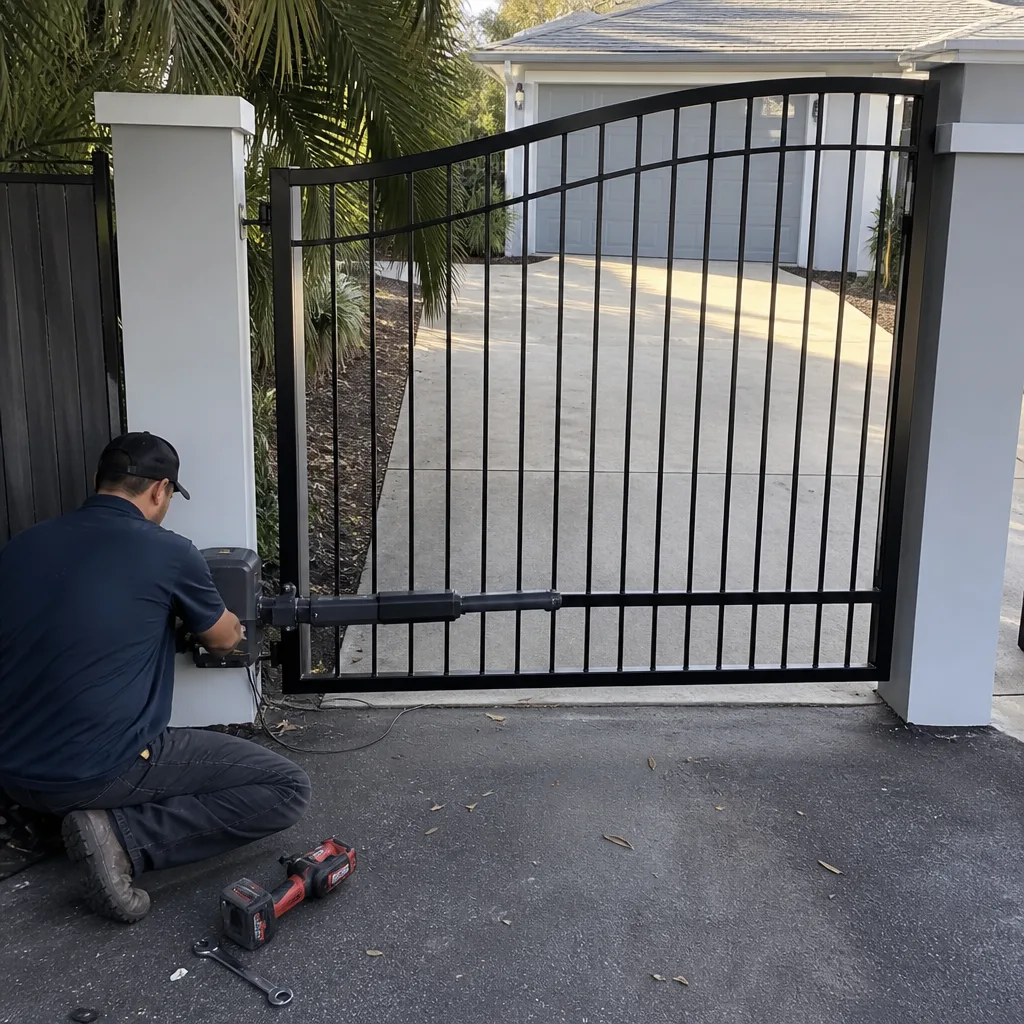 After
When to Call a Professional
Call a gate specialist when the problem involves electricity, structural alignment, or safety equipment. If the gate opens on its own, doesn’t respond to the keypad, trips the breaker repeatedly, or makes grinding sounds at a consistent point, don’t keep adjusting things. You’ll likely make the problem worse. Photoelectric sensors and automatic safety reversals are safety devices. Never bypass a photo eye because it’s “annoying.” Never disable the auto-reverse feature because the gate binds. If a child, a pet, or a delivery driver is in the path of a gate that doesn’t reverse, the result is not a minor inconvenience. A gate that binds and then reverses into an obstruction repeatedly is a sign of a mechanical or electrical fault that needs diagnostic work, not a workaround. Arroyo Gate Repair offers free estimates in Orlando – call (877) 851-6955 and we’ll tell you what’s actually wrong before you commit to anything.
Frequently Asked Questions
Most residential gate repairs in Orlando run between $150 and $600 for mechanical work and between $300 and $1,200 for electric or automated system repairs. The final figure depends on the broken component, the gate’s size and weight, and the opener brand. Every Arroyo Gate Repair quote is given before any work starts, so you’ll know exactly what you’re paying. Call (877) 851-6955 for a specific quote on your gate.
Moisture intrusion into the control board is the usual cause, and it’s one of the most common problems in Orlando’s humid climate. Condensation bridges the gap between solder joints on the board, creating a phantom input the operator interprets as “open.” Sealing the board, replacing it if the corrosion is already advanced, and greasing all low-voltage connectors usually resolves the problem permanently.
For many mechanical issues and common electric failures, a same-day or next-day appointment is available in most Orlando service areas if parts are on hand. More specialized commercial operators or rare-brand boards may need parts ordered, which takes one to three business days. Call (877) 851-6955 and we’ll tell you the realistic timeline based on your specific gate before you book.
Installation quality matters more than brand in Florida’s climate. That said, Ghost Controls residential units have shown better board-level moisture resistance than Mighty Mule units in our service experience, and DoorKing’s commercial operators, when properly maintained, handle Orlando’s humidity and traffic demands well. The single most important variable is sealing the enclosure and connectors correctly at installation, followed by seasonal maintenance.
For low-voltage repairs like control board replacement, photo eye installation, or keypad wiring, a gate specialist can handle the work without a separate electrical license. For any work involving 120V or 240V line-voltage power, including running new power to a gate or adding a dedicated circuit, Florida law requires a licensed electrical contractor. If the scope requires both, the electrical portion should be subcontracted properly.
If your opener is more than 10 years old, shows visible board corrosion, and has already needed two or more repairs in the past 18 months, replacement usually makes better financial sense than another repair. That’s especially true in Orlando, where older boards degrade faster from humidity exposure. We’ll give you an honest recommendation based on the condition of the unit and the cost of the next repair, and the quote is always free. Call (877) 851-6955 for a straight answer.
The Bottom Line
Gates fail in Orlando for predictable reasons: moisture gets into electronics, soil shifts gate posts, and humidity corrodes every metal surface it touches. Understanding these patterns means you can diagnose problems correctly before spending money on the wrong fix. For a deeper breakdown, see The Complete Guide to Gate Repair in Orlando. Post movement is not motor weakness. Phantom operation is not a haunted gate; it’s a wet control board. A gate that worked fine in Ohio will not hold up the same way in Florida without proper sealing, grounding, and maintenance. Fix the root cause, keep up with the seasonal maintenance calendar, and call a gate specialist who works on your specific brand. That’s the difference between a gate repaired and a gate that stays repaired.
Written by the team at Arroyo Gate Repair, serving Orlando since 2013.