
Last updated October 31, 2026
 Wrought iron
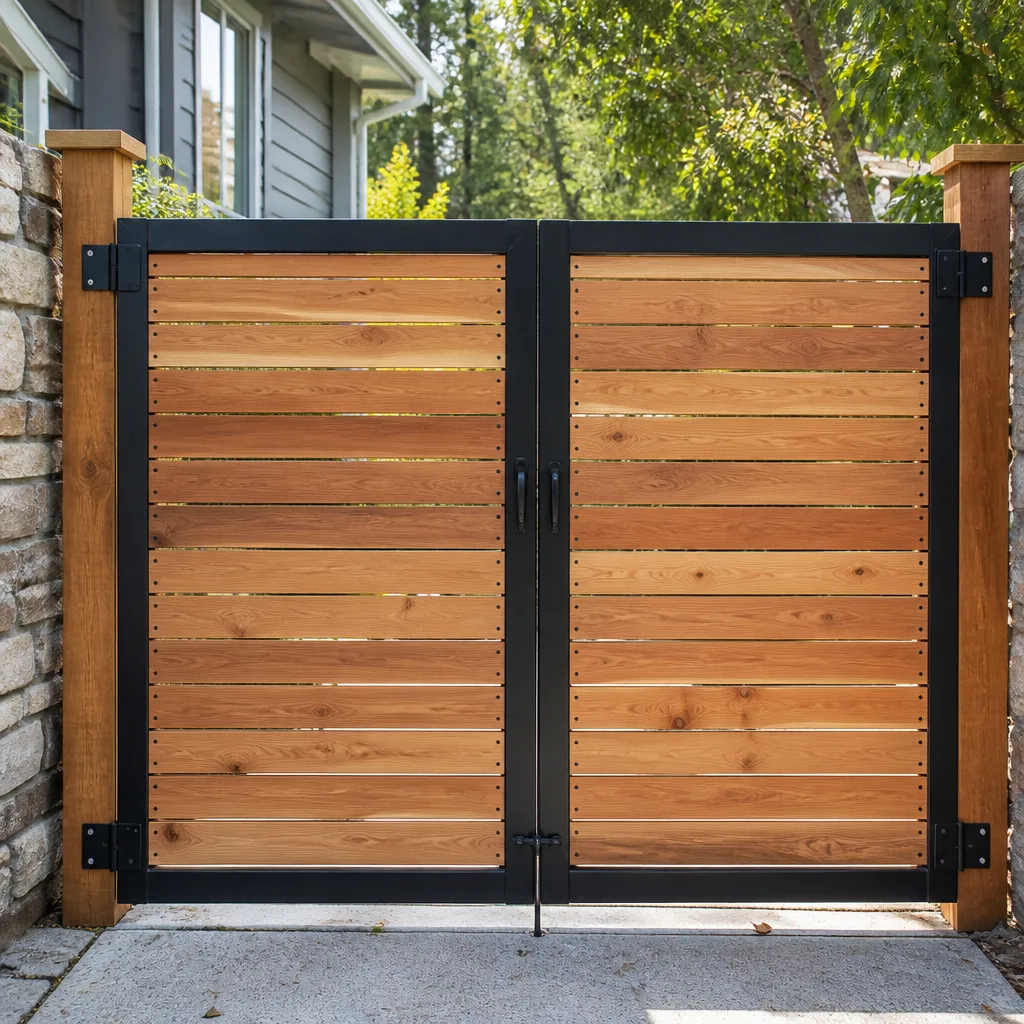 Wood & steel frame
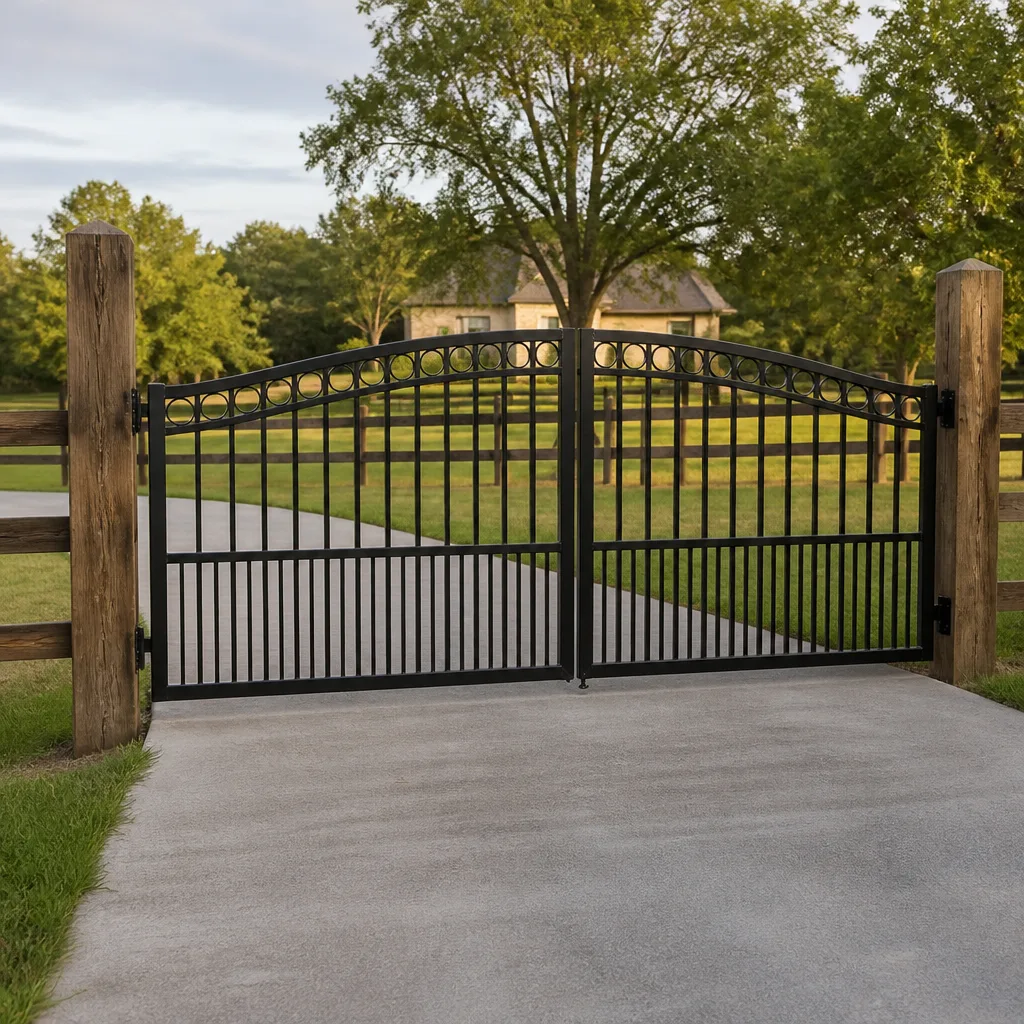 Farm & ranch
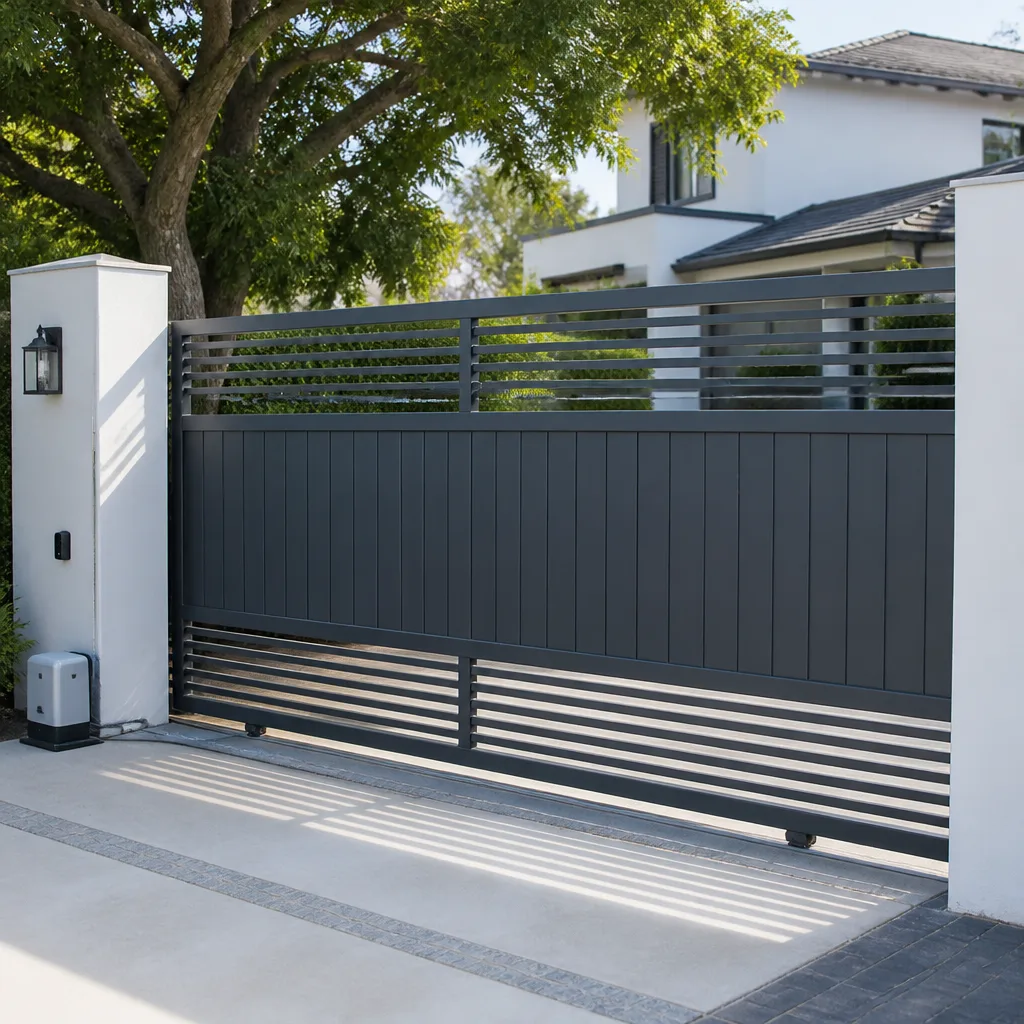 Sliding driveway gates
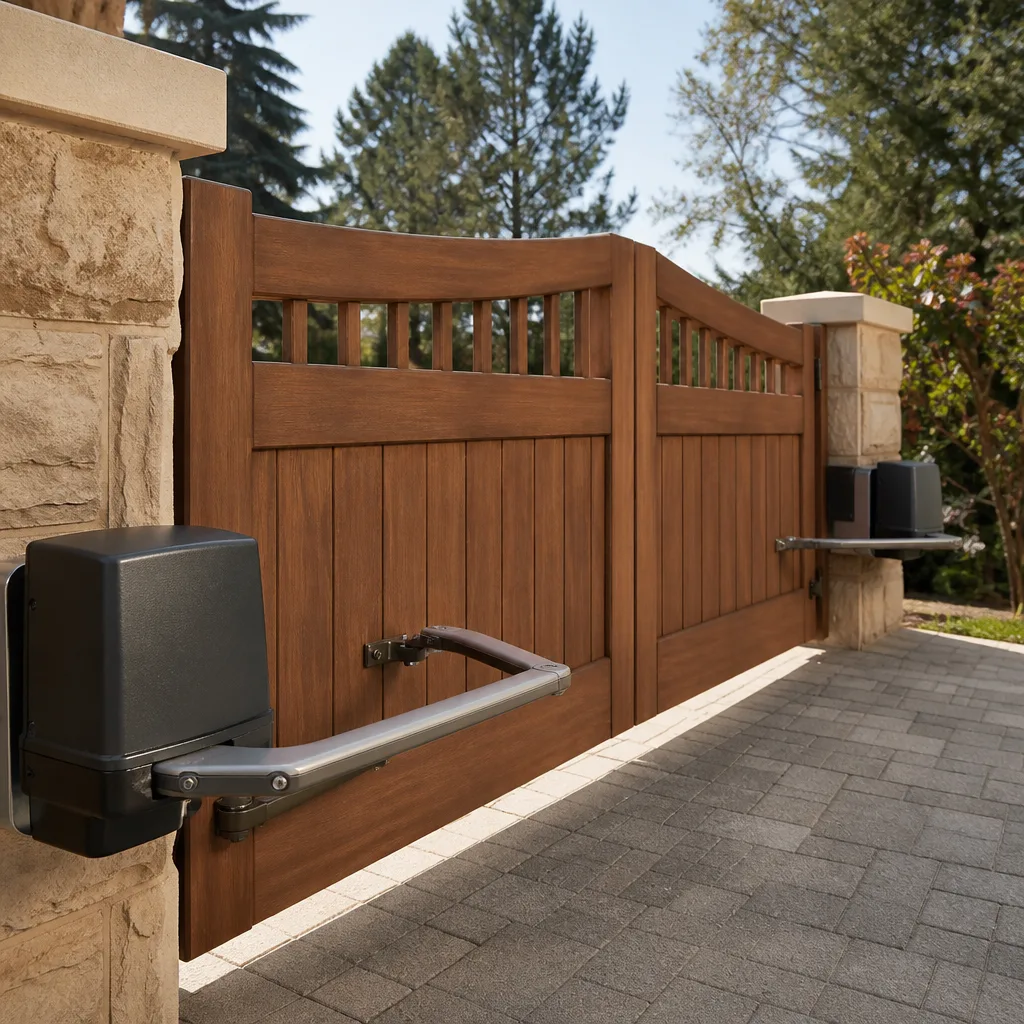 LiftMaster operators
Free on-site gate assessment - hinges, posts, and your LiftMaster or Nice gate operator checked before anything is quoted
The assessment is free and the quote is the invoice.
Get your free estimateGate Repair Emergency Preparedness Guide for Orlando Homes
Every automatic gate operator has a manual release mechanism, but a 2023 industry survey found that fewer than 20% of residential gate owners had ever tested theirs. That means their “backup plan” is a procedure they’ve never practiced on a component that may be corroded, frozen, or missing its release key entirely. In Orlando, where afternoon thunderstorms knock out power routinely and hurricane season runs from June through November, that’s not a theoretical risk. It’s a scheduled event. This guide walks through the emergency protocols every Orlando homeowner should have in place before a gate fails at the worst possible moment.
Styles & brands we work with
Quick Answer
A gate emergency in Orlando breaks down into three scenarios: a gate stuck closed when you need to get out, a gate stuck open when you need security, and a gate that won’t respond after a storm. The single most important step is knowing where your manual release is and having tested it before you need it. If your gate has already failed and you can’t operate it manually, call Gate Repair in Orlando at (877) 851-6955 for same-day emergency service.
Table of Contents
- The Manual Release: Your Gate’s Emergency Override
- Power Outage Protocol for Orlando Gate Systems
- The Gate Frozen Open: Security Emergency Plan
- Post-Hurricane Re-Engagement Protocol
- Building a Gate Emergency Kit for Your Orlando Home
- Manual Release by Operator Type: What Orlando Homes Actually Have
- Preventative Measures That Prevent Emergencies
- Common Mistakes to Avoid
- When to Call a Professional
- Frequently Asked Questions
- The Bottom Line
The Manual Release: Your Gate’s Emergency Override
Every automatic gate operator ships with a manual release that disconnects the gate from the motor so you can push it open by hand. In Orlando, we see this mechanism fail more often than any other emergency component, and the failure is almost never mechanical. It’s neglect. Release keys get lost in a kitchen drawer. Release mechanisms corrode in Florida humidity. Homeowners buy a house with an existing gate and never learn where the release is located at all.
Here’s the core procedure, step by step:
- Locate the operator unit. On swing gates, it’s the metal box mounted near the gate hinge or at the base of the gate post. On slide gates, it’s mounted on a concrete pad beside the gate track.
- Find the release handle or key slot. Most residential operators, including LiftMaster, FAAC, and Linear models, have a small metal T-handle or a keyed release on the side or bottom of the operator housing.
- Disconnect the drive. Turn the key or pull the T-handle. You should feel a mechanical disengagement. On some LiftMaster swing operators, this requires pulling a lever that separates the arm from the gate bracket.
- Test the gate by hand. Push the gate slowly through its full travel path. It should move with moderate resistance. If it binds, stop and check the hinges and track before forcing it.
The test matters. We’ve responded to Orlando emergency calls where the homeowner knew exactly where the release was, pulled it, and then discovered the gate hadn’t been manually operated in seven years. The hinge grease had turned to paste. The gate moved eighteen inches and stopped. Practice the procedure in daylight, on a dry afternoon, before August. That’s the difference between a five-minute fix and a 2 a.m. service call.
Power Outage Protocol for Orlando Gate Systems
Orlando’s afternoon thunderstorm season, which runs roughly May through September, produces some of the highest lightning-strike density in the continental United States. Even without a direct strike, voltage spikes from nearby strikes are the leading cause of gate control board failure in Central Florida. A gate that works perfectly on a sunny Wednesday can be dead by Friday afternoon.
If your gate loses power, work through this sequence before assuming you need a repair:
- Check the circuit breaker. Gate operators are typically on a dedicated circuit, either in your main panel or a subpanel. A thunderstorm can trip the breaker. Reset it once. If it trips again, do not reset it a third time; there’s a short somewhere in the system.
- Check the GFCI outlet. Many Orlando gate installations run power through a GFCI outlet near the operator. If the outlet is tripped, the gate is dead while the rest of the house runs normally. Press the reset button.
- Test battery backup if installed. Some Orlando gate systems include battery backup modules that keep the gate operational through short outages. These batteries degrade faster in Florida heat. A battery rated for three years may only deliver eighteen months of reliable service in an Orlando summer.
- Use manual release if power won’t return. If the gate is dead and you need access, use the manual release procedure from the section above.
What batteries don’t cover: Florida heat shortens battery life but so does the frequency of charge cycles. A gate in a busy Orlando neighborhood that cycles forty times a day will drain its backup battery far faster than a gate that cycles six times a day. If your property has a backup battery and you haven’t tested it since last hurricane season, test it this weekend. Disconnect power to the operator and try running the gate on battery alone. If it moves slowly or stops halfway, the battery is due for replacement.
The Gate Frozen Open: Security Emergency Plan
A gate stuck closed traps you in. A gate stuck open invites everyone else in. In Orlando, where many residential gates back up to conservation areas, retention ponds, or just quiet streets, an open gate at 11 p.m. is a security failure that gets noticed. This is the scenario that most emergency guides skip.
If your gate fails in the open position, here’s the immediate protocol:
- Attempt a close cycle from the keypad or remote. Try three times. The problem may be a momentary sensor trip.
- Check for obstructions. Walk the full gate path. Leaf debris, a branch from an afternoon storm, or a blown trash can under the gate can trigger the safety reverse and leave the gate open.
- Try the manual close. Disconnect the operator using the manual release and push the gate closed by hand. Even if you can’t lock it, a closed gate is a visual deterrent that an open gate is not.
- Secure the gate physically. If the gate won’t stay closed on its own, use a chain and padlock, a cable lock through the gate frame, or even a heavy-duty ratchet strap from the gate to the post. This is temporary physical security, not a permanent solution, but it buys time.
- Call for service. A gate frozen open in Orlando after dark warrants a service call. Electric gate repair in Orlando is available through Arroyo Gate Repair at (877) 851-6955, including evenings and weekends.
For property managers and HOA boards in Orlando, a gate frozen open at a community entrance is a different scale of problem. Your covenant responsibilities don’t pause because the operator died. The temporary chain-and-padlock approach works as a stopgap, but plan for a faster timeline on commercial repairs. A community with a broken gate is a community with a documented security gap.
Post-Hurricane Re-Engagement Protocol
Here is the mistake we see after every hurricane in Orlando: the power comes back on, the homeowner presses the remote, the gate opens and closes, and everyone assumes the system survived. Weeks later, the gate fails under normal operation because hurricane stress damaged components that hadn’t fully failed yet.
After any named storm passes through Orlando, run this checklist before trusting the gate in automatic mode:
- Inspect the gate structure visually. Walk both sides. Look for bent sections, sagging hinges, cracked welds, loose bolts. A gate that operates fine but has a hairline crack in a weld will eventually fail, and it will fail at the worst time.
- Check the track for slide gates. Debris, mud, or shifted concrete can create resistance that overloads the motor. Clear the track completely. Run the gate manually for one full cycle to feel for binding.
- Inspect the operator housing. Water intrusion kills electronics slowly. If the operator cover is cracked, warped, or has standing water inside, the control board may be running on borrowed time.
- Test the safety sensors. Place an object in the gate path and attempt to close. The gate should reverse. After a storm, sensors can shift out of alignment or collect debris.
- Run the gate through five complete cycles. Watch and listen. A gate that operates but sounds different, groans, or hesitates at a specific point is sending an early warning signal.
Do not re-enable automatic timers or scheduled functions until these checks are complete. An automatic gate on a timer will open and close whether or not you’re watching it. If a hurricane has compromised the system, the first unsupervised cycle is where the failure bites.
Building a Gate Emergency Kit for Your Orlando Home
An emergency gate kit is not a product you buy. It’s a collection of items you gather and store somewhere you can find them in the dark with a flashlight. For Orlando homeowners, this kit should live in the garage or a utility closet near the electrical panel, not in a storage bin that requires moving four other bins to access.
- Manual release key or T-handle. If your operator has a removable release key, keep it in the kit. If the release is built into the operator, keep a printed photo of its location in the kit.
- Operator manual. Printed, not a PDF on a phone that might be dead. Highlight the manual release section and the troubleshooting table.
- Gate repair company phone number. Hardware fails. The kit is your backup plan, not a replacement for professional repair. Write down (877) 851-6955 and put it in the kit.
- Spare remote with fresh batteries. The remote is not for the gate emergency itself. It’s for testing the gate after an outage without digging through the house for the primary remote.
- Heavy-duty flashlight. Your phone flashlight is a one-handed tool with a limited battery. A real flashlight leaves both hands free to operate the release mechanism.
- Work gloves. Gate hardware sits in the Florida sun and rain. It’s hot or corroded or both. Gloves make the manual release procedure physically manageable.
- Chain and padlock. For the frozen-open scenario. You won’t carry a gate lock in your pocket at 11 p.m., but if it’s in the kit, you have it.
Test the kit. Pull out the release key and use it. Try the spare remote. Replace the flashlight batteries once a year, ideally in May before hurricane season peaks in Orlando. A kit you’ve never opened is a decoration, not a plan.
Manual Release by Operator Type: What Orlando Homes Actually Have
Orlando’s mix of housing stock means a wide range of gate equipment. We service everything from a homeowner-installed Ghost Controls opener on a decorative driveway gate to a commercial-grade FAAC hydraulic operator at a gated community entrance. The manual release procedure varies by operator type, and knowing yours matters.
LiftMaster Swing Gate Operators
Most LiftMaster residential swing operators have a manual release lever located on the side of the operator arm where it connects to the gate bracket. Disengaging it separates the arm from the gate, allowing manual operation. Re-engaging requires aligning the arm and gate positions, which often takes two people: one to hold the gate and one to flip the lever.
FAAC Swing and Slide Operators
FAAC’s residential 390 and 400 series swing operators use a keyed manual release on the operator housing. The release key is proprietary to FAAC, and it’s one of the most commonly lost keys we see in Orlando. If you have a FAAC operator, order a spare release key now, before you need it. FAAC slide operators typically have a release mechanism on the drive unit that disconnects the drive gear from the rack.
Linear and BFT Operators
Linear operators vary by model, but most residential units use a T-handle release that threads out of the operator housing. BFT swing operators often use a keyed release similar to FAAC’s, and BFT slide operators have a lever mechanism on the gear motor. The user manual is your friend here; the release procedure is a two-page section, not a footnote.
Why This Matters for Orlando Gate Emergencies
The scenario that drives emergency calls in Orlando is not “my gate stopped and I need it fixed.” It’s “my gate stopped, I didn’t know how to release it, and I need it fixed right now.” The first version is a repair. The second version is a repair plus frustration plus a potentially dangerous manual-operation attempt. If we diagnose by system logic rather than trial and error, it’s because we work on all nine brands including LiftMaster, FAAC, BFT, and Linear. When the release mechanism is model-specific, that depth keeps a diagnosis accurate.
For a full walkthrough of how these systems work and what repairs look like, see our guide to Electric Gate Repair in Orlando.
Preventative Measures That Prevent Emergencies
The best emergency is the one that never happens. Gate systems in Orlando operate in a specific environment: high heat, high humidity, afternoon lightning, seasonal hurricanes, and fine sandy soil that finds its way into everything. Preventative maintenance is not a luxury upsell; it’s the difference between a gate that fails during a storm and a gate that runs through it.
- Lubricate hinges and bearings twice a year. Use a dry lubricant suitable for outdoor metal. Florida humidity accelerates corrosion, and a hinge seizing up is a common cause of gate motor overload.
- Test the manual release quarterly. This is the number one preventative action for emergency preparedness. If a component is rusted or missing, you find out in May, not during a hurricane.
- Test battery backup quarterly. Cut power to the operator and run the gate on battery. If it fails, replace the battery before the outage, not after.
- Inspect safety sensors monthly. These are the eyes of the system. Dirty or misaligned sensors cause phantom obstructions and reverse cycles that eventually burn out motors.
- Check for rust on critical hardware. Orlando’s salt air lives within ten miles of the coast, but even inland humidity rusts gate hardware. Treat rust spots before they become structural failures.
- Review the operator manual once a year. Skim the troubleshooting section. If something fails, you’ll remember seeing the symptom in the manual even if you don’t remember the fix.
We recommend preventative service before hurricane season each year. It’s not about selling more repairs. It’s about catching the failing component in June when a replacement takes two days instead of discovering it in September when three thousand other Orlando homeowners are calling for emergency service at the same time.
Common Mistakes to Avoid
- Waiting until the emergency to read the manual. The manual release procedure for a LiftMaster operator is not the same as a FAAC operator. Reading a PDF on your phone in the rain at midnight is a poor learning environment. Learn the procedure now.
- Forcing the gate open without disengaging the operator. This is the single most expensive mistake in gate ownership. A forced gate destroys the operator’s internal gears, strips the drive mechanism, or bends the arm. The repair bill jumps from hundreds to thousands of dollars.
- Assuming a battery backup lasts the stated rating. Battery ratings assume moderate temperatures and average cycle counts. Orlando summers degrade lead-acid and lithium batteries faster. Test it; don’t trust the datasheet.
- Ignoring a gate that’s operating but making new noises. A grinding sound, a hesitation, a gate that starts and stops midway: these are warnings. The gate is telling you a component is failing. Address the warning before it becomes an emergency.
- Using the gate as the primary lock for the property. A gate is access control, not a lock. If your property security depends entirely on the gate closing, plan for the day it doesn’t. Have a secondary physical security option.
- Calling a general handyman for electric gate problems. Orlando has plenty of handymen who will take a look at a gate. Many will guess. Electric gate systems have specific diagnostic procedures per brand, and a wrong guess means replacing parts that didn’t need replacing. Call a gate specialist who works on your brand.
- Not testing the release because you “have a warranty.” Warranties cover parts and labor for covered failures. They don’t cover you being stuck in your driveway at 6 a.m. on a workday, or a security gap while you wait for a warranty appointment to open up.
When to Call a Professional
Some gate problems are honestly DIY-addressable: a tripped GFCI, a wedged branch, a manual release procedure you’ve practiced. But if the gate won’t respond to the remote or keypad, if the motor hums but the gate doesn’t move, if the control board shows error codes, or if the gate was struck by a vehicle, call a specialist. These are problems that get worse with attempted DIY fixes. A gate that’s been forced while engaged has internal damage that requires disassembly to diagnose.
Gate Repair in Orlando from Arroyo Gate Repair covers the full range: mechanical failures, electric operator failures, control board issues, sensor problems, and access hardware. We work on nine major brands including LiftMaster, FAAC, BFT, and Linear, and we offer free estimates in Orlando. Call (877) 851-6955 for emergency service or to schedule preventative maintenance before hurricane season.
Frequently Asked Questions
Locate the manual release on the operator unit. For LiftMaster swing operators, it’s a lever on the operator arm. For FAAC and BFT operators, it’s a keyed release on the housing. Disengage the release, push the gate open by hand, and leave it open until power returns or you’re ready to close it manually. The release procedure is in your operator manual; if you don’t have a printed copy, call (877) 851-6955 and we can walk you through your specific model.
Emergency gate repair in Orlando varies by the failure. A tripped breaker or GFCI reset is free if you can identify it. A service call for a gate stuck mid-travel typically starts with a diagnostic visit, and the repair cost depends on the component: a capacitor or limit switch replacement costs less than a control board replacement. We quote the price before any work starts, so call (877) 851-6955 for a free estimate and we’ll give you a number, not a range.
Yes, we offer evening and weekend emergency gate repair in Orlando. Call (877) 851-6955 and we’ll talk through the symptom, the likely cause, and whether a temporary manual close is safe so you have security until a technician arrives.
Do not operate the gate. Try to secure the gate in a safe position using the manual release, but if the gate is off its track or visibly bent, leave it and call a professional. A gate that’s been struck has structural damage that automatic operation will worsen. Call (877) 851-6955 for assessment.
Battery backup systems keep the gate operational through short power outages, which are common in Orlando during thunderstorm season. Whether you need one depends on your access needs. If you have no other pedestrian access and you need to get vehicles in and out during outages, a battery backup is the difference between an inconvenience and an emergency. We can assess your current system and recommend a compatible backup module.
In Florida, test the manual release every three months. Humidity and salt air accelerate corrosion, and a release mechanism that works in January can seize by August. Quarterly testing takes ten minutes and gives you certainty that your backup plan actually functions.
The Bottom Line
A gate emergency in Orlando is going to happen. The only variable is whether you’re prepared for it. Test your manual release now, before the afternoon storm season peaks. Build the emergency kit, print the manual, and store it somewhere you can find it with a flashlight. If the gate fails in a way you can’t solve from the kit, call a specialist who works on your specific brand. Gate installation and repair in Orlando is available from Arroyo Gate Repair at (877) 851-6955. Free estimates. No surprise invoices. You’ll know the price before we start.
Written by the team at Arroyo Gate Repair, serving Orlando since 2013.
See the difference
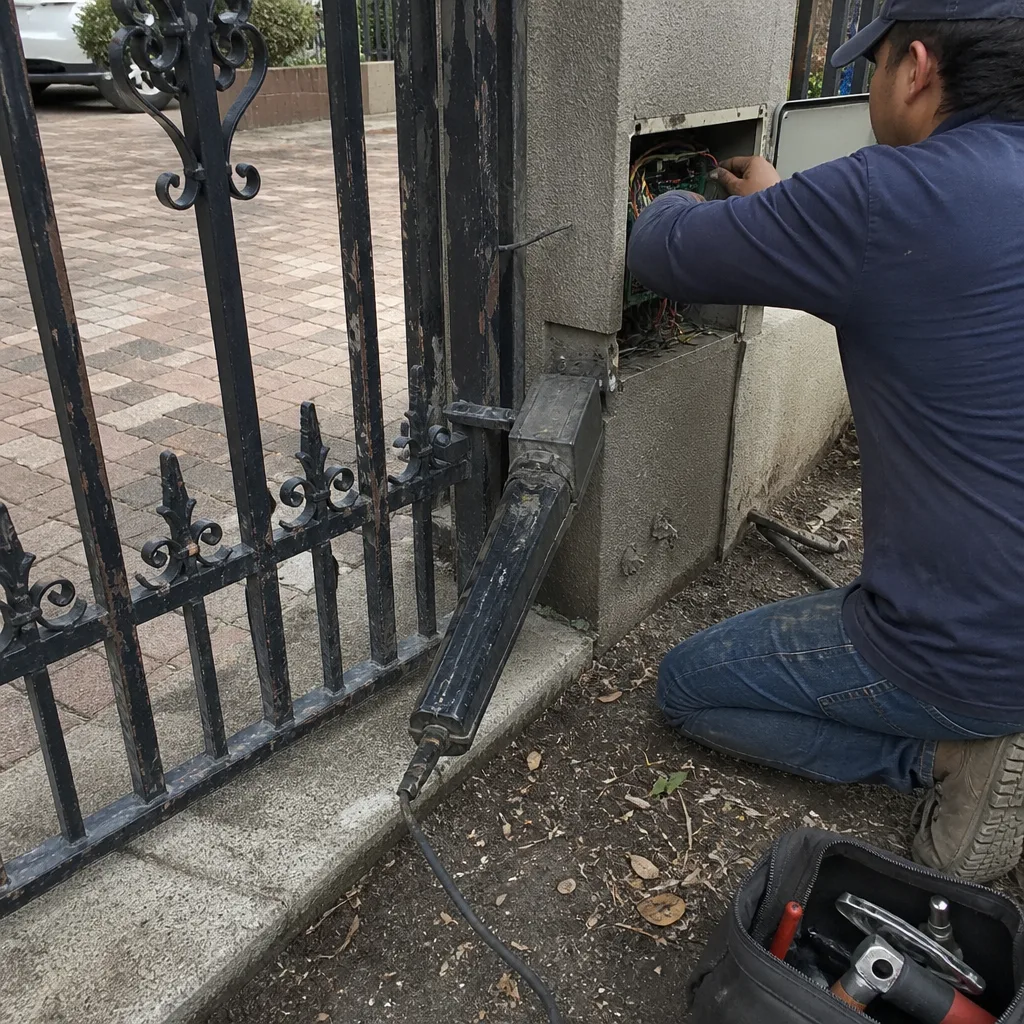 Before
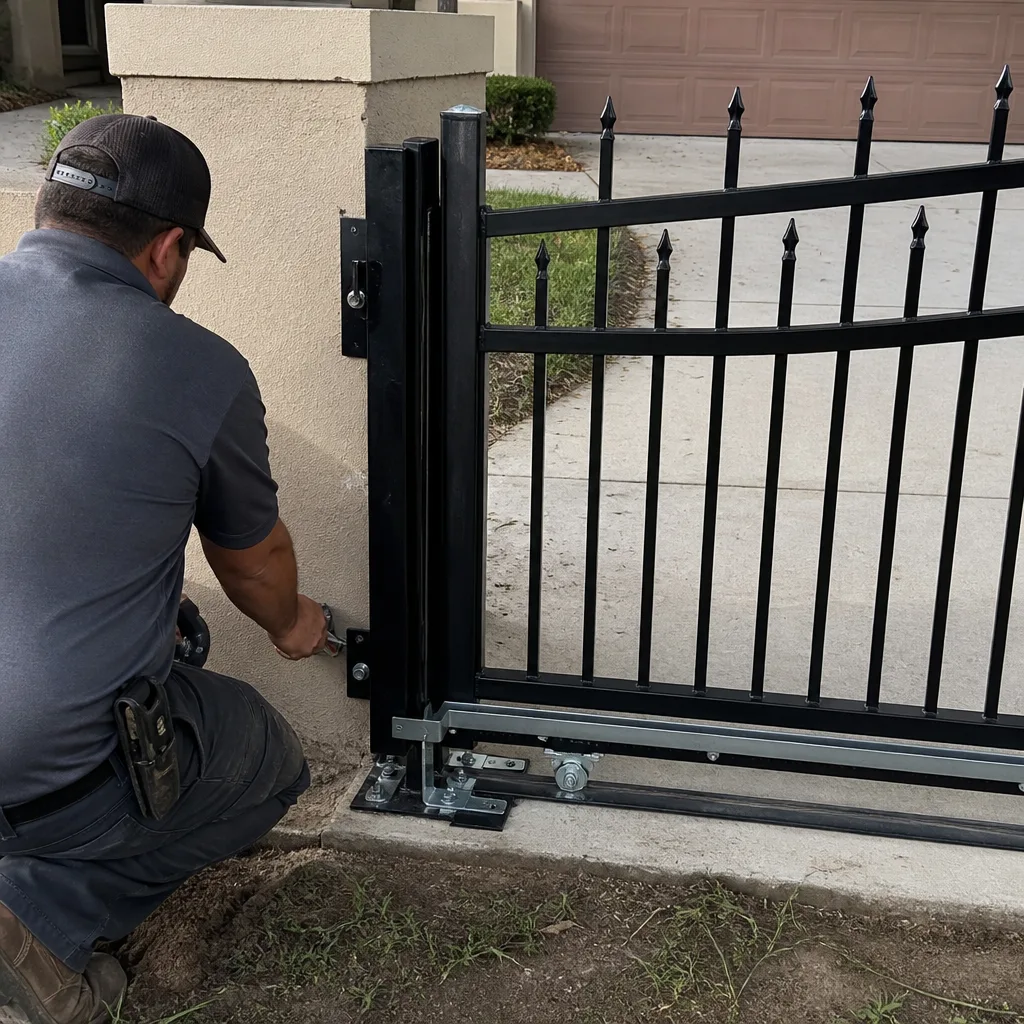 After
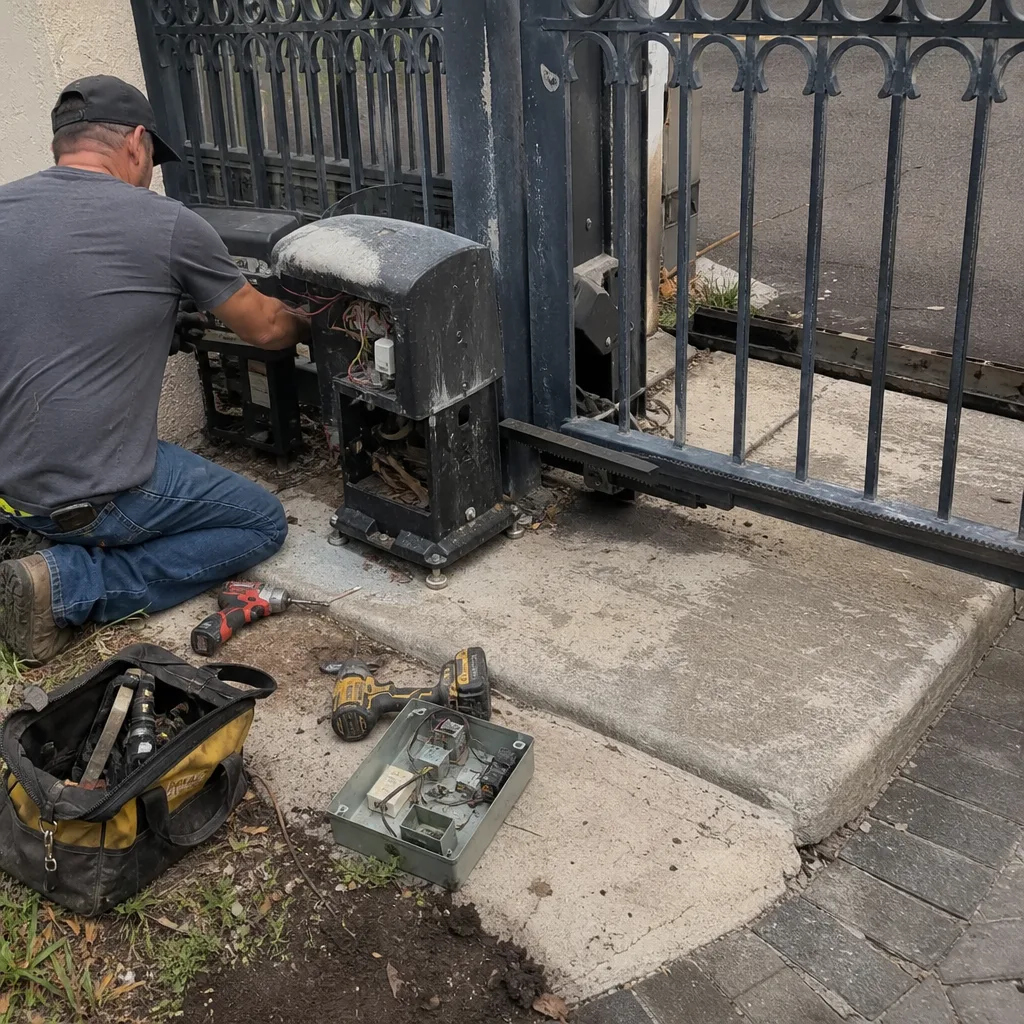 Before
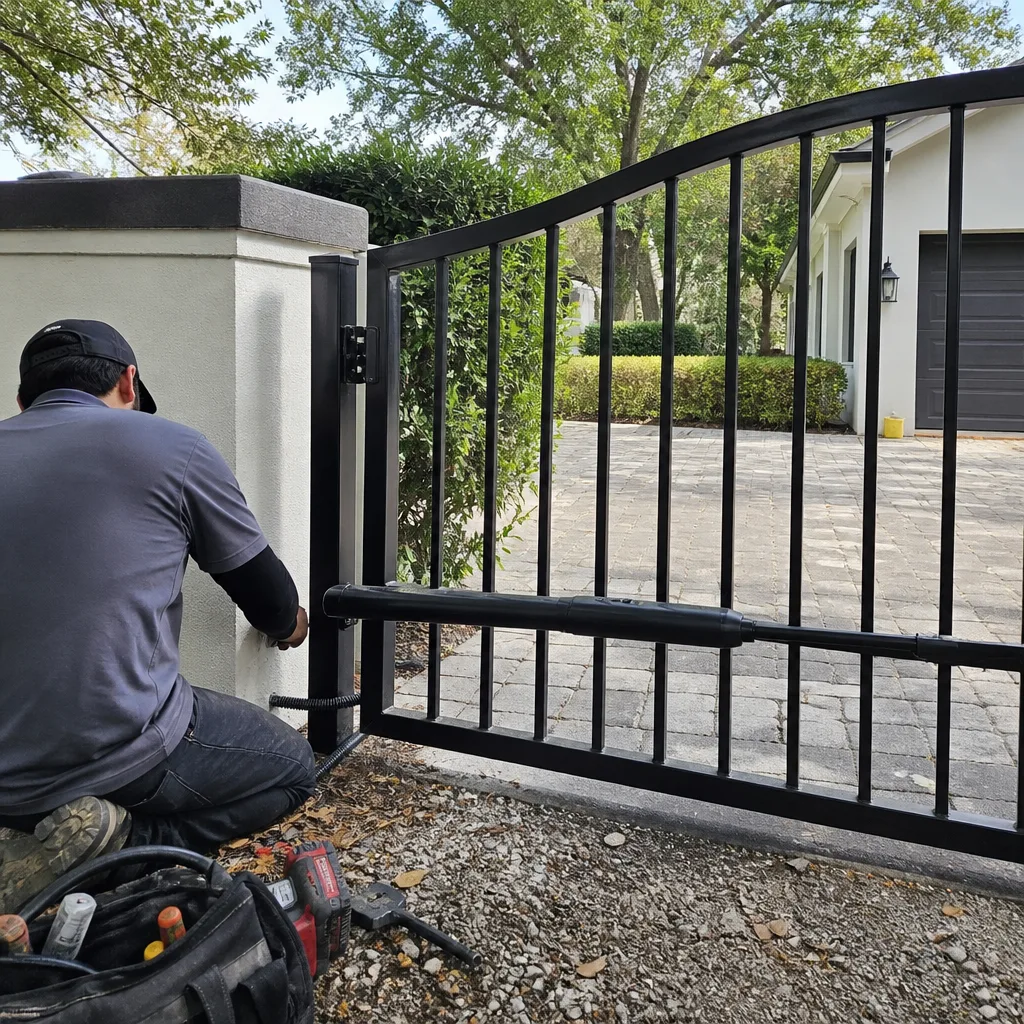 After
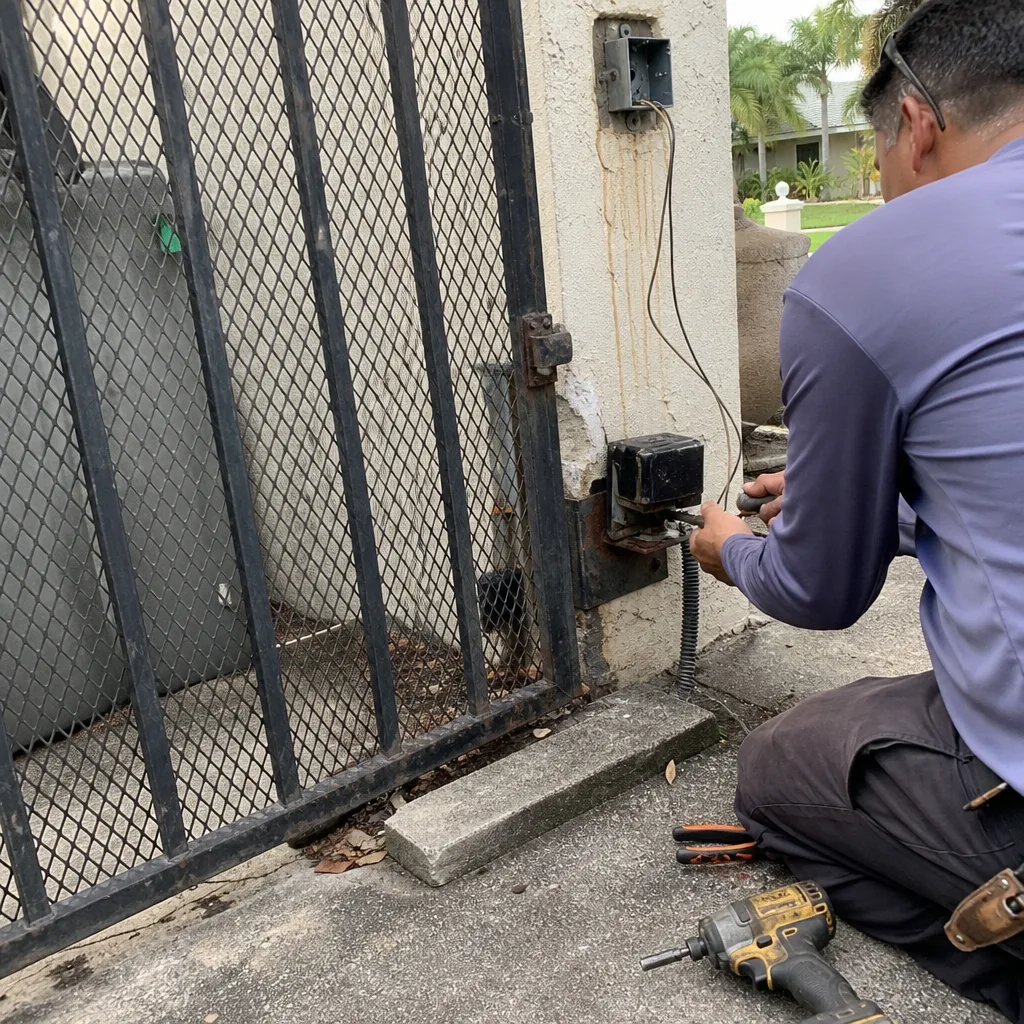 Before
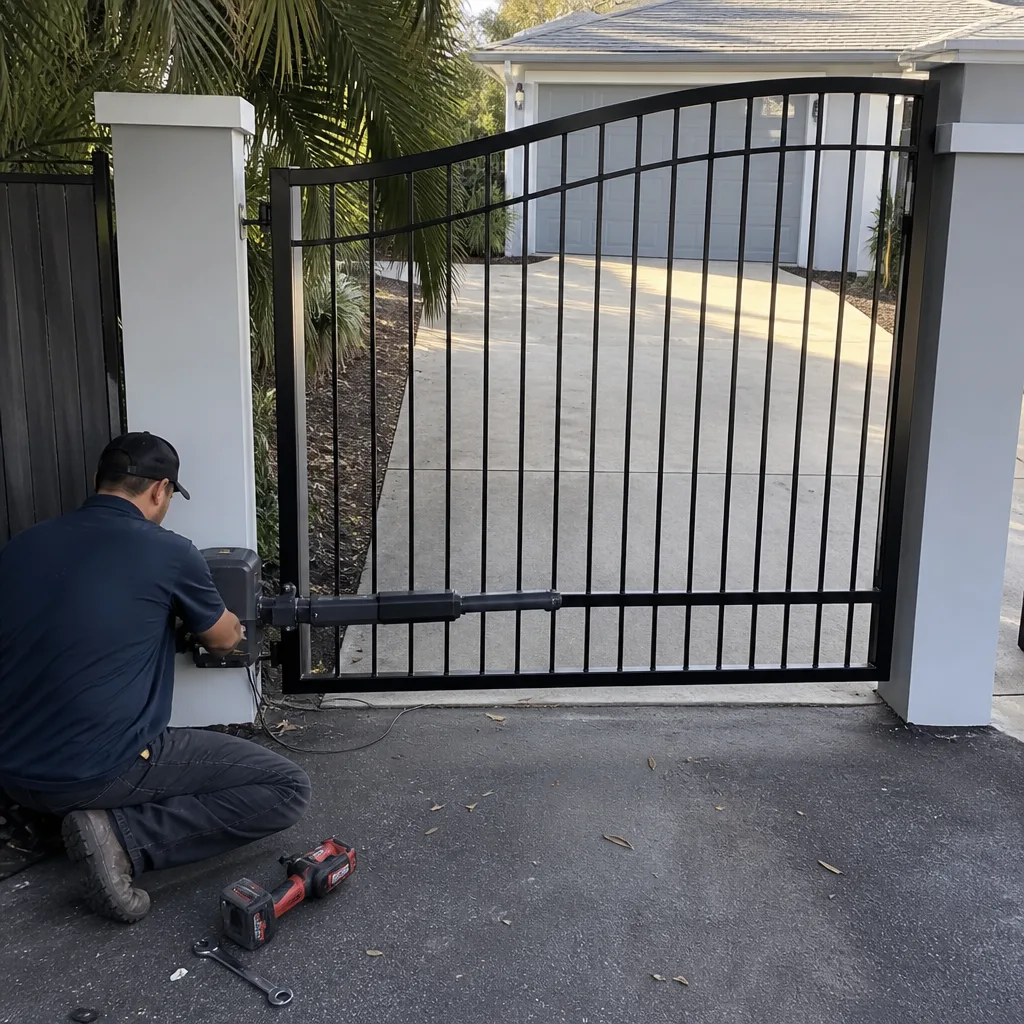 After